Introduction
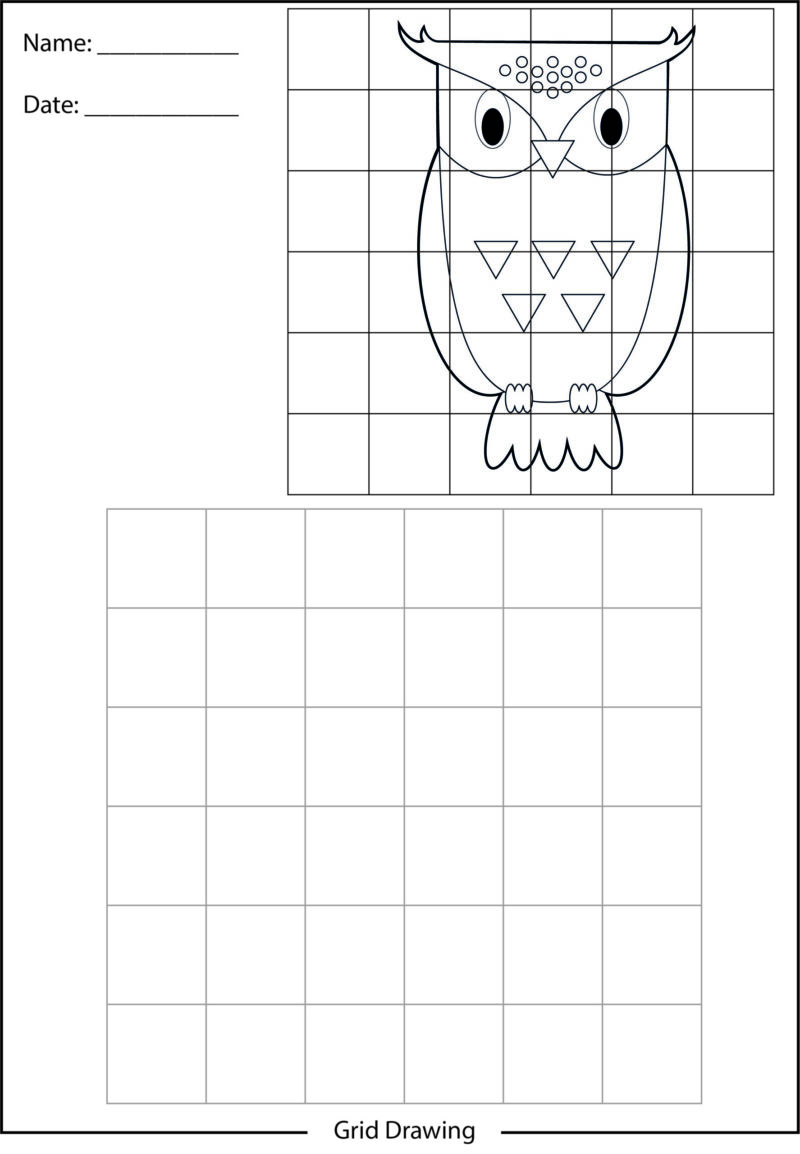
Grid drawing halloween activities involve breaking down seasonal photographic reference images into smaller square coordinates to systematically develop spatial awareness, observational accuracy, and proportion estimation in young learners. According to the National Association for the Education of Young Children (NAEYC), structured visual-spatial exercises during early childhood actively strengthen the foundational neural pathways required for geometry, reading fluency, and advanced fine-motor coordination. Educators, parents, and homeschoolers leverage specialized resources such as printable Grid Drawing worksheets alongside real photographic flashcards to transition children from intuitive scribbling to precise, analytical representation. This instructional approach utilizes realistic photographic templates—featuring pumpkins, autumn foliage, and gentle seasonal themes—to anchor abstract drawing tasks in concrete visual observation. Implementing these methodical art challenges removes the intimidation factor of blank pages, allowing developing minds to focus on one single coordinate square at a time.
Visual Learning & Skill Snapshot:
- Core Focus: Systematic coordinate-based replication of seasonal photographic imagery using structural grid lines.
- Target Skill: Spatial reasoning, visual discrimination, fine-motor proportion, and photorealistic observation.
- Key Recommendation: Pair photographic reference cards with matching 4×4 or 6×6 grid worksheets to gradually build scaling proficiency.
Core Principles and Visual Learning Overview
Grid drawing halloween methodology operates by training the brain to isolate individual visual shapes rather than attempting to render complex objects as a whole. When children analyze a photographic subject through a grid, cognitive overload decreases significantly because attention shifts from the entire scary or whimsical theme to simple lines, curves, and negative spaces within a confined square. This technique directly reinforces analytical thinking by encouraging learners to cross-reference coordinates, measure relative distances, and verify line placements against adjacent boxes. Utilizing high-resolution Photo Flashcards as primary reference materials rather than cartoon drawings ensures that learners engage with authentic textures, natural lighting, and true-to-life proportions. Through consistent repetition, children internalize spatial relationships, transforming a recreational seasonal craft into a rigorous exercise in visual literacy and cognitive development.
Key Specifications and Breakdown
| Age / Learning Stage | Visual Skill & Grid Ratio | Pedagogical Application & Scaffolding |
|---|---|---|
| Early Preschool (Ages 3-4) | 2×2 Grid with large bold lines | Focuses on basic shape recognition and marker control using simplified photographic references of round objects. |
| Early Elementary (Ages 5-7) | 4×4 Grid with standard scaling | Develops coordinate tracking, line continuity, and direct visual comparison using realistic seasonal subjects. |
| Advanced Elementary (Ages 8-10) | 6×6 Grid with proportional reduction | Enhances detailed shading, angle estimation, and complex spatial mapping utilizing high-contrast photo flashcards. |
Systematic visual breaking through coordinate grids significantly enhances spatial memory and observational accuracy in early cognitive development — National Art Education Association (NAEA)
Step-by-Step Practical Application and Printing Guidelines
Executing a successful grid drawing halloween session requires pairing a high-contrast photographic reference card with an identically proportioned blank grid worksheet. Educators and parents should print both sheets cleanly on heavyweight cardstock to prevent tearing and to provide a stable writing surface for young hands practicing pencil pressure control. Begin by instructing learners to identify the top-left square coordinate on the reference card, noting where specific lines enter and exit the grid borders. Encourage children to lightly sketch the corresponding lines inside the matching blank square on their worksheet before moving sequentially across rows or down columns. Supplementing these drawing tasks with diverse Educational Activities keeps engagement high while reinforcing fine-motor dexterity and cross-curricular concept retention throughout the autumn season.
Common Challenges and How to Avoid Them
Young learners frequently struggle with grid drawing halloween tasks when they rush across grid lines or attempt to draw the entire image before checking coordinate alignment. To prevent frustration, facilitators should introduce cardboard L-shaped framing windows that isolate a single square at a time, effectively eliminating visual clutter from surrounding boxes. Another common obstacle involves children misjudging line angles because pencil strokes do not match the entry and exit points on the grid borders. Guiding learners to place dots precisely where lines intersect the grid edges before connecting them with continuous strokes ensures accurate proportion scaling and builds lasting confidence in independent artistic execution.
💬 Frequently Asked Questions
Explore More Free Learning Printables and Visual Activities on WePhotoAgency
Discover an extensive library of seasonal worksheets, cognitive development tools, and printable learning aids by visiting WePhotoAgency.com today. Empower young learners with premium resources designed to foster creativity, spatial reasoning, and academic excellence.
Visual Reference Gallery