Introduction
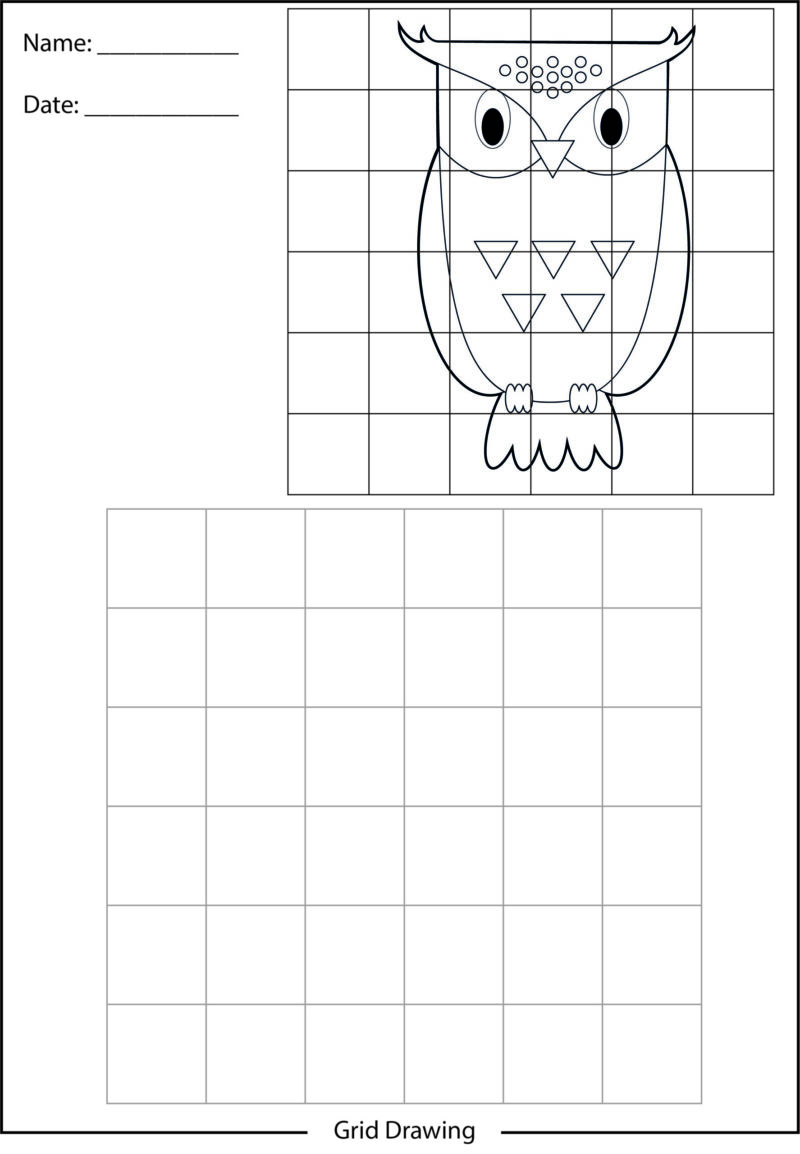
A grid drawing horse is a structured visual learning method that breaks down complex equine anatomy into manageable geometric coordinate squares for young learners. According to the National Association for the Education of Young Children (NAEYC), structured visual-spatial exercises significantly enhance fine-motor coordination, cognitive mapping, and early geometric comprehension in early elementary learners. By utilizing printable worksheets paired with real photographic references found in Grid Drawing collections, children learn to isolate visual data, measure relative distances, and translate observational information onto paper with precision.
Visual Learning & Skill Snapshot:
- Core Focus: Systematic spatial breakdown of equine forms via geometric coordinate grids.
- Target Skill: Spatial reasoning, visual discrimination, fine-motor proportion, and photo-based concept mastery.
- Key Recommendation: Pair photographic references with low-density 4×4 grids before transitioning to high-detail coordinate maps.
Core Principles and Visual Learning Overview
Grid drawing horse techniques transform overwhelming artistic tasks into accessible visual chunks by training the brain to analyze negative space, line orientation, and coordinate alignment rather than relying on abstract symbols. When developing early educational activities, educators utilize high-contrast photographic flashcards—similar to those found within Photo Flashcards—to establish clear visual boundaries. This methodology encourages children to look at individual squares rather than the whole animal, effectively reducing cognitive overload while reinforcing mathematical concepts like symmetry, scale, and grid mapping.
Key Specifications and Breakdown
| Age / Learning Stage | Visual Skill & Grid Ratio | Pedagogical Application & Scaffolding |
|---|---|---|
| Early Kindergarten (Ages 5-6) | 2×2 or 3×3 Grid Matrix | Focuses on basic contour recognition, major shapes, and gross hand-eye coordination using simplified horse outlines. |
| Late Kindergarten / 1st Grade (Ages 6-7) | 4×4 Standard Grid | Introduces proportion estimation, line direction tracking, and matching curved equine silhouettes across adjacent squares. |
| Early Elementary (Ages 7-9) | 6×6 Advanced Coordinate Grid | Emphasizes detailed anatomical observation, exact angle replication, and realistic scale translation from real photo references. |
Structured visual-spatial mapping fosters cognitive development and fine-motor precision by training children to analyze isolated geometric coordinates rather than abstract wholes. — National Art Education Association (NAEA)
Step-by-Step Practical Application and Printing Guidelines
Executing a successful grid drawing horse session requires clean, high-contrast printing and methodical pacing to ensure optimal cognitive absorption. Educators and parents must print matching reference cards and blank coordinate worksheets at identical scales to prevent spatial distortion. Beginners should start by numbering horizontal rows and lettering vertical columns to reinforce matrix navigation. Instruct learners to complete the central squares containing prominent features, such as the eye or muzzle, before tackling complex mane and hoof details. Incorporating these steps into daily Educational Activities guarantees steady, frustration-free progress.
Common Challenges and How to Avoid Them
Over-reliance on freehand sketching without checking coordinate boundaries remains the most frequent obstacle when children tackle equine grid drawings. Young learners often attempt to draw the entire horse from memory midway through the exercise, bypassing the individual grid squares that provide structural anchors. To counteract this tendency, provide physical masking cards that allow children to isolate one single square at a time, completely obscuring the surrounding image. This simple physical constraint forces strict reliance on direct visual observation, proper proportion estimation, and careful line replication.
💬 Frequently Asked Questions
Explore More Free Learning Printables and Visual Activities on WePhotoAgency
Access a comprehensive collection of structured visual learning tools, printable worksheets, and developmental resources by browsing the complete curriculum library available at WePhotoAgency.com. Dedicated educators, homeschooling parents, and pediatric learning specialists will discover endless opportunities to enrich early childhood education through high-impact graphic design and photography.
Visual Reference Gallery