Introduction
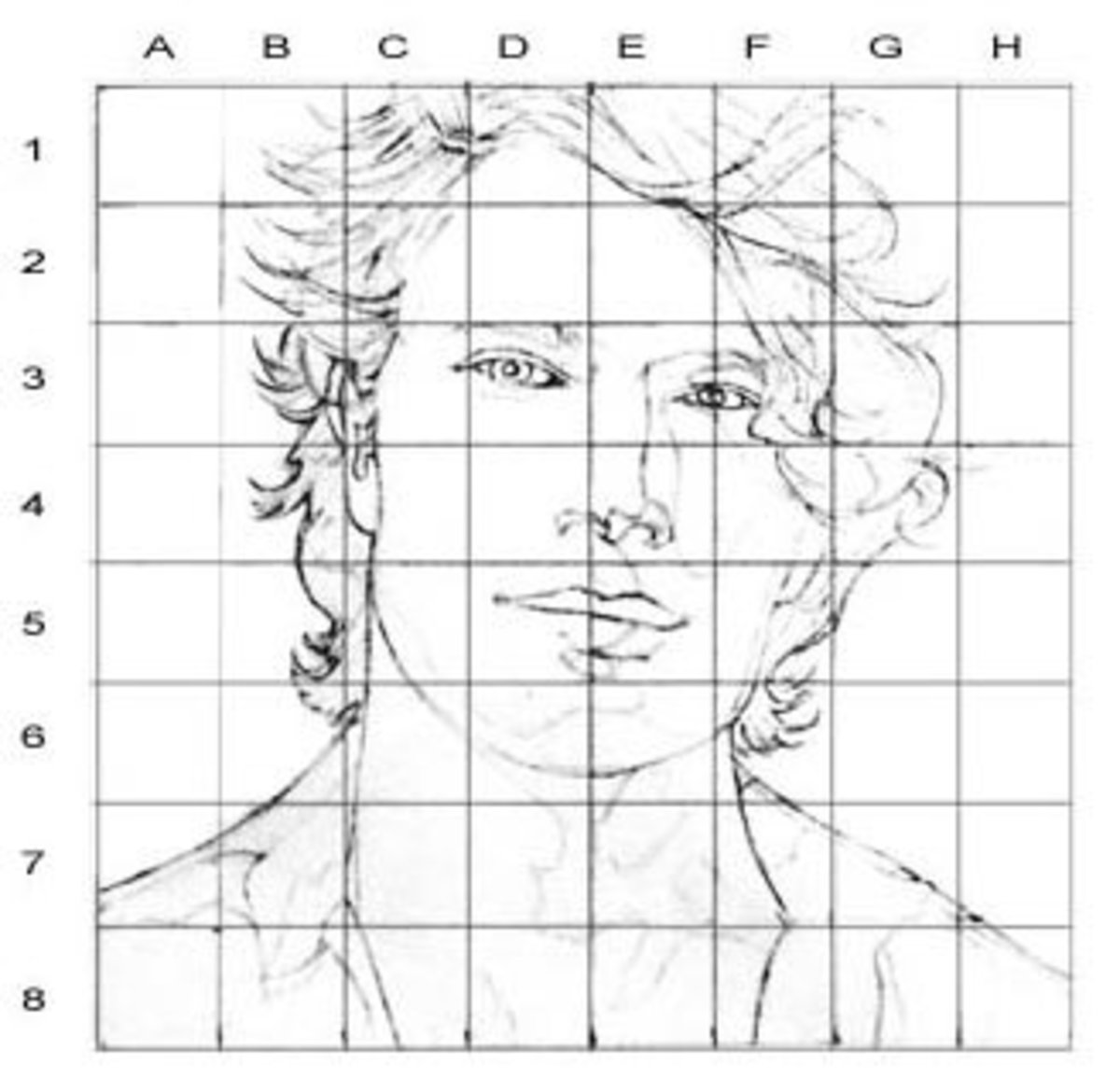
Drawing portraits with grid lines is a foundational cognitive and artistic technique that breaks complex visual forms into manageable coordinate sections to enhance spatial estimation and observation skills in early learners. According to the National Association for the Education of Young Children (NAEYC), structured visual-spatial activities actively support the development of mathematical proportion, fine motor control, and eye-hand coordination in early childhood education. By dividing reference imagery into distinct squares, children transition from abstract guessing to concrete visual analysis, successfully mapping facial features onto corresponding paper grids. This method bridges the gap between raw perception and precise draftsmanship, making portraiture accessible and frustration-free for young minds exploring Grid Drawing exercises.
Visual Learning & Skill Snapshot:
- Core Focus: Systematic coordinate-based visual mapping of human facial features using divided reference images.
- Target Skill: Spatial reasoning, visual discrimination, fine-motor proportion, and photo-based concept mastery.
- Key Recommendation: Pair high-contrast printable grids with realistic photo visual flashcards to reinforce shape and contour recognition.
Core Principles and Visual Learning Overview
Proportion estimation relies on the human brain’s capacity to isolate individual sections of a larger picture rather than attempting to process the entire visual field at once. When children engage with Photo Flashcards alongside gridded drawing worksheets, cognitive load decreases significantly because the visual data is partitioned into smaller chunks. This reduction in complexity allows young learners to focus exclusively on negative space, line curvature, and relative placement within a singular grid square. Educators frequently combine these drawing strategies with broader Educational Activities to cultivate multi-sensory engagement, ensuring that tactile motor skills develop concurrently with visual literacy and analytical perception.
Key Specifications and Breakdown
| Age / Learning Stage | Visual Skill & Grid Ratio | Pedagogical Application & Scaffolding |
|---|---|---|
| Ages 4-5 (Early Preschool) | 2×2 or 3×3 simple grids | Focuses on basic shape placement and gross motor pencil control using high-contrast facial flashcards. |
| Ages 6-7 (Early Elementary) | 4×4 balanced coordinate grids | Targets precise line intersections, eye-nose-mouth alignment, and relative scale estimation. |
| Ages 8-9 (Advanced Elementary) | 6×6 detailed portrait matrices | Emphasizes nuanced tonal values, intricate contour mapping, and independent proportion verification. |
Structured spatial tasks and grid-based visual decomposition significantly enhance cognitive mapping, geometric estimation, and analytical problem-solving capabilities in developing children. — National Art Education Association (NAEA)
Step-by-Step Practical Application and Printing Guidelines
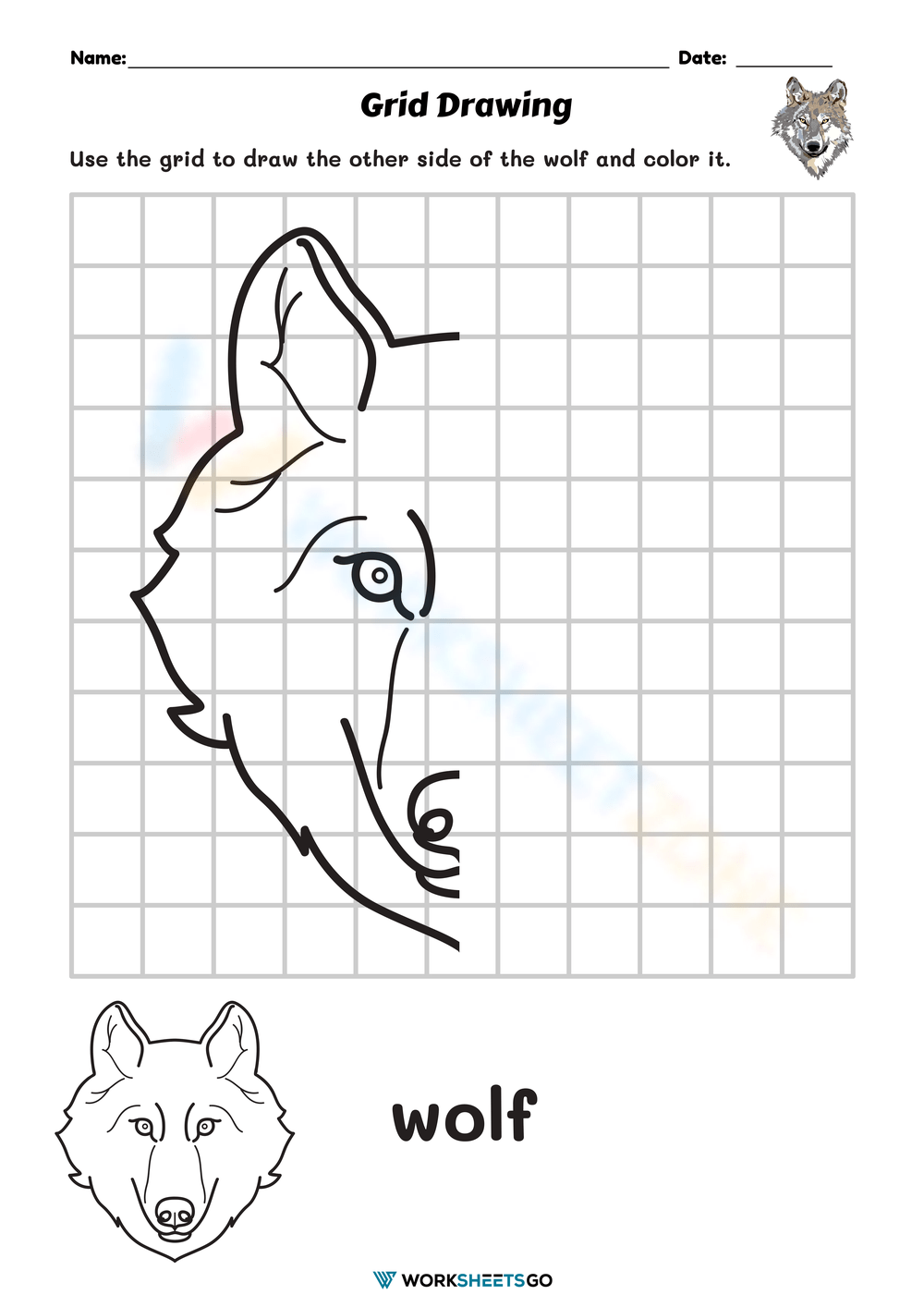
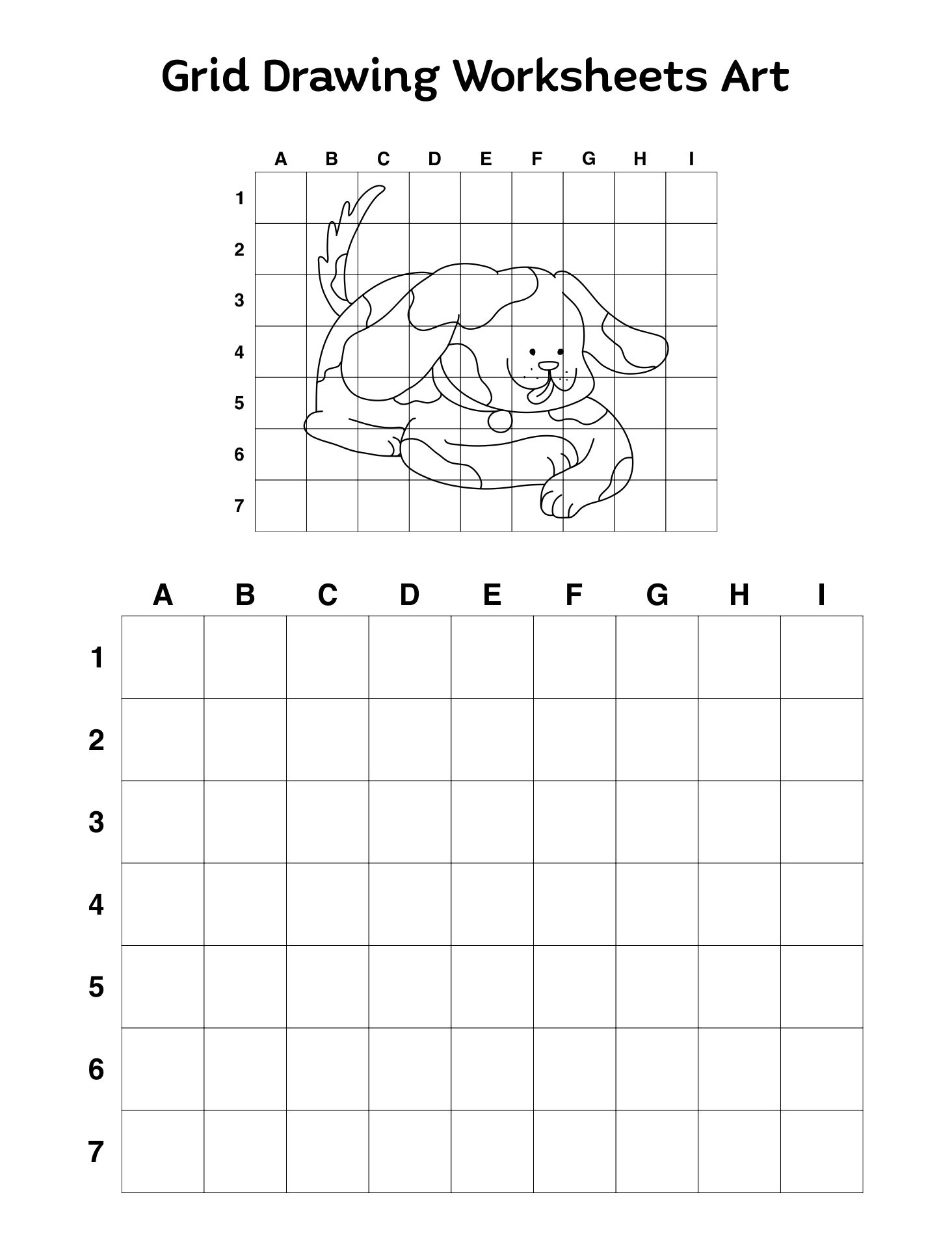
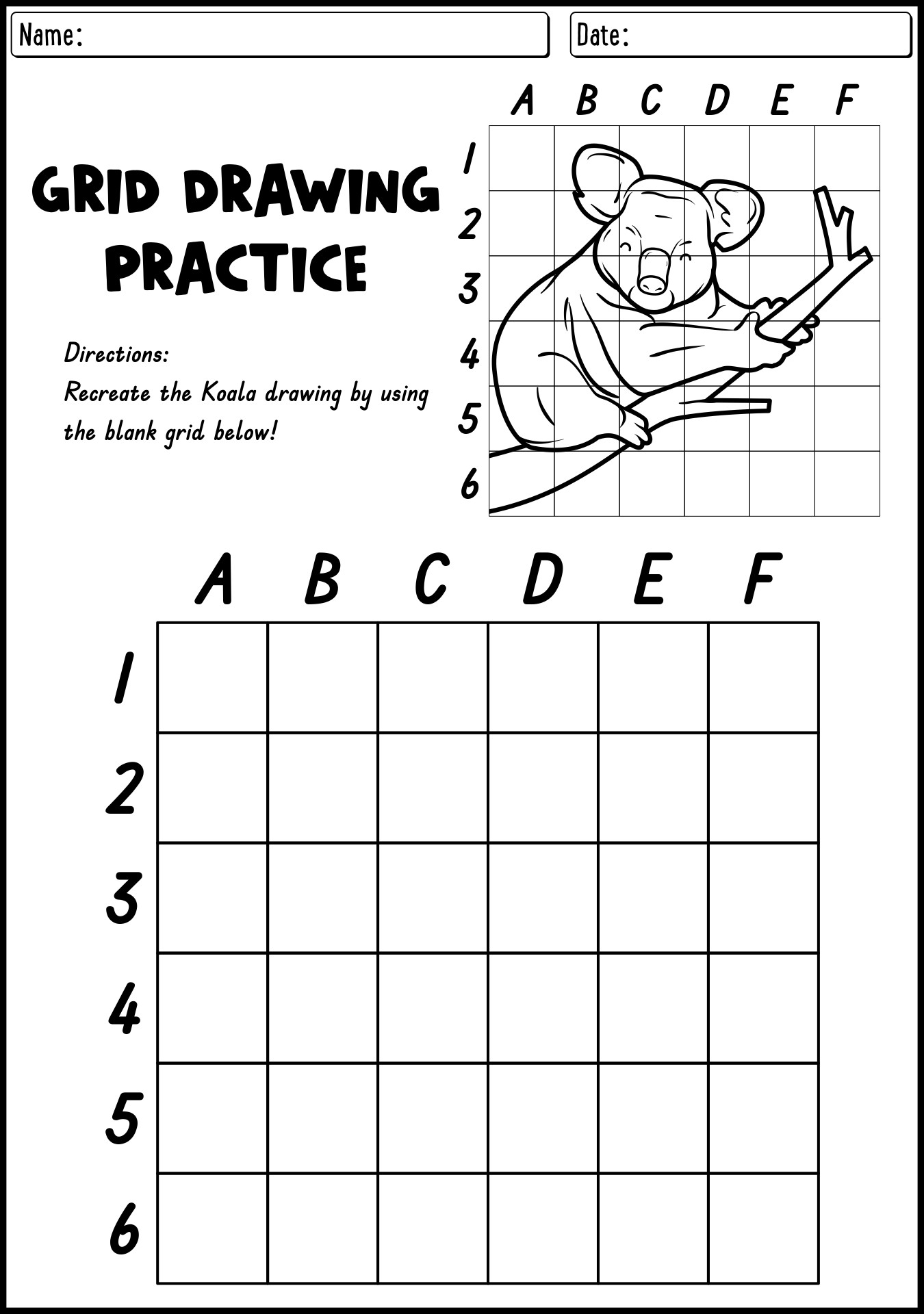
Effective implementation begins with selecting high-resolution, evenly lit reference portraits featuring clear facial landmarks. Print both the reference image and the blank drawing template with uniform grid dimensions, ensuring matching coordinate labels (such as letters across the top and numbers down the side) to assist young learners with tracking. Instruct children to isolate one specific square at a time using a movable paper window to block out surrounding visual distractions. Encourage them to look at where lines enter and exit the borders of each individual square before attempting to sketch the interior curves, reinforcing methodical observation over rushed estimation.
Common Challenges and How to Avoid Them
Young learners frequently struggle with grid drawing when they attempt to copy the entire face at once instead of focusing strictly on isolated grid coordinates. Overcoming this hurdle requires educators to actively demonstrate how to cover adjacent squares, directing the child’s attention to a single coordinate box like B2 before moving to B3. Another common obstacle involves heavy, rigid pencil pressure that prevents easy erasing; providing soft HB drawing pencils and encouraging light, feathery sketching strokes ensures children can adjust proportions without damaging the paper surface during corrections.
💬 Frequently Asked Questions
Explore More Free Learning Printables and Visual Activities on WePhotoAgency
Expanding a child’s creative capabilities and spatial reasoning requires access to structured, high-quality developmental resources tailored for early learners. Explore the complete collection of printable worksheets, visual flashcards, and creative guides available across the library at WePhotoAgency.com to support holistic artistic growth at home or in the classroom.
Visual Reference Gallery