Introduction
A grid drawing assistant acts as a foundational cognitive scaffold that breaks complex visual stimuli into manageable coordinate squares for early learners. According to the National Art Education Association (NAEA), structured visual exercises significantly enhance observational accuracy, proportional reasoning, and fine-motor coordination in young children. By pairing printable geometric lattices with real-world photo references, educators help students transition from abstract visual guessing to precise spatial analysis. Integrating these methods into early childhood curricula bridges the gap between raw visual perception and controlled hand-eye execution.
Visual Learning & Skill Snapshot:
- Core Focus: Utilizing a grid drawing assistant to simplify complex images into coordinate-based squares for early learners.
- Target Skill: Spatial reasoning, visual discrimination, fine-motor proportion, and photo-based concept mastery.
- Key Recommendation: Pair high-contrast real photo references with simplified 2×2 or 3×3 grids before progressing to complex layouts.
Core Principles and Visual Learning Overview
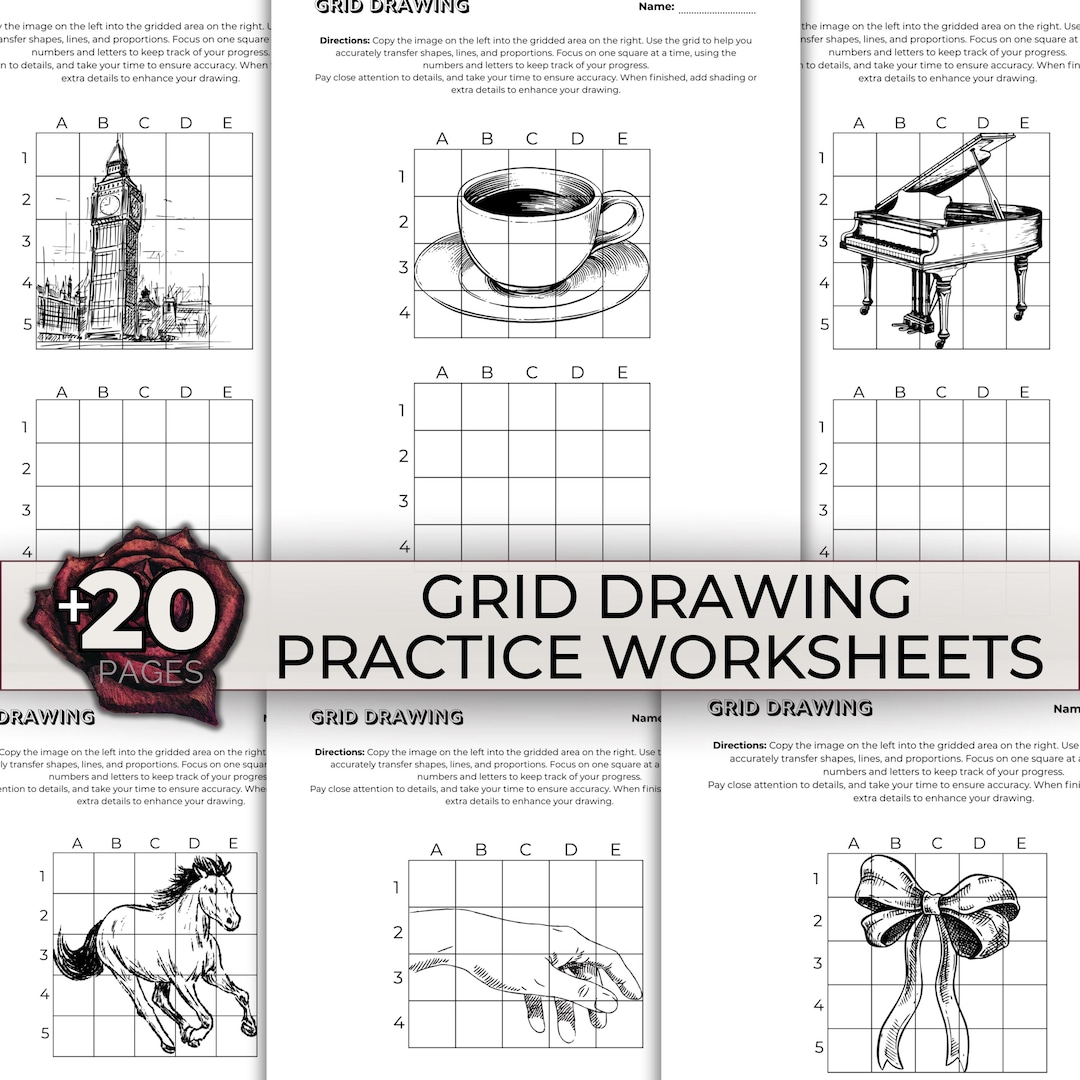
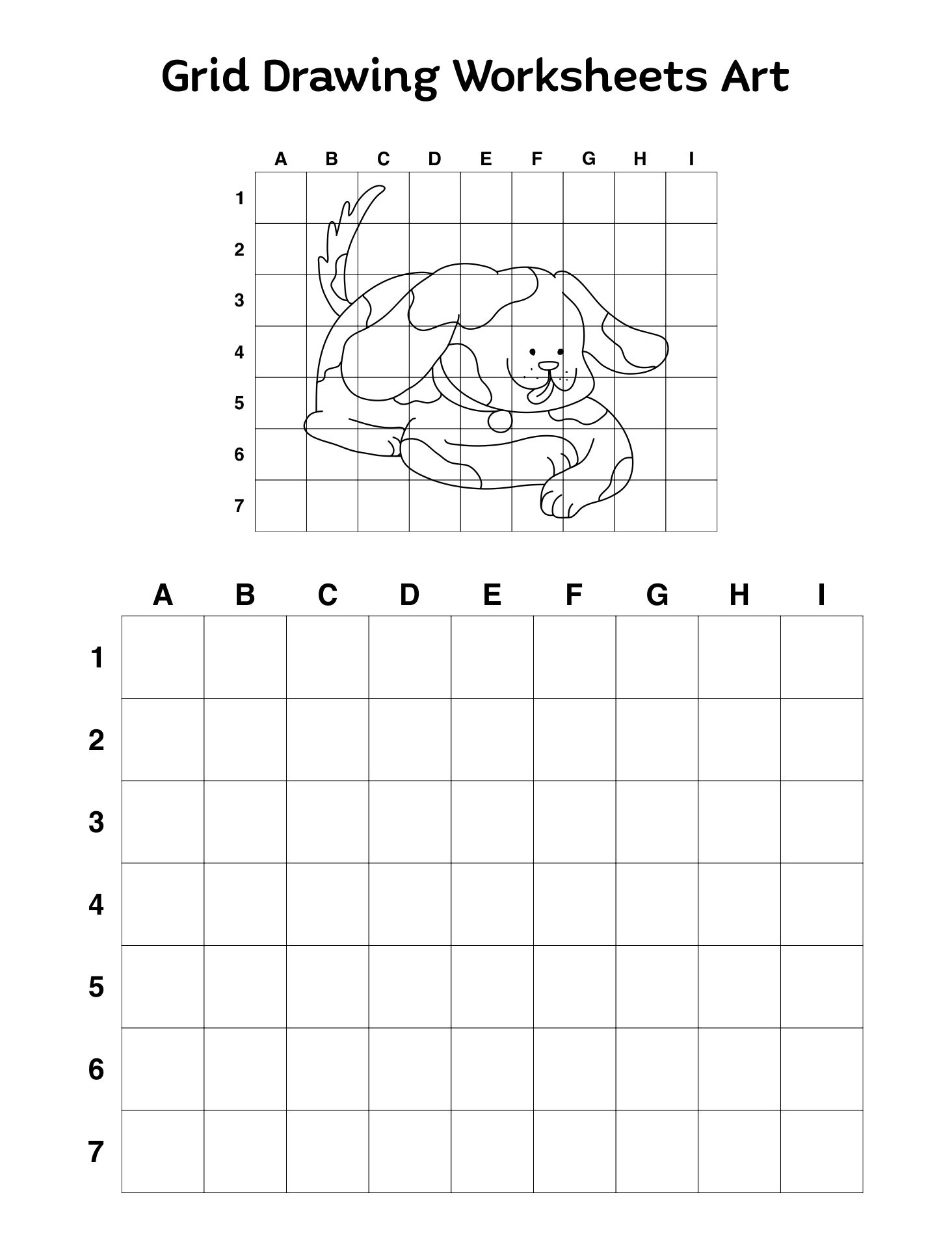
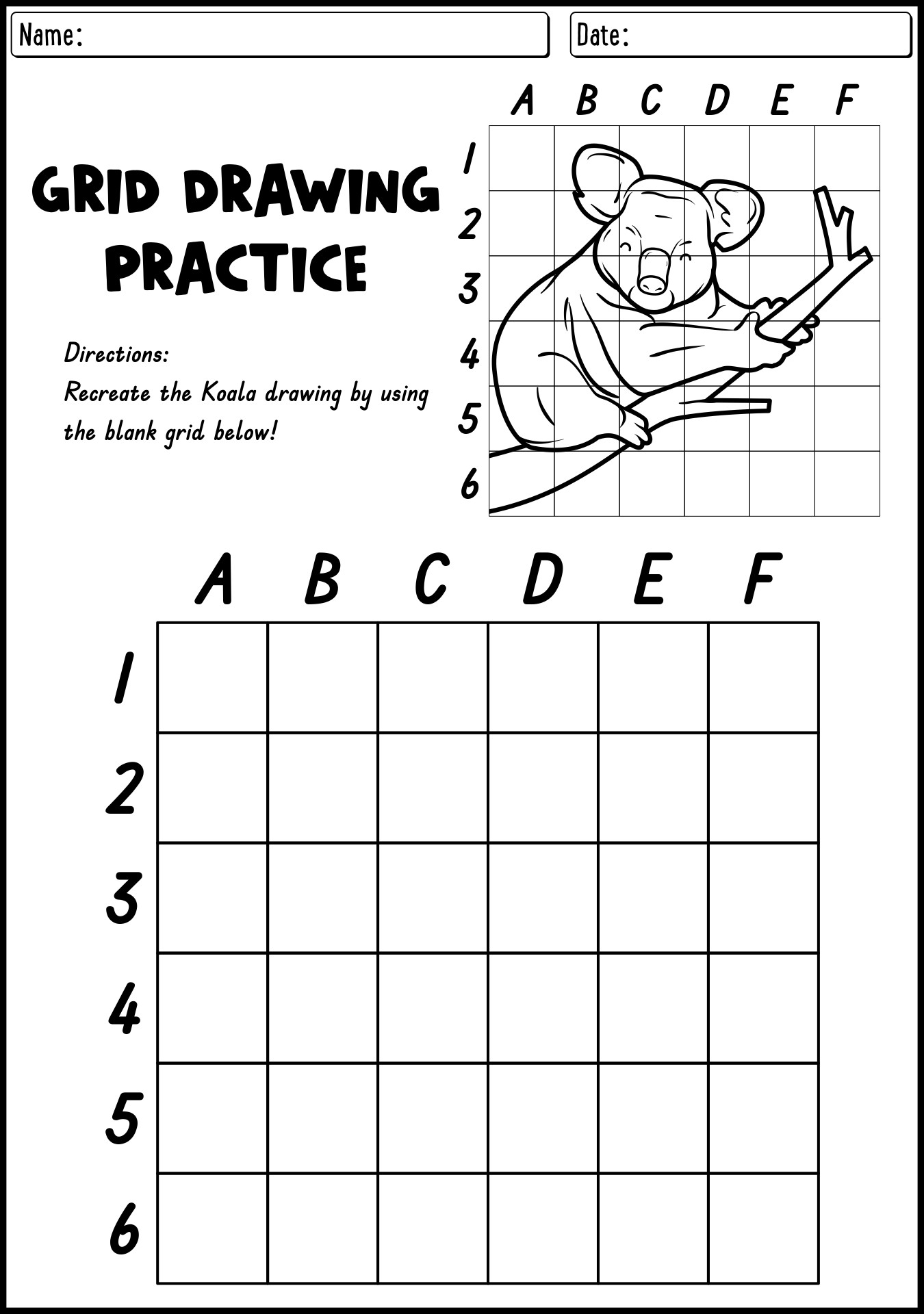
Spatial awareness is successfully developed when children learn to isolate visual information quadrant by quadrant rather than attempting to process an entire scene simultaneously. A reliable grid drawing assistant utilizes intersecting horizontal and vertical axes to establish clear coordinates, transforming abstract shapes into identifiable geometric intersections. This segmentation strategy aligns directly with established principles found in Grid Drawing exercises, which teach young artists how to measure relative distances and angles accurately. When combined with realistic Photo Flashcards, learners connect tangible objects to structural mapping, reinforcing both cognitive development and artistic confidence simultaneously.
Key Specifications and Breakdown
| Age / Learning Stage | Visual Skill & Grid Ratio | Pedagogical Application & Scaffolding |
|---|---|---|
| Ages 4-5 (Early Preschool) | 2×2 Grid; Basic shapes and primary outlines | Focuses on quadrant identification, using Educational Activities to teach top-left to bottom-right scanning patterns. |
| Ages 6-7 (Early Elementary) | 3×3 Grid; Detailed objects and animals | Encourages line-matching and curve estimation, bridging basic observation with intermediate Grid Drawing techniques. |
| Ages 8+ (Advanced Elementary) | 4×4 or 5×5 Grid; Complex real photo subjects | Refines proportional scaling and negative space awareness using high-detail Photo Flashcards as reference templates. |
Structured visual division exercises demonstrably improve coordinate tracking, fine-motor precision, and cognitive mapping capabilities during early childhood development. — National Art Education Association (NAEA). For more related activities, check out our Grid Drawing Bird.
Step-by-Step Practical Application and Printing Guidelines
Executing a successful grid-based drawing session requires high-contrast printing, durable paper stock, and a progressive reduction of visual prompts. Educators and parents should print matching reference images and blank drawing templates on sturdy 24lb or heavier paper to prevent tearing during pencil erasing. Instructors begin by demonstrating how to look inside a single grid square on the reference image, identifying where lines intersect the borders, and replicating those exact coordinate points on the blank grid worksheet. As students gain confidence, reduce verbal prompts and allow independent scanning across the grid matrix to foster self-correction and independent spatial reasoning.
Common Challenges and How to Avoid Them
Young learners frequently experience frustration when attempting to draw across multiple grid squares simultaneously instead of focusing on one isolated coordinate at a time. To prevent this common error, provide a physical masking card or paper window that covers all surrounding squares except the active quadrant under observation. Additionally, ensure that printouts maintain identical grid dimensions on both the reference sheet and the working sheet to eliminate scaling confusion. Cultivating patience through incremental quadrant completion transforms a potentially overwhelming drawing task into an achievable, highly engaging puzzle.
💬 Frequently Asked Questions
Explore More Free Learning Printables and Visual Activities on WePhotoAgency
Accessing a robust collection of specialized visual aids empowers educators and parents to cultivate foundational spatial intelligence in every child. Discover a wide selection of printable resources, structured drawing worksheets, and cognitive learning tools designed to support early childhood development by visiting WePhotoAgency.com for all educational planning needs.
Visual Reference Gallery