Introduction
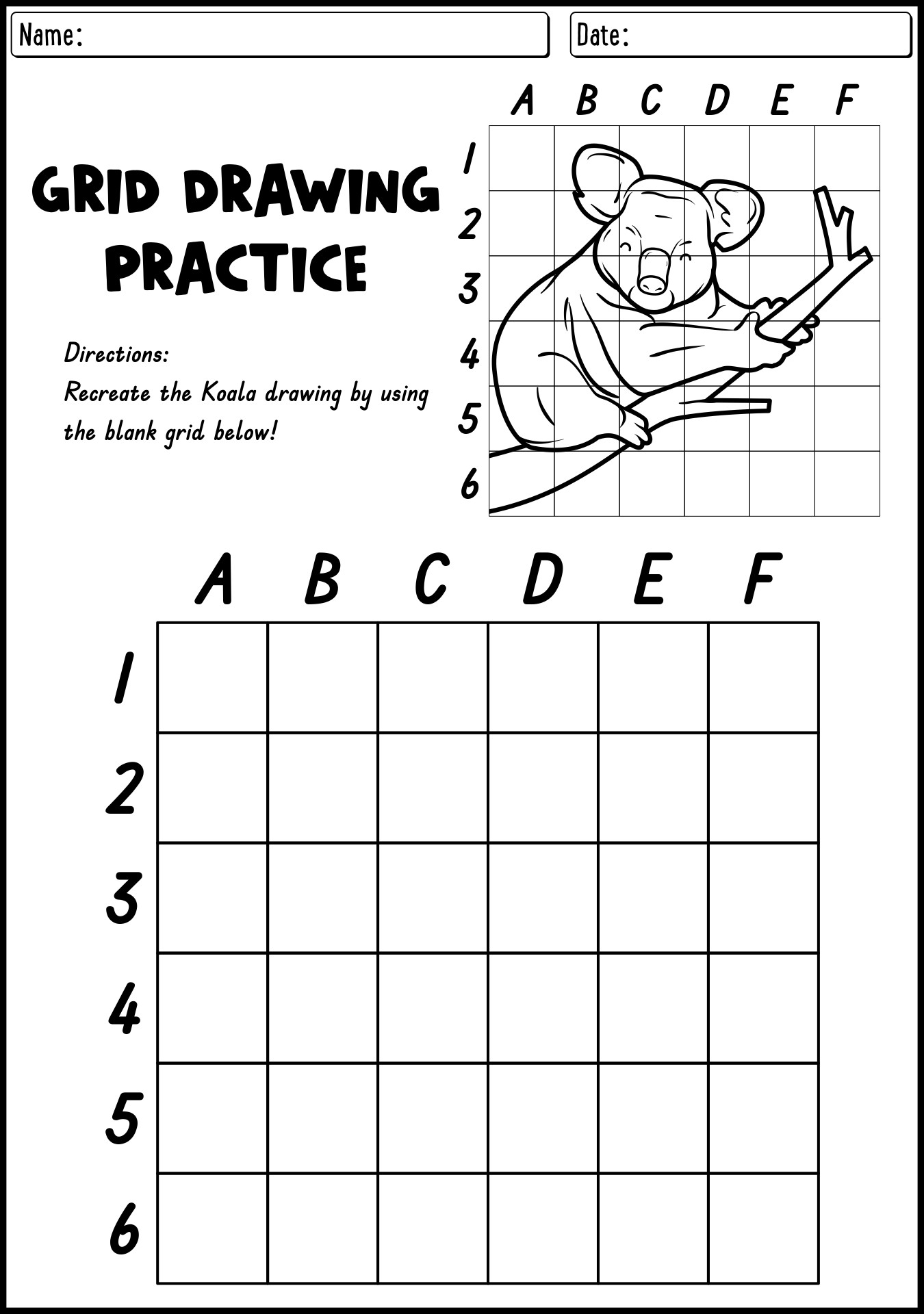
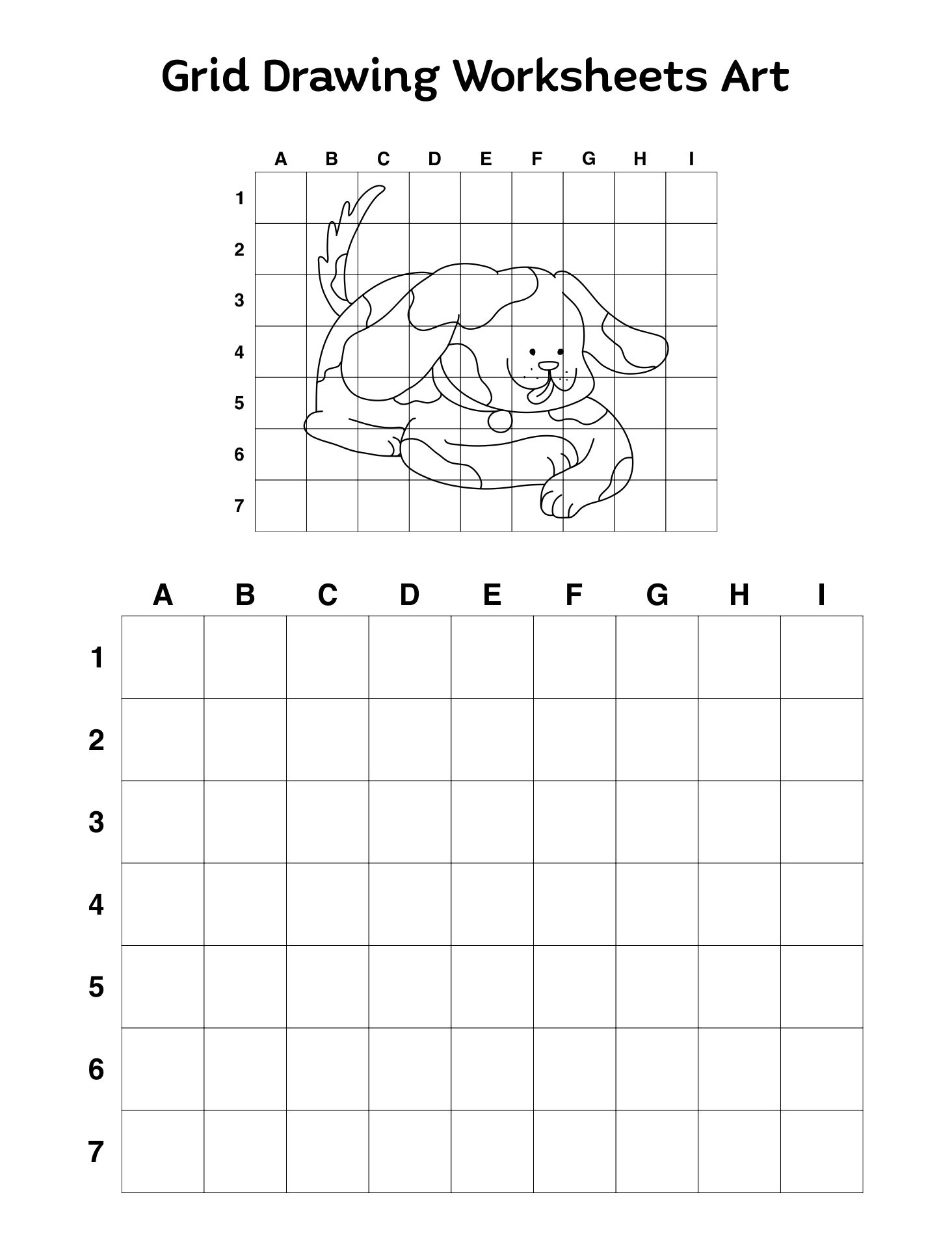
Grid drawing black and white is a foundational visual learning technique that deconstructs complex photographic imagery into manageable coordinate squares to build spatial awareness, proportion estimation, and precise observational skills in young learners. According to the National Art Education Association (NAEA), structured observational drawing activities significantly enhance fine-motor coordination, visual discrimination, and cognitive mapping abilities during early childhood development. This monochrome method eliminates chromatic distraction, allowing students to focus purely on line, value, contour, and precise coordinate plotting. Educators leverage these strategies within specialized Grid Drawing curricula to transition children from abstract sketching to accurate, realistic rendering.
Visual Learning & Skill Snapshot:
- Core Focus: Monochrome coordinate-based visual duplication using structured reference grids.
- Target Skill: Spatial reasoning, visual discrimination, fine-motor proportion, and photo-based concept mastery.
- Key Recommendation: Start early learners with simple 2×2 or 3×3 grids before advancing to higher-density geometric templates.
Core Principles and Visual Learning Overview
Monochrome grid drawing operates by training the brain to isolate individual fragments of a larger picture rather than attempting to process the entire visual composition simultaneously. By breaking down real photographic subjects into discrete grid squares, children learn to measure angles, negative space, and line intersections with mathematical precision. This method bridges the gap between abstract visual observation and concrete hand-eye coordination. When combined with authentic Photo Flashcards, students develop robust mental libraries of real-world objects, animals, and architectural forms, thereby accelerating cognitive processing and artistic confidence.
Key Specifications and Breakdown
| Age / Learning Stage | Visual Skill & Grid Ratio | Pedagogical Application & Scaffolding |
|---|---|---|
| Ages 4–5 (Preschool) | Basic shapes on a 2×2 grid | Focus on tracing vertical and horizontal lines; pair with real-world matching exercises. |
| Ages 6–7 (Early Elementary) | Simple contours on a 3×3 grid | Encourage square-by-square isolation using blocking cards to block visual clutter. |
| Ages 8–10 (Upper Elementary) | Complex subjects on a 4×4+ grid | Emphasize proportion estimation, shading gradients, and accurate coordinate mapping. |
Structured grid partitioning improves spatial working memory and analytical observation by reducing cognitive overload during complex visual synthesis tasks — National Art Education Association (NAEA)
Step-by-Step Practical Application and Printing Guidelines
Successful implementation of monochrome grid worksheets begins with high-contrast, clean-lined reference materials printed on durable matte cardstock to prevent glare and pencil smudging. Instructors should select age-appropriate photographic templates, ensuring the grid lines are distinct yet thin enough not to overpower the core subject matter. Learners should be guided to work systematically from the top-left square to the bottom-right square, or to focus on central focal points first to anchor overall proportions. Educators can further expand these lessons by integrating targeted Educational Activities that reinforce coordinate reading, symmetry, and geometric scaling.
Common Challenges and How to Avoid Them
Young learners frequently struggle with grid drawing when they attempt to draw the whole picture at once instead of treating each square as an independent puzzle piece. To prevent frustration, supply students with an L-shaped masking card to cover surrounding squares, isolating only the active working coordinate. Another common pitfall involves inaccurate pencil pressure, which makes erasing guide lines difficult; encourage light, feather-like initial sketching before committing to final dark contours. Providing explicit instruction on measuring distances from grid borders ensures children maintain correct proportions across adjacent squares without distorting the final image.
💬 Frequently Asked Questions
Explore More Free Learning Printables and Visual Activities on WePhotoAgency
Access a comprehensive collection of downloadable resources designed to support spatial reasoning, artistic expression, and cognitive growth. Explore the complete library of printable worksheets, visual tools, and developmental guides by visiting WePhotoAgency.com today.
Visual Reference Gallery