Introduction
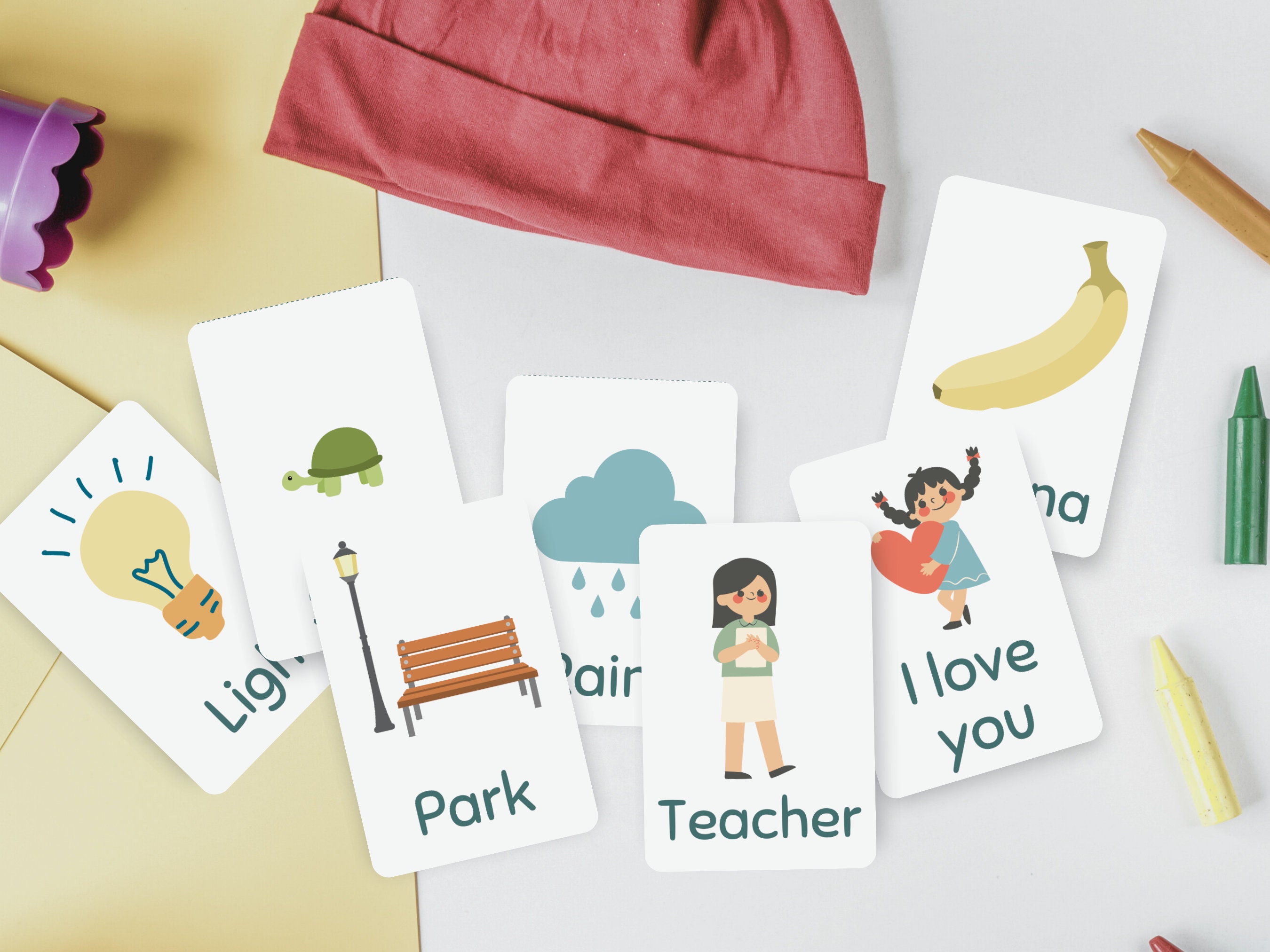
Picture flashcards for babies serve as foundational visual learning tools that accelerate early cognitive development, visual discrimination, and spatial awareness by utilizing high-contrast, authentic photography instead of abstract cartoon illustrations. According to the National Association for the Education of Young Children (NAEYC), exposure to real-world visual stimuli during infancy significantly enhances neurological pathway formation, visual literacy, and attention regulation. Integrating these realistic visual resources into daily routines supports early concept mastery and prepares young learners for advanced academic tasks such as Grid Drawing and proportional observation. Educators and caregivers can leverage these Photo Flashcards to bridge the gap between concrete objects and abstract cognitive representations during critical developmental windows.
Visual Learning & Skill Snapshot:
- Core Focus: Real-photo visual flashcards designed for early infancy cognitive development.
- Target Skill: Spatial reasoning, visual discrimination, proportion estimation, and real-world object recognition.
- Key Recommendation: Use high-resolution, uncrowded photographic prints paired with structured Educational Activities to maximize cognitive retention.
Core Principles and Visual Learning Overview
Spatial reasoning and visual proportion estimation begin with early exposure to uncluttered, high-resolution photographic imagery that accurately reflects the physical environment. Picture flashcards for babies establish a vital baseline for observational drawing and spatial coordination by training the infant eye to recognize edges, symmetry, and scale without the distortion of stylized drawings. When children repeatedly process authentic photographic representations, neural pathways responsible for decoding complex visual data strengthen rapidly. This early visual processing capacity directly translates to later success in mathematics, fine-motor coordination, and geometric proportion mapping. Furthermore, structuring these visual tools alongside printable grid templates encourages young learners to transition smoothly from passive observation to active spatial mapping.
Key Specifications and Breakdown
| Age / Learning Stage | Visual Skill & Grid Ratio | Pedagogical Application & Scaffolding |
|---|---|---|
| 0-6 Months (Infancy) | High-contrast, 1:1 single object focus | Hold flashcards 8-12 inches away to build tracking and focal fixation. |
| 6-12 Months (Mobile Infant) | Detailed object-in-context, 2×2 grid preview | Encourage touching, pointing, and matching physical objects to cards. |
| 12-24 Months (Toddler) | Complex real photos, simple grid alignment | Introduce basic proportion tracking and spatial sorting exercises. |
Visual stimuli must prioritize ecological validity, featuring realistic lighting, true-to-life proportions, and uncluttered backgrounds to optimize infant neurological development. — National Association for the Education of Young Children (NAEYC). Related guide: Free Printable Halloween Flashcards.
Step-by-Step Practical Application and Printing Guidelines
Implementing picture flashcards for babies requires careful preparation of physical printouts to ensure durability, safety, and optimal visual clarity for developing eyes. Begin by selecting high-resolution photographic templates designed for clear printing on heavy cardstock (minimum 110 lb weight) to prevent tearing and light bleed-through. Laminate the finished cards using rounded corners to ensure complete child safety during tactile exploration sessions. Present one flashcard at a time in a well-lit environment free from visual distractions to maintain focused attention. Gradually incorporate simple grid frames around the cards as children grow, allowing them to practice early proportion estimation by observing how individual visual elements occupy specific coordinate squares.
Common Challenges and How to Avoid Them
Sensory overload and rapid card-cycling represent the most frequent pitfalls when introducing visual learning materials to infants and young toddlers. Caregivers often show too many images at once or utilize overly complex backgrounds that obscure the primary focal point of the flashcard. To prevent cognitive fatigue, limit sessions to two to three minutes, restrict the active rotation to a small set of cards, and always ensure the imagery features clean, isolated subjects against neutral backgrounds. When transitioning older toddlers into grid-based proportion exercises, avoid forcing rigid drawing mechanics; instead, maintain a playful, exploratory approach that honors natural developmental timelines.
💬 Frequently Asked Questions
Explore More Free Learning Printables and Visual Activities on WePhotoAgency
Unlock a comprehensive library of educator-designed visual resources, high-resolution photography flashcards, and developmental worksheets by visiting WePhotoAgency.com. Dedicated parents, homeschool educators, and art teachers will discover endless tools crafted to foster early spatial reasoning, artistic observation, and cognitive growth.
Visual Reference Gallery