Introduction
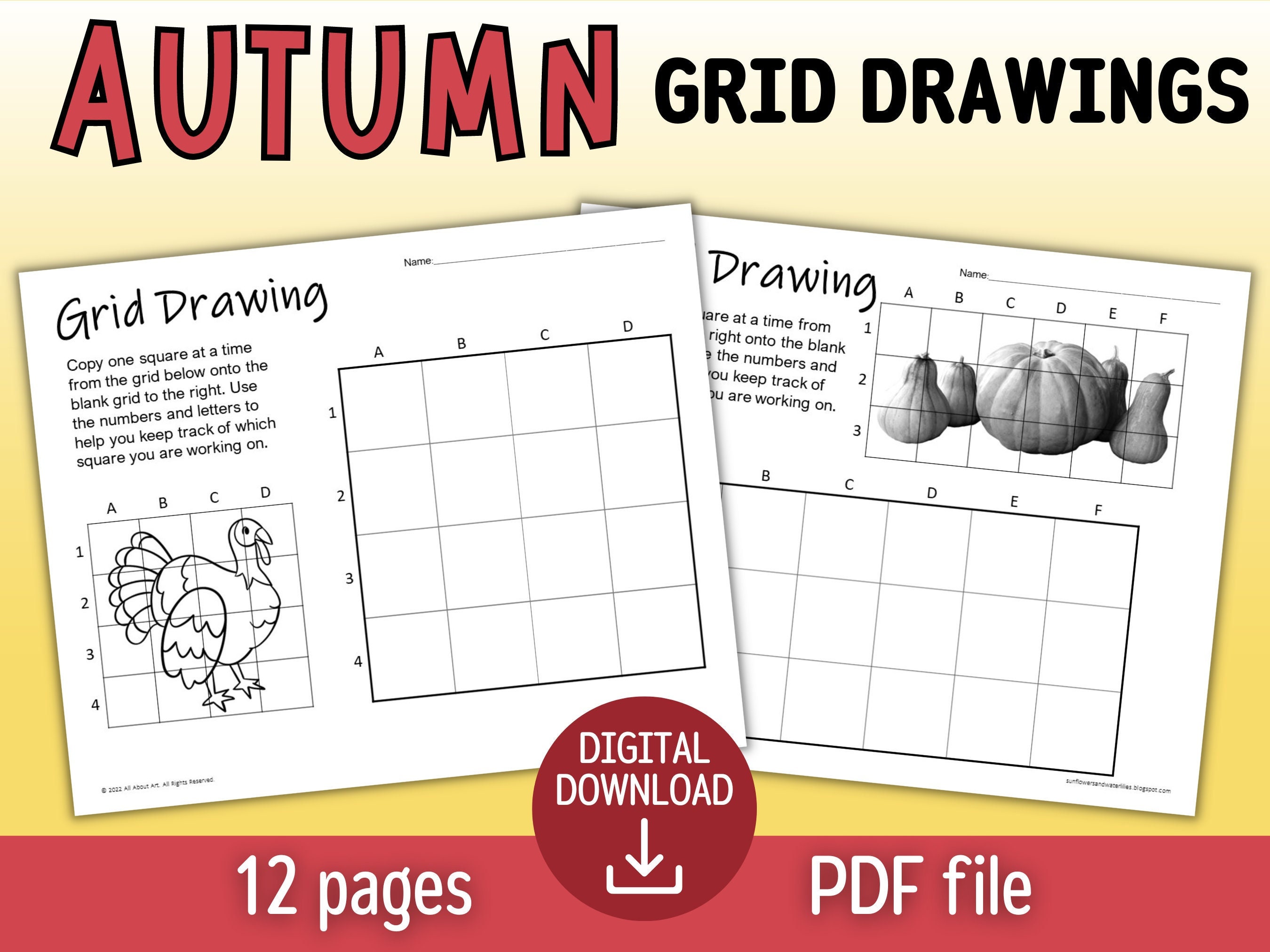
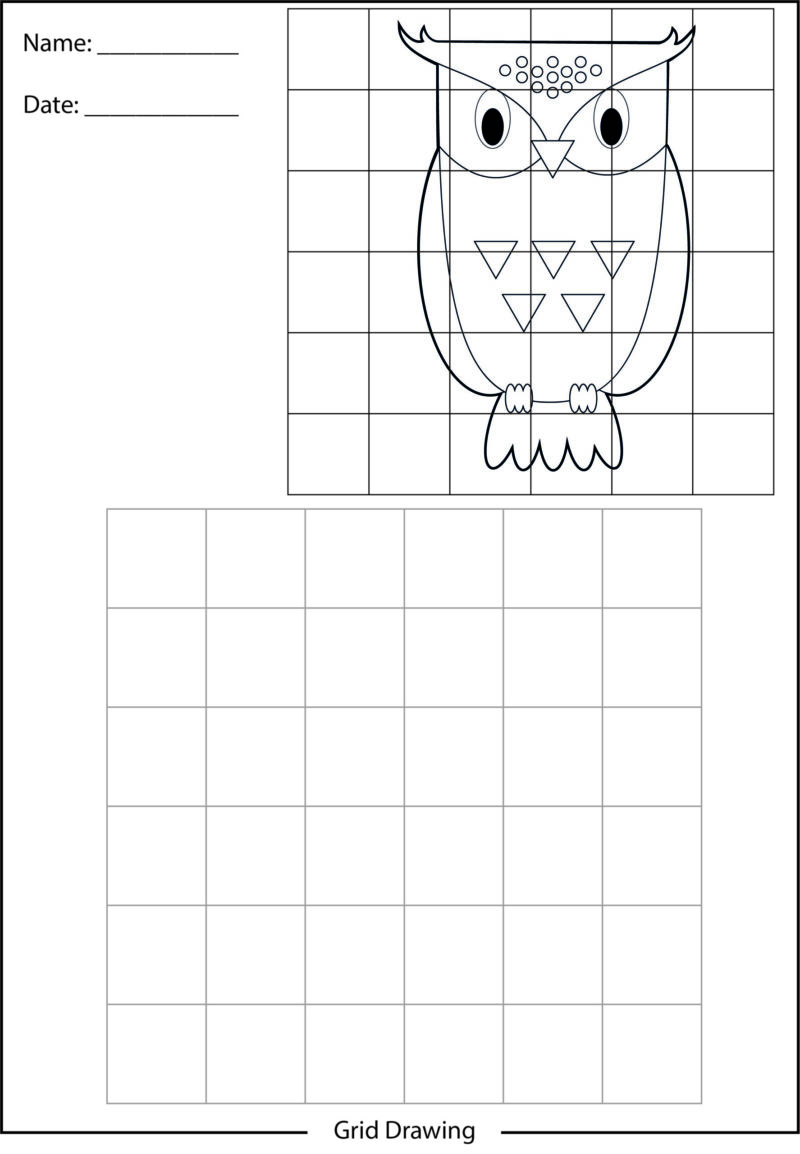
A grid drawing grid maker is an invaluable digital or physical tool that overlays uniform coordinate squares onto reference photographs to simplify complex visual data into manageable, localized drawing blocks for young learners. According to the National Association for the Education of Young Children (NAEYC), structured visual-spatial activities profoundly enhance fine-motor coordination and cognitive mapping during early childhood development. Utilizing specialized printables, such as those found within curated Grid Drawing collections, empowers educators to break down intimidating real-world imagery into approachable segments. Children learn to isolate visual information cell by cell, mitigating the cognitive overload typically associated with freehand proportion estimation.
Visual Learning & Skill Snapshot:
- Core Focus: Systematic spatial breakdown of real photographs using coordinate-based drawing grids.
- Target Skill: Spatial reasoning, visual discrimination, fine-motor proportion, and attentive observation.
- Key Recommendation: Pair high-contrast reference grids with parallel blank graphing sheets to anchor coordinate tracking.
Core Principles and Visual Learning Overview
Proportional scaling through coordinate mapping teaches young learners how to translate three-dimensional visual stimuli onto a two-dimensional plane with exceptional accuracy. By pairing grid worksheets with Photo Flashcards, facilitators bridge the gap between abstract geometrical graphing and concrete real-world object recognition. The child’s brain shifts from viewing an entire complex image—like an animal or botanical specimen—to analyzing distinct intersecting lines, curves, and negative spaces contained within a single matrix square. This methodical process strengthens hand-eye coordination, reinforces left-to-right scanning habits essential for literacy, and cultivates patience through structured step-by-step artistic execution.
Key Specifications and Breakdown
| Age / Learning Stage | Visual Skill & Grid Ratio | Pedagogical Application & Scaffolding |
|---|---|---|
| Ages 4–5 (Early Preschool) | 2×2 or 3×3 simple grids | Focuses on basic contour tracking, pairing oversized photo flashcards with bold coordinate lines. |
| Ages 6–7 (Early Elementary) | 4×4 or 5×5 balanced matrices | Teaches mid-level proportion scaling, encouraging line intersection observation and shape continuity. |
| Ages 8–10 (Advanced Elementary) | 6×6 up to 10×10 high-density grids | Refines detailed observational sketching, complex shading, and accurate angular estimation. |
Structured visual-spatial interventions significantly accelerate proportional understanding and cognitive mapping in early childhood learners. — National Art Education Association (NAEA)
Step-by-Step Practical Application and Printing Guidelines
Executing a successful grid-based drawing lesson requires crisp contrast, perfectly aligned coordinate markers, and sturdy print materials that withstand repeated erasing and pencil pressure. Educators should select clear, high-resolution photographic references and apply a clean grid overlay using standard digital photo editing tools or dedicated worksheet generators. Print both the gridded reference image and an identical blank grid sheet on heavyweight cardstock to prevent tearing during heavy tracing and sketching exercises. Introduce Educational Activities by demonstrating how to locate a specific coordinate marker—such as square B-3—on both the master photo and the blank drawing sheet before instructing children to replicate the enclosed lines.
Common Challenges and How to Avoid Them
Children frequently struggle with grid drawing when they attempt to sketch the entire image at once rather than focusing strictly on one individual square at a time. To eliminate this frustration, provide opaque tracking windows or index cards that mask off surrounding cells, forcing the learner to isolate and analyze only the active coordinate square. Another common pitfall involves grid line misalignment between the reference photo and the target paper, which distorts final proportions. Utilizing professionally formatted print templates guarantees exact 1:1 or scaled dimensional ratios, ensuring frustration-free artistic progression and sustained confidence building.
💬 Frequently Asked Questions
Explore More Free Learning Printables and Visual Activities on WePhotoAgency
Enhance early childhood curriculums, homeschool portfolios, and art studio lessons by exploring the comprehensive resources available directly through WePhotoAgency.com. Discover an extensive library of professional-grade printables, specialized visual tools, and developmental resources designed to inspire creativity and cognitive growth.
Visual Reference Gallery