Introduction
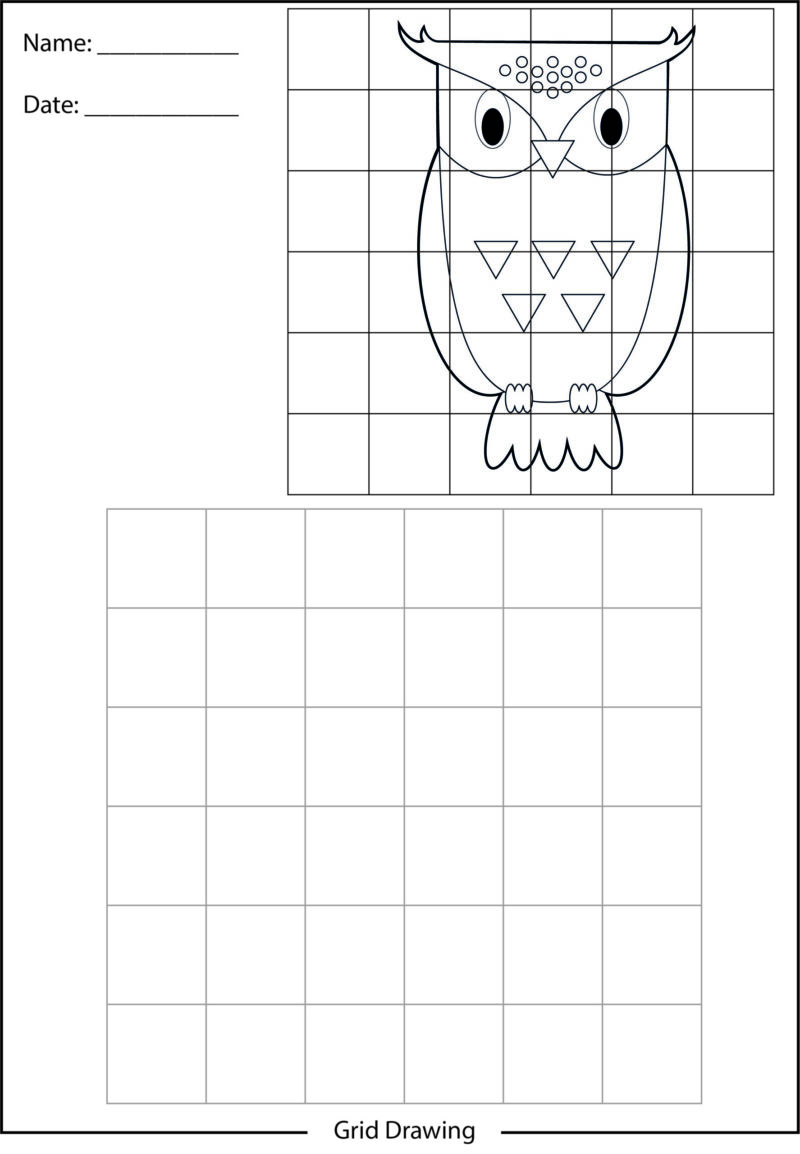
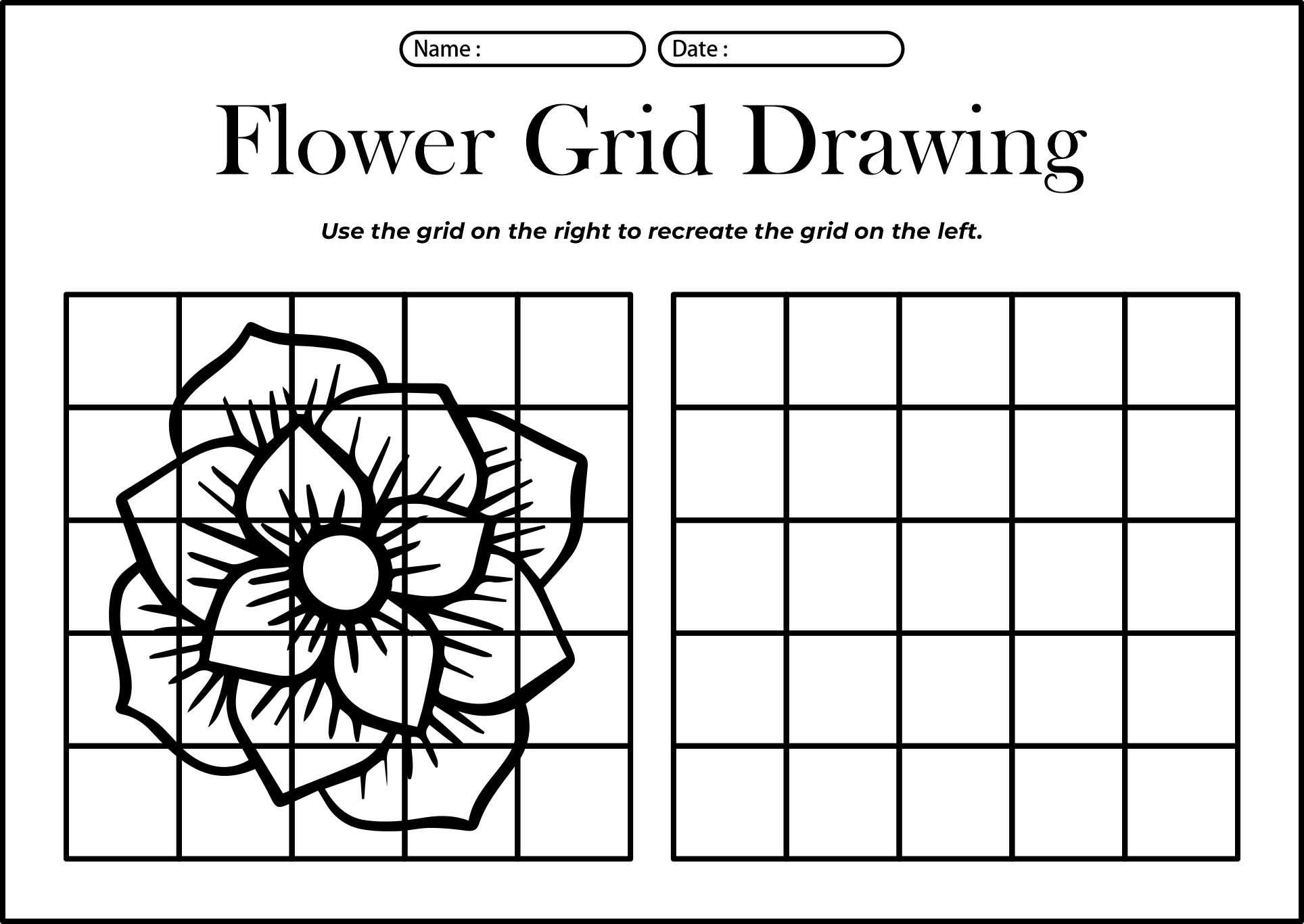
A grid drawing for kids printable is a structured visual learning worksheet that divides a reference image into smaller coordinate squares to help young learners replicate proportions with accuracy. According to the National Art Education Association (NAEA), structured visual breaking exercises systematically enhance children’s observational drawing capabilities and spatial cognition. Educators and parents utilize these printable templates alongside Photo Flashcards to bridge the gap between abstract visual perception and concrete fine-motor execution. By isolating sections of an image, children avoid the cognitive overload of rendering an entire subject at once. This foundational Educational Activities resource supports early elementary development by transforming complex visual stimuli into manageable geometric coordinates.
Visual Learning & Skill Snapshot:
- Core Focus: Coordinate-based visual mapping utilizing a grid drawing for kids printable.
- Target Skill: Spatial reasoning, visual discrimination, fine-motor proportion, and photo-based concept mastery.
- Key Recommendation: Pair high-contrast printable photographic grids with pencil-scaffolding steps for optimal engagement.
Core Principles and Visual Learning Overview
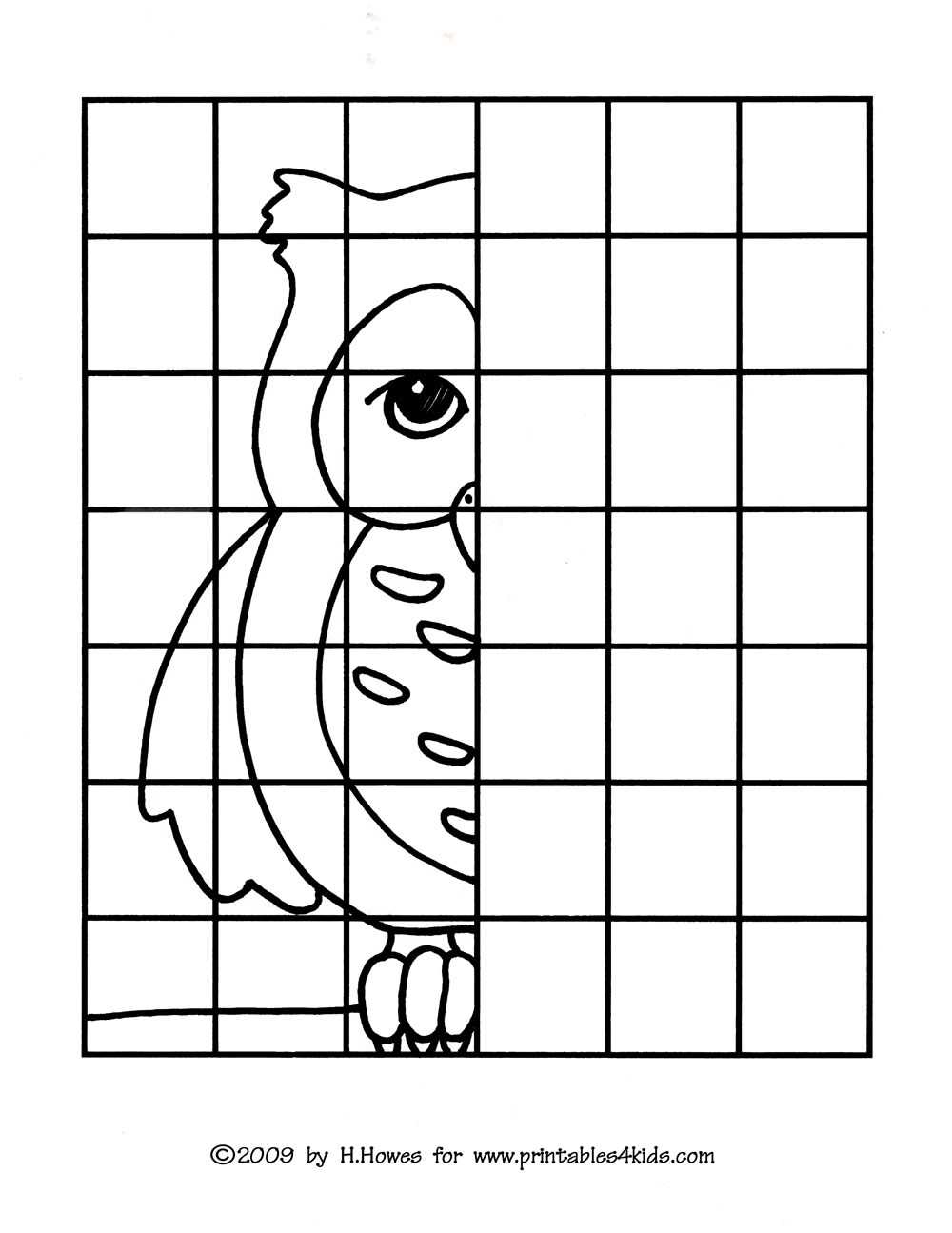
Grid drawing principles rely on breaking down complex visual data into localized spatial components that young minds can analyze independently. When children utilize a Grid Drawing resource, the brain shifts from recognizing whole objects to observing lines, angles, and negative space within a bounded box. This methodology builds cognitive frameworks for geometric mapping, symmetry recognition, and proportional scaling. Early learners develop advanced hand-eye coordination as pencil movements mirror exact coordinates found on the master image. Integrating realistic photographic references into these templates enhances contextual learning, allowing children to connect symbolic drawing techniques with authentic visual imagery.
Key Specifications and Breakdown
| Age / Learning Stage | Visual Skill & Grid Ratio | Pedagogical Application & Scaffolding |
|---|---|---|
| Ages 4–5 (Preschool) | 2×2 or 3×3 Large Grid | Focuses on basic shape placement and boundary awareness using simple icons. |
| Ages 6–7 (Early Elementary) | 4×4 Moderate Grid | Develops line accuracy, proportion estimation, and coordinate tracking. |
| Ages 8–10 (Advanced Elementary) | 5×5 or greater Detailed Grid | Enhances complex observational shading, perspective, and realistic photo rendering. |
Systematic spatial partitioning during early artistic instruction accelerates visual-motor integration and geometric problem-solving efficiency by training the brain to isolate individual coordinate domains — National Art Education Association (NAEA)
Step-by-Step Practical Application and Printing Guidelines
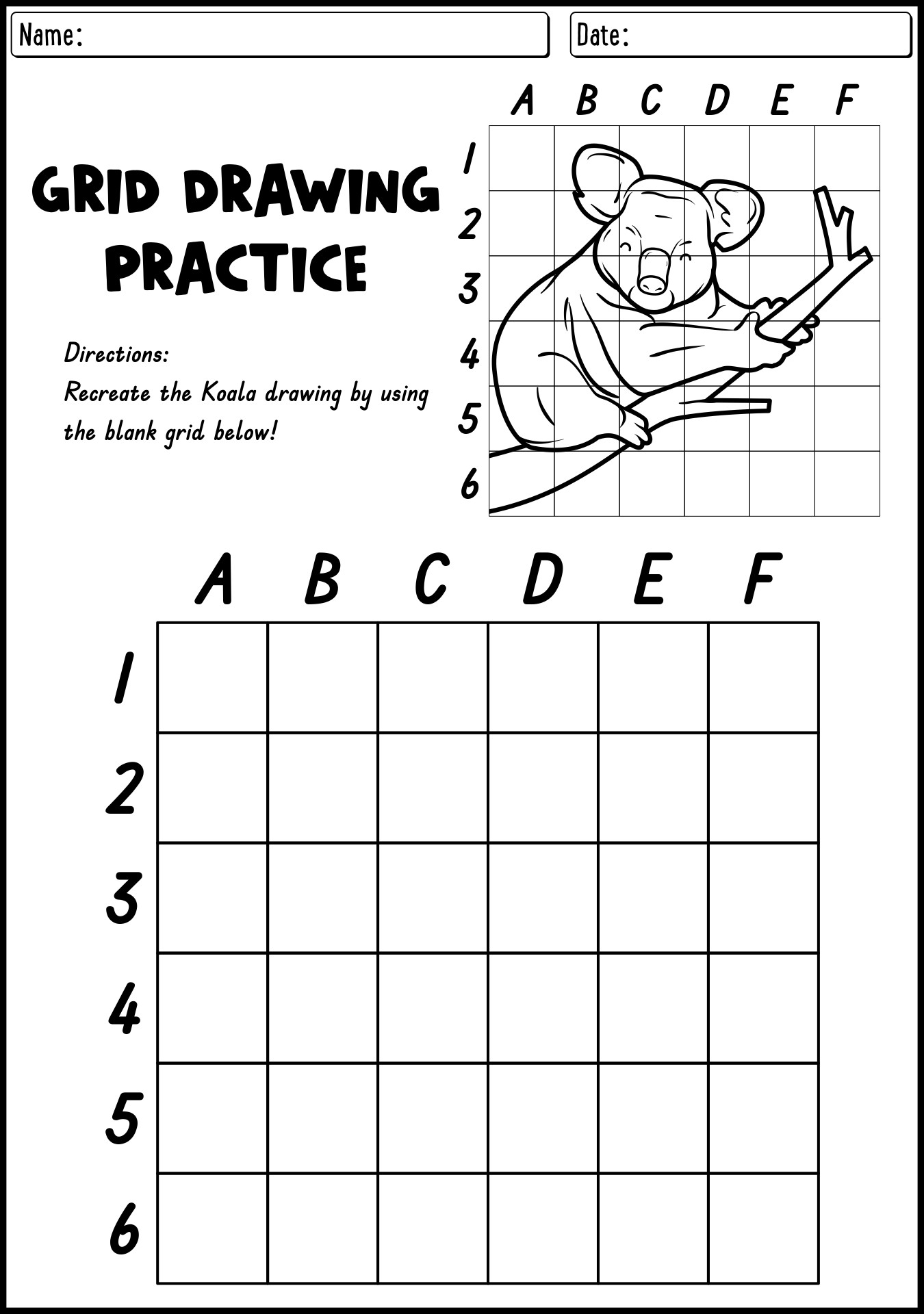
Executing a grid drawing worksheet effectively requires selecting high-contrast printable sheets that match the specific developmental stage of the child. Educators should print worksheets on durable heavyweight cardstock to prevent pencil tearing during intensive erasing and line adjustments. Begin the activity by demonstrating how to locate a specific box on the reference sheet, such as row A, column 1, and replicate only the lines contained inside that precise boundary. Encourage children to use a blank index card to cover adjacent squares, minimizing visual distraction and sharpening focus on the active drawing zone. Consistent printing parameters, such as maintaining crisp line weights and clear coordinate labels, ensure optimal cognitive accessibility for independent learners.
Common Challenges and How to Avoid Them
Children frequently struggle with grid drawing tasks when the reference image contains excessive visual clutter or when the grid density exceeds current developmental readiness. Overcoming these hurdles involves stepping down to a simpler 2×2 or 3×3 layout before introducing intricate photographic subjects. Another common obstacle occurs when learners attempt to draw the entire picture continuously instead of focusing on one single grid square at a time. Providing direct adult scaffolding—such as pointing out intersection points where lines cross grid boundaries—helps re-engage analytical observation without inducing frustration.
💬 Frequently Asked Questions
Explore More Free Learning Printables and Visual Activities on WePhotoAgency
Discover a comprehensive digital library designed to support cognitive development, spatial reasoning, and artistic expression by visiting WePhotoAgency.com. Educators, parents, and homeschoolers can instantly access an expanding collection of high-quality visual resources tailored for young learners.
Visual Reference Gallery