Introduction
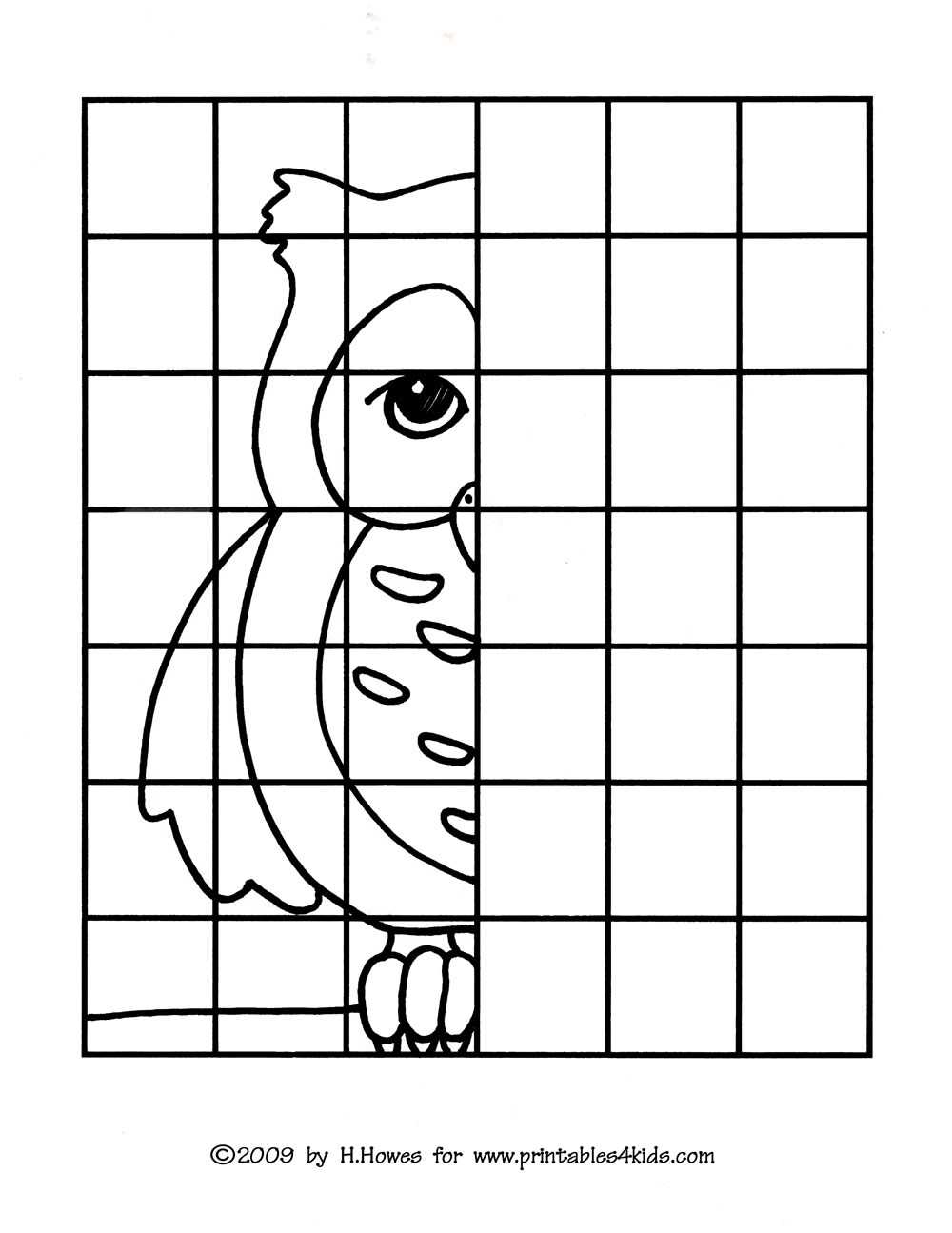
Grid drawing images systematically transform complex visual references into manageable segments, accelerating spatial reasoning and fine-motor precision in early childhood education. According to the National Art Education Association (NAEA), structured visual exercises that break forms down into geometric coordinates help children bridge the gap between abstract observation and concrete mark-making. Utilizing printable worksheets alongside real-life reference cards provides children with a structured framework for analyzing contours, angles, and relative distances. These multisensory tools support foundational cognitive development by transforming passive looking into active spatial investigation, making complex art concepts accessible to early learners and homeschoolers.
Visual Learning & Skill Snapshot:
- Core Focus: Systematic replication of realistic photography using coordinate-based grid overlays.
- Target Skill: Spatial reasoning, visual discrimination, fine-motor proportion, and observation accuracy.
- Key Recommendation: Pair photographic references with high-contrast, low-density grids (2×2 or 3×3) for early-stage learners.
Core Principles and Visual Learning Overview
Grid drawing images operate by leveraging the human brain’s natural capacity for chunking visual data into smaller, identifiable regions. Instead of processing an entire photograph as an overwhelming whole, learners focus exclusively on the intersecting lines of a single square at a time. This observational shift diminishes cognitive overload and reduces intimidation, allowing children to map lines, curves, and negative spaces with exact proportions. Incorporating Grid Drawing templates into daily routines cultivates patience and systematic thinking, which directly reinforces mathematical coordinate mapping and early reading literacy through systematic scanning.
Key Specifications and Breakdown
| Age / Learning Stage | Visual Skill & Grid Ratio | Pedagogical Application & Scaffolding |
|---|---|---|
| Ages 4-5 (Early Learners) | 2×2 Grid with Photo Flashcards | Focuses on basic shape identification and quadrant isolation using large, familiar object photos. |
| Ages 6-7 (Transition Stage) | 3×3 Grid with high-contrast photographic lines | Encourages intermediate proportion estimation and continuous line tracking across intersecting grid boundaries. |
| Ages 8-9 (Advanced Beginners) | 4×4 Grid utilizing complex nature and architectural scenes | Refines detailed observation, scale shifting, and independent verification of spatial relationships. |
Structured visual decomposition significantly enhances geometric reasoning, visual-spatial attention, and executive function by lowering cognitive load during complex shape replication tasks — National Art Education Association (NAEA)
Step-by-Step Practical Application and Printing Guidelines
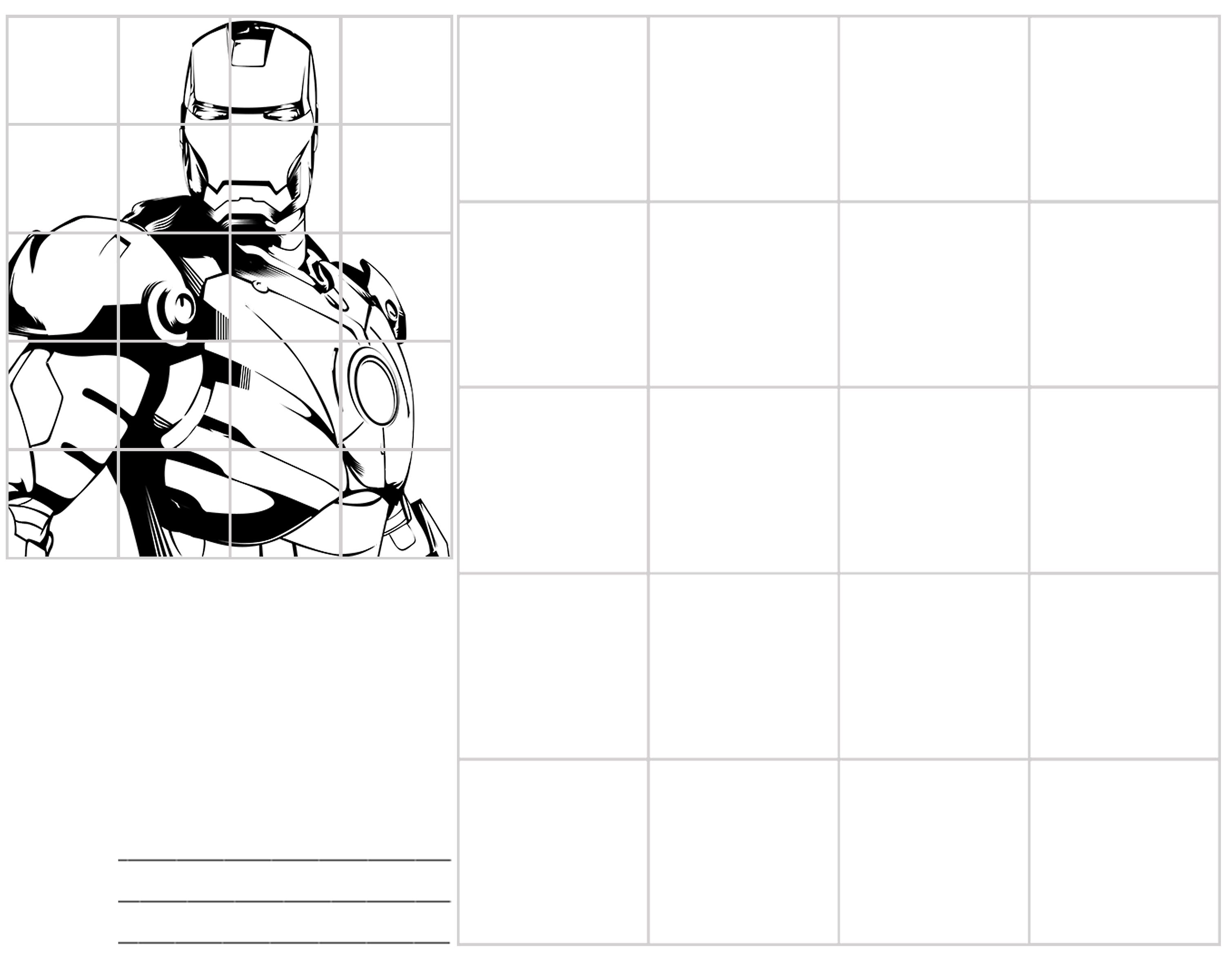
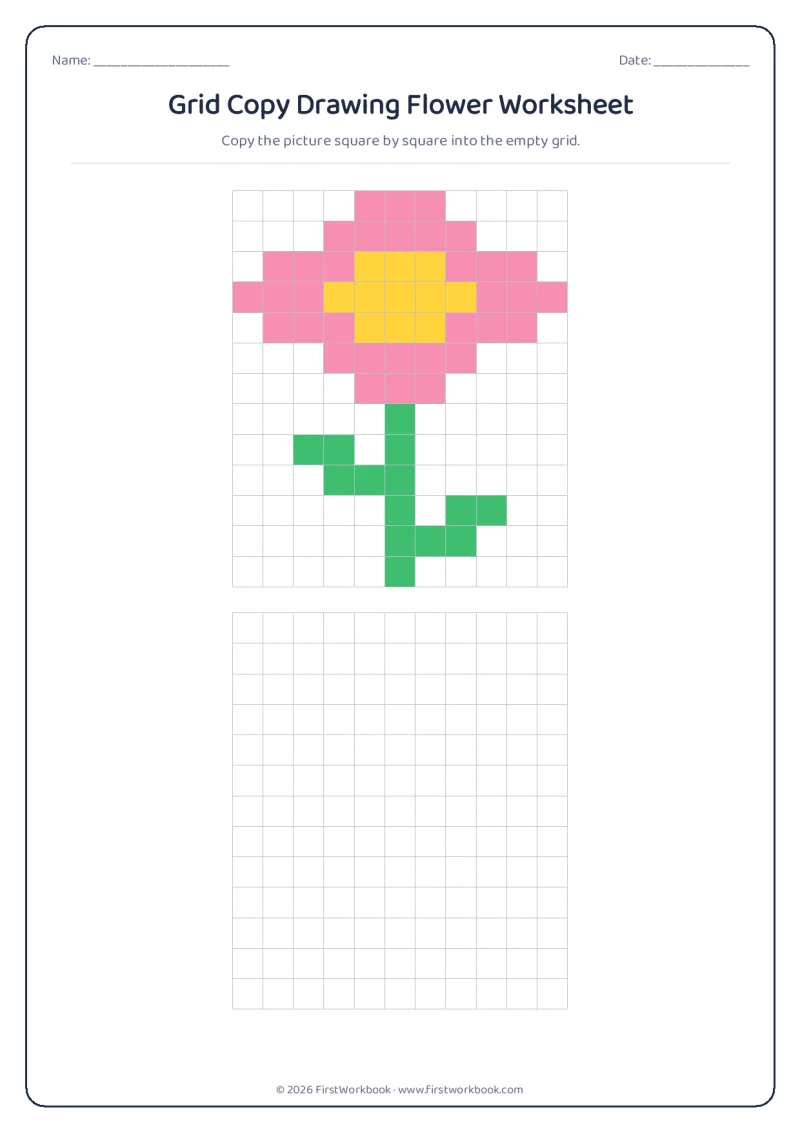
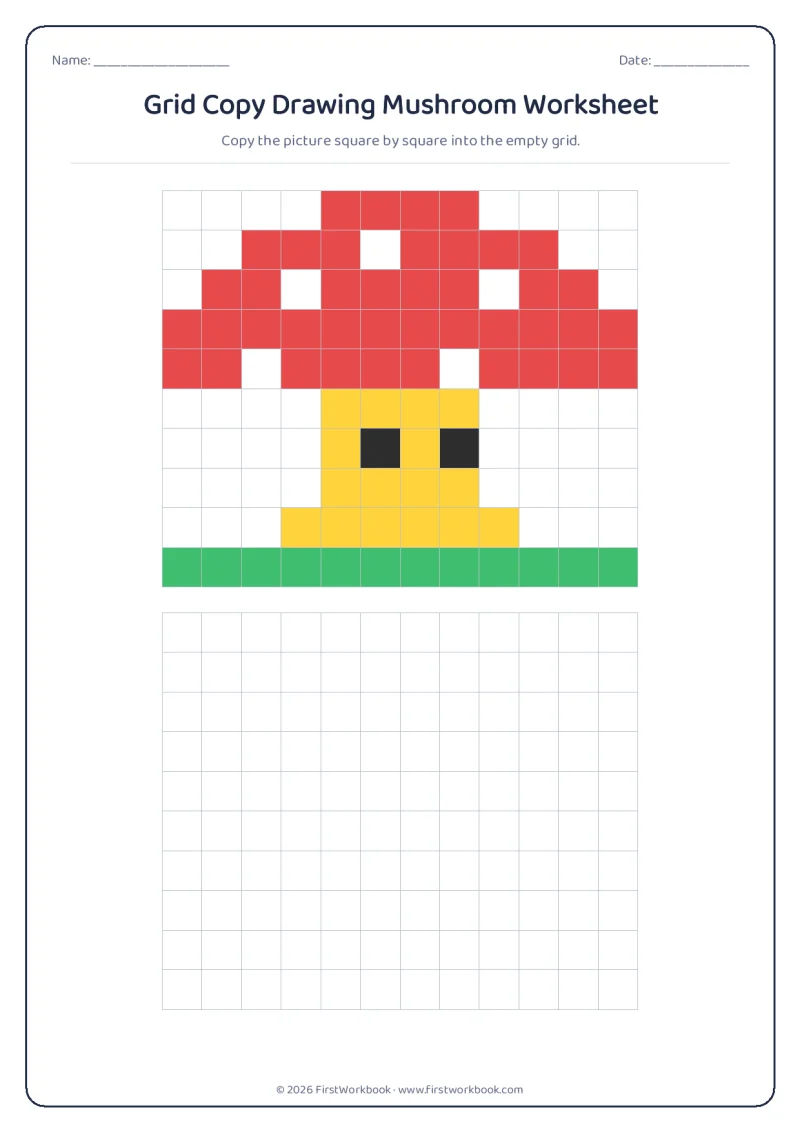
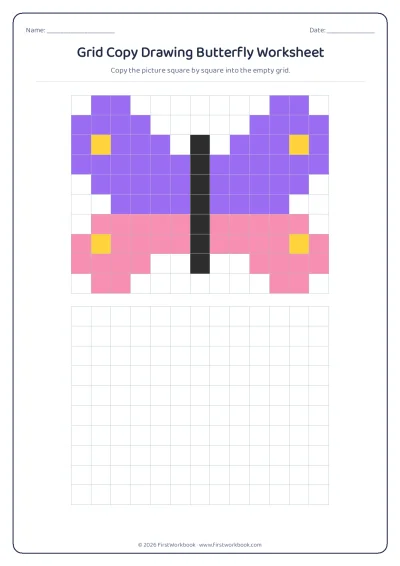
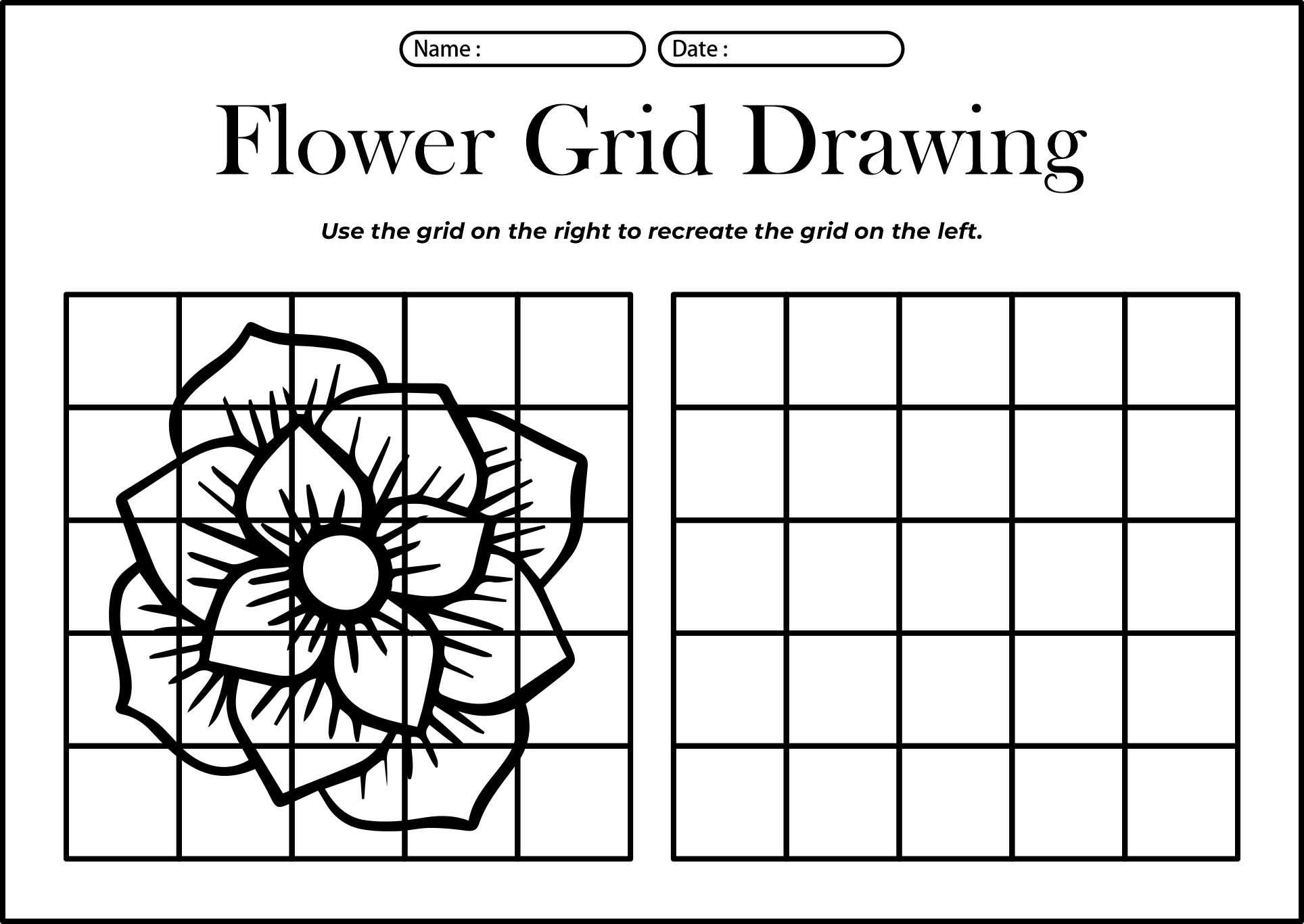
Executing a successful grid drawing exercise requires pairing high-resolution printed photographic references with matching blank coordinate grids on heavyweight paper. Educators should begin by selecting clear, uncluttered images from resources dedicated to Educational Activities to prevent visual confusion. Print the reference image with a visible grid overlay on the left, alongside an identical empty grid on the right for the child’s replication. Instruct learners to locate specific intersecting points—such as where an animal ear touches a horizontal grid line—before drawing the connecting curves, ensuring accuracy from square to square.
Common Challenges and How to Avoid Them
Children frequently struggle with grid drawing images when they attempt to draw the entire object at once instead of isolating one single box at a time. To overcome this hurdle, provide opaque window cards or small masks that allow young artists to cover all surrounding squares except the active target square. Another common obstacle involves incorrect line scaling caused by rushing through edge intersections; educators should encourage light, erasable preliminary sketching before committing to final dark lines. Consistent reinforcement of coordinate mapping safeguards against frustration and guarantees steady improvement in hand-eye coordination.
💬 Frequently Asked Questions
Explore More Free Learning Printables and Visual Activities on WePhotoAgency
Expanding a child’s visual literacy requires a consistent supply of structured, engaging, and professionally designed resources. Explore the complete collection of printable worksheets, creative templates, and visual development tools by visiting WePhotoAgency to support cognitive growth at every learning stage.
Visual Reference Gallery