Introduction
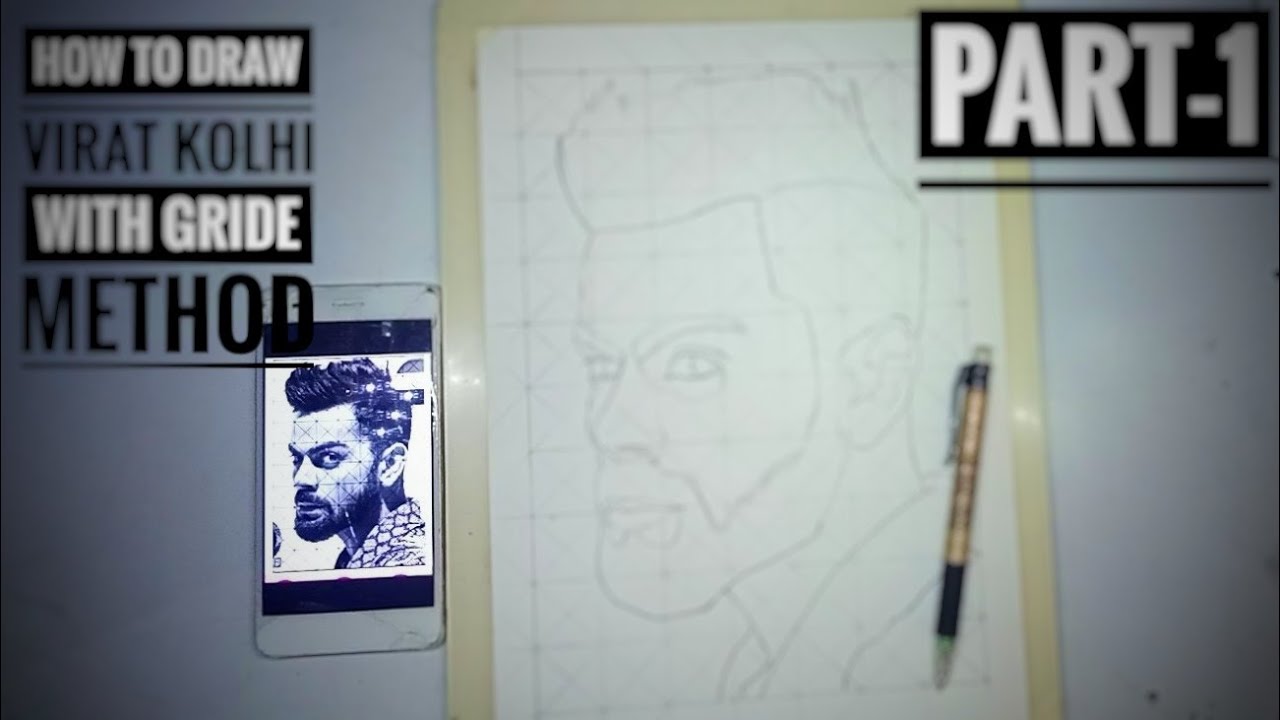
Grid drawing virat kohli transforms complex celebrity portraiture into manageable geometric coordinates, strengthening spatial reasoning and fine-motor accuracy in young learners. According to the National Art Education Association (NAEA), breaking down complex visual references into structured grids significantly improves children’s observation skills, proportion estimation, and hand-eye coordination. By utilizing printable worksheets featuring iconic reference subjects, educators and parents can seamlessly bridge the gap between recreational drawing and rigorous visual arts education. Leveraging resources from Grid Drawing collections ensures that children develop systematic scanning patterns essential for both artistic mastery and early geometry.
Visual Learning & Skill Snapshot:
- Core Focus: Systematic coordinate-based drawing of elite athletic portraits using segmented reference squares.
- Target Skill: Spatial reasoning, visual discrimination, fine-motor proportion, and photo-based concept mastery.
- Key Recommendation: Pair structured grid worksheets with authentic Photo Flashcards to reinforce structural observation before pencil-to-paper transfer.
Core Principles and Visual Learning Overview
Structured coordinate mapping fundamentally alters how young children process visual information by shifting attention from whole-object anxiety to isolated component analysis. When children attempt to draw a complex face freehand, cognitive overload frequently occurs, leading to distorted proportions and early frustration. Conversely, isolating an athletic reference image into a 3×3 or 4×4 matrix forces the brain to analyze negative space, line curvature, and intersection points square by square. This methodical breakdown aligns directly with broader Educational Activities designed to enhance cognitive mapping, mathematical grid literacy, and visual-spatial memory in early elementary settings.
Key Specifications and Breakdown
| Age / Learning Stage | Visual Skill & Grid Ratio | Pedagogical Application & Scaffolding |
|---|---|---|
| Ages 5-6 (Early Foundation) | 2×2 or 3×3 simple matrix with high-contrast outlines | Focuses on basic contour tracking, square-by-square identification, and pencil grip stability. |
| Ages 7-8 (Intermediate Practice) | 4×4 balanced coordinate grid with moderate detail | Emphasizes proportion estimation, angle replication, and relative distance measurement. |
| Ages 9-11 (Advanced Mastery) | 6×6 detailed photographic grid with subtle shading tones | Develops value scaling, realistic texture mapping, and independent error correction. |
Structured grid partitioning demonstrably enhances visual-spatial working memory by reducing extraneous cognitive load during complex shape replication tasks. — National Art Education Association (NAEA)
Step-by-Step Practical Application and Printing Guidelines
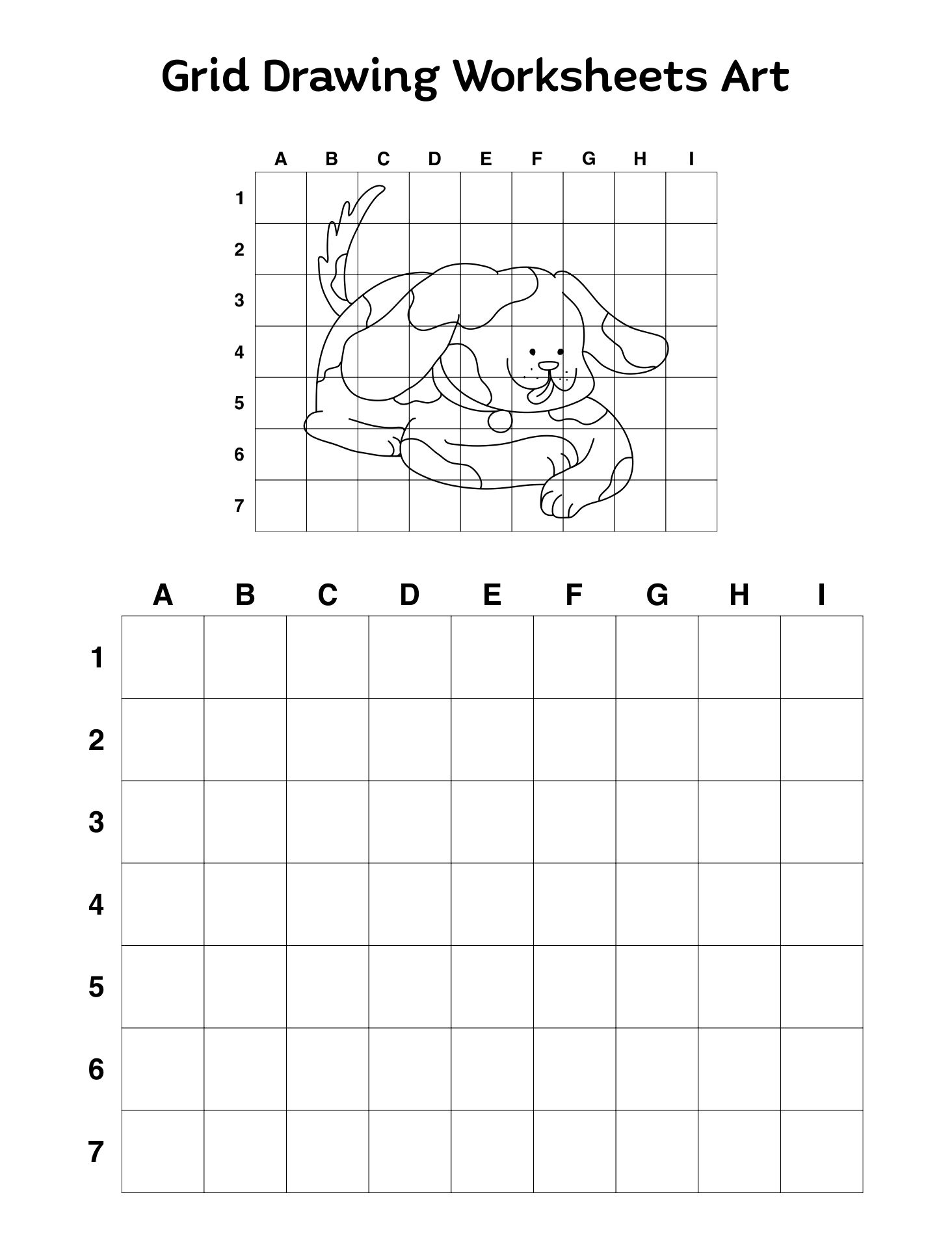
Executing a successful coordinate drawing activity requires high-contrast printouts, stable writing surfaces, and clear sequential instructions for the learner. Educators should begin by printing the reference portrait and the blank coordinate sheet on heavy cardstock to prevent paper warping during pencil work. Instruct learners to cover all grid rows except the top-most tier using a blank index card, isolating visual data and training the brain to concentrate on singular coordinates at a time. Encourage children to locate specific intersecting points—such as the corner of an eye or the edge of a jawline—before drawing continuous contour lines. Consistent scaling practices ensure that the final portrait maintains accurate proportions from the original reference image to the child’s independent creation.
Common Challenges and How to Avoid Them
Rushing through individual grid squares represents the most frequent obstacle encountered by children attempting portraiture, often resulting in skewed facial features and misaligned proportions. To counteract this tendency, educators must model deliberate observation techniques, prompting learners to pause and measure distances with a finger or ruler before making permanent pencil marks. Another common hurdle involves children becoming overwhelmed by facial hair, clothing details, or complex expressions within the reference photo. Scaffolding the activity by temporarily masking surrounding squares allows young artists to focus exclusively on abstract shapes rather than the iconic identity of the subject.
💬 Frequently Asked Questions
Explore More Free Learning Printables and Visual Activities on WePhotoAgency
Expanding children’s creative horizons and cognitive capabilities requires a diverse repository of high-quality, educator-approved visual materials. Discover an extensive collection of structured drawing worksheets, photographic flashcards, and interactive learning resources by visiting WePhotoAgency.com to support comprehensive early childhood development.
Visual Reference Gallery