Introduction
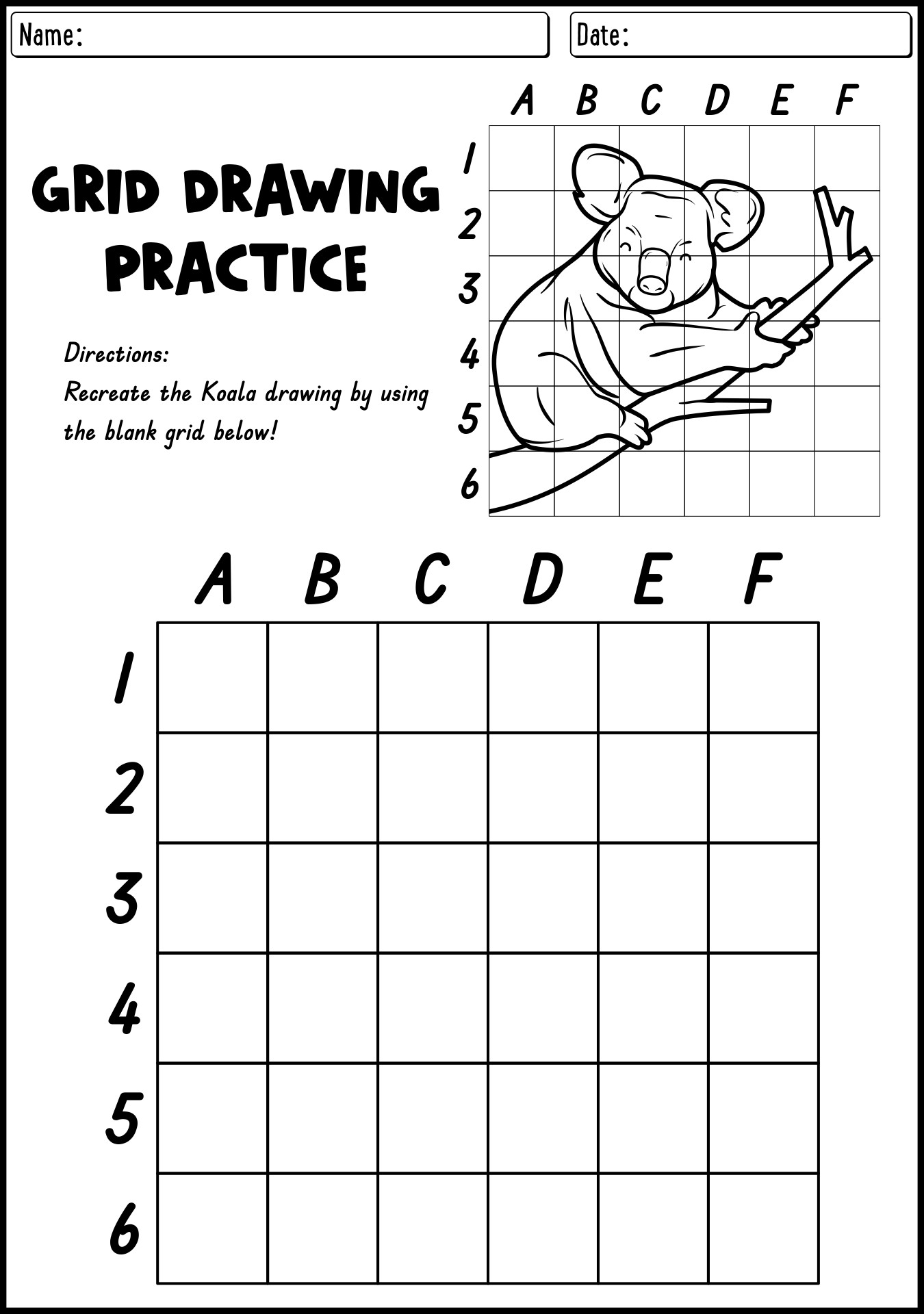
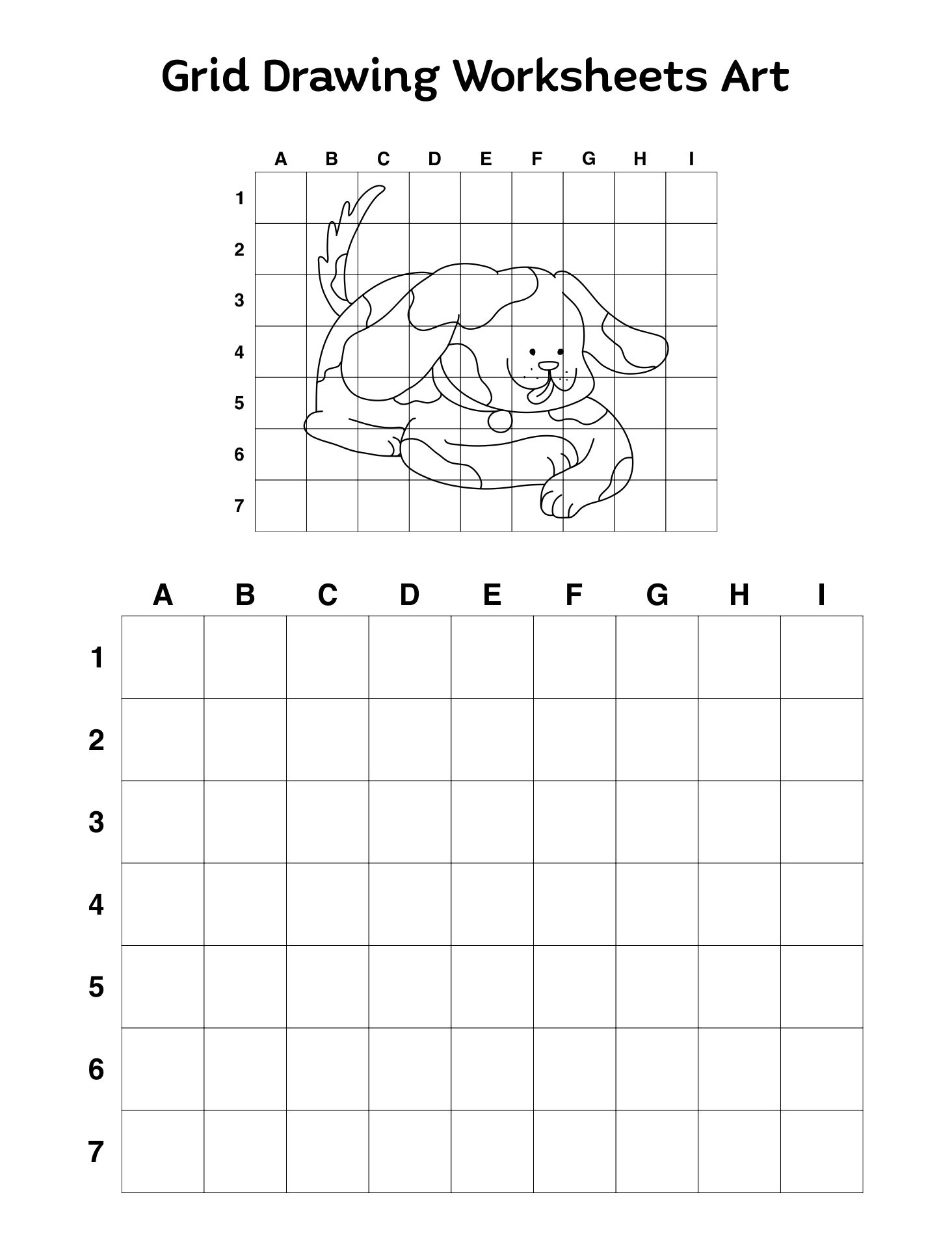
A drawing grid number is a systematic coordinate system printed across visual reference materials and blank sketching templates to help young learners break complex images into manageable spatial chunks. According to the National Art Education Association (NAEA), structured visual partitioning methods effectively enhance children’s observational accuracy, proportional reasoning, and fine-motor coordination. By assigning clear horizontal and vertical numbers or letters to each coordinate box, educators provide children with an intuitive navigational map that bridges the gap between abstract visual perception and concrete motor execution. This foundational drawing technique transforms overwhelming visual stimuli—such as intricate Photo Flashcards—into isolated, easily reproducible segments that cultivate genuine artistic confidence during early childhood development.
Visual Learning & Skill Snapshot:
- Core Focus: Mapping numerical coordinates onto printable references to teach proportional scaling.
- Target Skill: Spatial reasoning, visual discrimination, fine-motor proportion, and photographic concept mastery.
- Key Recommendation: Start early learners with large 3×3 numbered grids paired with real-world photo references before advancing to complex coordinate densities.
Core Principles and Visual Learning Overview
Drawing grid number systems operate by establishing a strict Cartesian coordinate plane over a primary image and a corresponding blank canvas, requiring children to replicate visual contents square by square. This methodical process demands deliberate cognitive shifting from holistic viewing to analytical observation, forcing the developing brain to evaluate angles, intersections, and negative space within isolated boundaries. When integrated with high-contrast visual materials like Grid Drawing worksheets, children learn to translate three-dimensional photographic reality into two-dimensional representations without relying on stereotypical symbols. Educational programs that systematically utilize coordinate numbers show accelerated development in bilateral hand-eye coordination, executive function, and geometric comprehension among early elementary students.
Key Specifications and Breakdown
| Age / Learning Stage | Visual Skill & Grid Ratio | Pedagogical Application & Scaffolding |
|---|---|---|
| Ages 4-5 (Early Childhood) | 3×3 Grid with Large Numbers | Focuses on basic top-to-bottom and left-to-right sequencing using high-interest real photo subjects. |
| Ages 6-7 (Early Elementary) | 4×4 Grid with Number-Letter Axes | Introduces formal coordinate plotting to build multi-step problem-solving and line-tracking endurance. |
| Ages 8+ (Advanced Primary) | 5×5 or Higher Proportional Grids | Challenges learners to scale up or scale down complex photographic details with high precision. |
Systematic visual partitioning accelerates the development of spatial cognition and analytical motor control in early elementary learners — National Art Education Association (NAEA)
Step-by-Step Practical Application and Printing Guidelines
Implementing drawing grid number exercises successfully requires careful preparation of printable worksheets and high-resolution photo references to ensure absolute visual clarity. Begin by selecting age-appropriate templates featuring bold, legible numerals along the top and side margins to eliminate reading ambiguity for young learners. Print the master reference image and the blank drawing grid at identical dimensions for beginners, allowing direct visual comparison and physical measurement if necessary. Educators should guide children to locate the starting coordinate—such as square 1-A—observe the specific line or shape intersecting that exact box, and replicate only that specific section before moving horizontally to the next numbered box. Incorporating dynamic Educational Activities alongside these printable sheets reinforces cross-curricular engagement in geometry and literacy.
Common Challenges and How to Avoid Them
Children frequently experience frustration when attempting to copy an entire image at once instead of focusing strictly on individual numbered grid coordinates. To prevent cognitive overload, provide opaque paper masks or sliding windows that allow learners to cover all surrounding squares except the active target coordinate box. Another common obstacle involves number reversal or confusion between horizontal and vertical axes; combat this by color-coding the horizontal number sequences differently from the vertical number sequences. Instructors should emphasize that accuracy takes precedence over speed, framing each completed numbered square as a successful puzzle piece solved within a larger visual masterpiece.
💬 Frequently Asked Questions
Explore More Free Learning Printables and Visual Activities on WePhotoAgency
Discover an extensive digital library of printable educational resources, coordinate sketching templates, and visual learning tools designed to inspire young minds by visiting WePhotoAgency.com. Educators, parents, and homeschoolers can instantly access high-resolution materials crafted to build foundational artistic proficiency and cognitive growth.
Visual Reference Gallery