Introduction
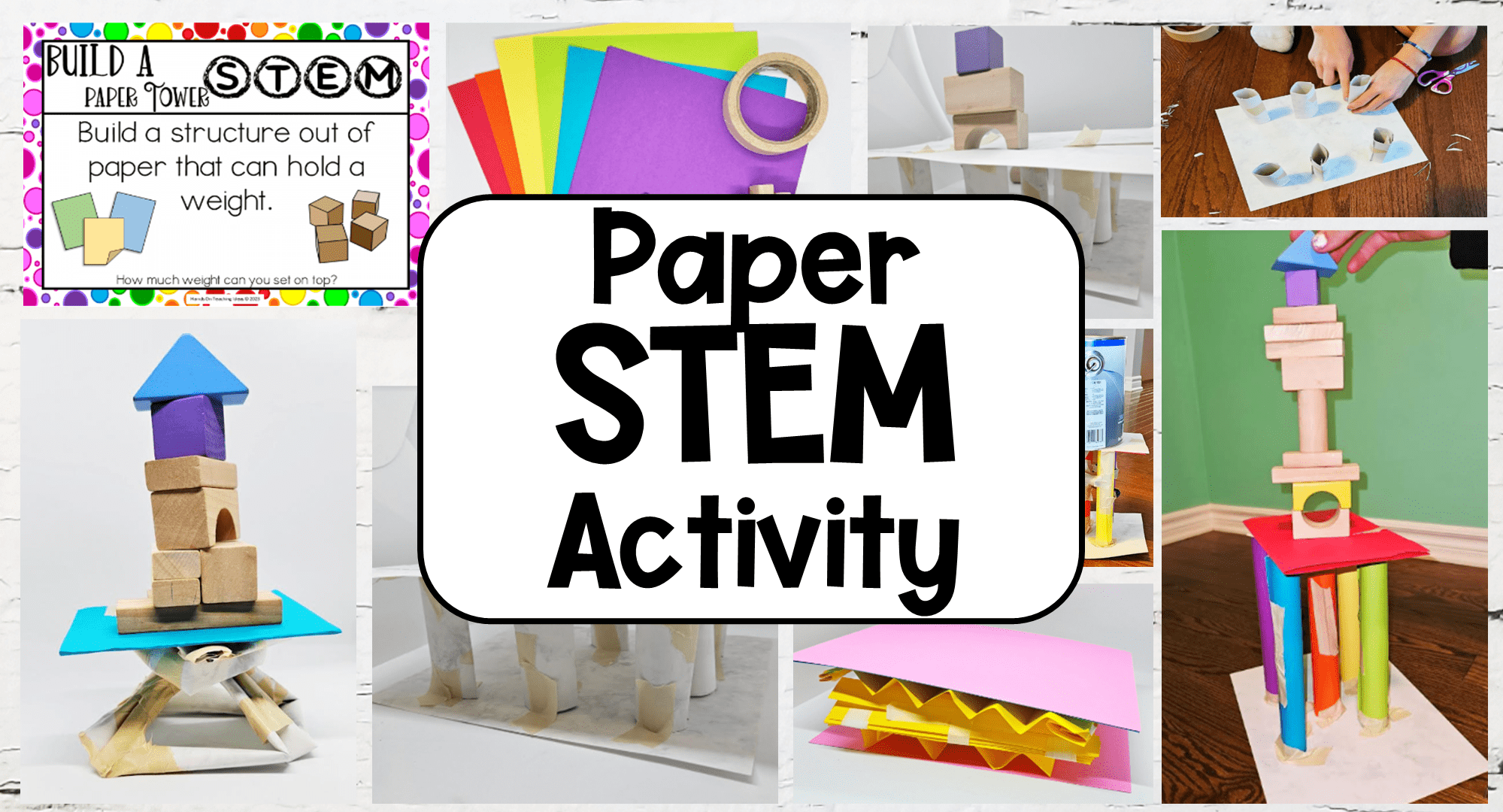
STEM activities for kids with paper integrate foundational mathematical measurement, spatial visualization, and technical drawing skills through accessible print-based mediums. According to the National Association for the Education of Young Children (NAEYC), hands-on manipulative experiences with printed paper materials actively foster critical cognitive mapping, geometric comprehension, and fine-motor coordination in early childhood development. Utilizing structured visual challenges bridges the gap between abstract engineering concepts and tangible tactile creation, empowering young learners to analyze complex forms through systematic breakdown. Educators leverage these tactile mechanics across various developmental Educational Activities to cultivate advanced perceptual processing.
Visual Learning & Skill Snapshot:
- Core Focus: STEM activities for kids with paper combine geometric grids, real-world photographic stimuli, and fine-motor engineering design.
- Target Skill: Spatial reasoning, visual discrimination, proportional coordinate mapping, and tactile observation accuracy.
- Key Recommendation: Pair high-contrast printed references with scaled grid matrices to systematically build analytical drawing confidence.
Core Principles and Visual Learning Overview
Paper-based engineering and observational drawing exercises require children to decode visual information from a reference plane and replicate coordinate proportions onto a structured workspace. Printable grid drawing worksheets establish an essential bridge between art and mathematical graphing by teaching young minds to isolate individual sections of an image. When paired with Photo Flashcards depicting real-world objects, animals, and architectural landmarks, children move beyond abstract guessing into precise visual observation. This systematic approach enhances cognitive flexibility, spatial memory, and hand-eye coordination without requiring expensive technological infrastructure.
Key Specifications and Breakdown
| Age / Learning Stage | Visual Skill & Grid Ratio | Pedagogical Application & Scaffolding |
|---|---|---|
| Ages 4-5 (Early Foundation) | 2×2 or 3×3 simple square grid | Focuses on macro-shapes, basic line direction, and fundamental Grid Drawing mechanics using bold photo references. |
| Ages 6-7 (Developing Primary) | 4×4 to 6×6 intermediate matrix | Emphasizes proportional scaling, negative space awareness, and detailed contour replication from photographic cards. |
| Ages 8-10 (Advanced Elementary) | 8×8 or multi-quadrant complex grid | Targets exact measurement estimation, cross-referencing coordinates, and independent mechanical error correction. |
Spatial coordinate mapping via tactile geometric grids significantly accelerates foundational mathematical graphing comprehension and visual-motor integration in early childhood. — National Art Education Association (NAEA)
Step-by-Step Practical Application and Printing Guidelines
Executing effective paper-based visual engineering tasks begins with selecting high-resolution printouts that maintain crisp boundary lines and clear tonal contrast. Educators should secure cardstock or heavier bond paper to prevent buckling during intensive pencil rendering or cutting procedures. Distribute reference cards alongside corresponding coordinate grids, instructing children to scan individual squares before committing pencil marks to paper. This methodical scanning process trains the brain to isolate complex visual stimuli into manageable geometric components, directly reinforcing analytical STEM thinking through artistic execution.
Common Challenges and How to Avoid Them
Over-reliance on whole-image guessing often causes children to experience frustration when initial proportions appear distorted on their drawing sheets. To counteract this perceptual hurdle, instructors should encourage learners to cover adjacent grid squares with a blank index card, isolating one coordinate cell at a time to reduce visual clutter. Additionally, providing pre-printed guidelines with distinct line weights helps young practitioners distinguish between primary structural borders and inner contour details, ensuring steady progression through increasingly complex design challenges.
💬 Frequently Asked Questions
Explore More Free Learning Printables and Visual Activities on WePhotoAgency
Empower young learners with comprehensive resources, structured worksheets, and engaging visual tools by visiting WePhotoAgency.com. Discover an extensive collection of print-ready educational assets designed to transform early childhood spatial development and creative problem-solving.
Visual Reference Gallery