Introduction
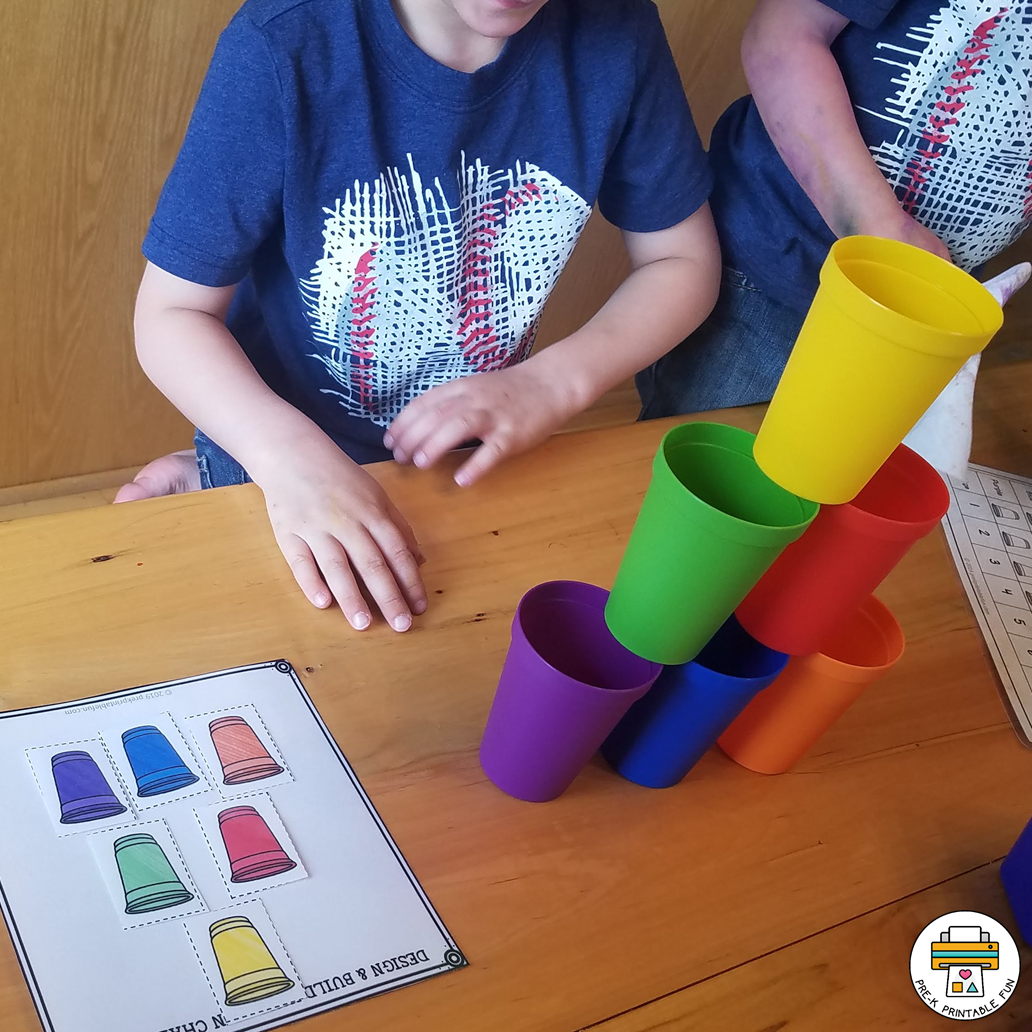
STEM activities for kids with cups integrate foundational engineering design, mathematics, and spatial reasoning by utilizing everyday cylindrical vessels to construct complex architectural models and investigate structural load capacity. According to the National Association for the Education of Young Children (NAEYC), young children develop critical mathematical and spatial competencies most effectively through active, manipulative, hands-on play that bridges tactile exploration with abstract thinking. Integrating simple household supplies like plastic or paper cups into educational environments transforms standard play into rigorous cognitive workouts, encouraging children to test hypotheses, estimate structural proportions, and analyze balance points. Educators and parents can leverage these low-cost materials to cultivate early engineering mindsets, building precise observation skills that translate seamlessly into advanced graphic communication and geometry.
Visual Learning & Skill Snapshot:
- Core Focus: STEM activities for kids with cups utilize simple cylindrical objects to teach structural physics, balance, and spatial relationships.
- Target Skill: Spatial reasoning, visual discrimination, fine-motor proportion, and observation-based problem-solving.
- Key Recommendation: Combine physical cup-stacking challenges with structured Grid Drawing exercises to bridge 3D spatial awareness with 2D visual proportion.
Core Principles and Visual Learning Overview
Spatial awareness and geometric proportion serve as the primary cognitive anchors during cup-based structural engineering and observational art tasks. When children manipulate cups to build towers, pyramids, and interlocking bridges, they engage in rigorous trial-and-error experimentation regarding center of mass, weight distribution, and symmetry. Translating these three-dimensional architectural concepts into graphic representations requires heightened visual discrimination. By pairing physical stacking challenges with high-contrast Photo Flashcards depicting architectural landmarks or geometric cup arrangements, learners quickly connect real-world objects to abstract visual symbols. This dual-modal approach accelerates cognitive flexibility, teaching young minds to evaluate scale, perspective, and balance accurately across diverse mediums.
Key Specifications and Breakdown
| Age / Learning Stage | Visual Skill & Grid Ratio | Pedagogical Application & Scaffolding |
|---|---|---|
| Ages 3-4 (Early Explorer) | 1:1 scale matching and basic shape sorting | Focus on straightforward vertical stacking, color sorting, and matching cups to simplified visual flashcards. |
| Ages 5-6 (Emerging Builder) | 2:2 grid ratio and proportional estimation | Introduce interlocking cup patterns alongside introductory Educational Activities that emphasize symmetry. |
| Ages 7-8 (Advanced Designer) | 4:4 grid scale-up and detailed architectural drawing | Challenge learners to build complex cup structures and draw them accurately using calibrated reference grids. |
Structured tactile manipulation of physical objects directly accelerates children’s ability to decode abstract mathematical ratios, spatial grids, and visual symmetry. — National Association for the Education of Young Children (NAEYC). For more related activities, check out our Stem Fair Activities For Kids.
Step-by-Step Practical Application and Printing Guidelines
Executing successful cup-based STEM and visual art lessons requires pairing tangible engineering challenges with high-quality printed reference materials. Begin by setting up a dedicated workstation equipped with standardized plastic or paper cups, alongside printed visual guides that illustrate target structures or geometric arrangements. Instruct learners to observe the reference image closely, noting how the base width dictates the maximum height of a pyramid structure. Guide children to map the physical dimensions of the cups onto paper using a lightweight grid system, encouraging them to count grid squares to maintain accurate proportions. This methodical workflow instills patience, enhances hand-eye coordination, and transforms unstructured play into a focused, analytical learning session.
Common Challenges and How to Avoid Them
Frustration during structural engineering and drawing tasks typically arises when children attempt complex designs without establishing a secure foundational base or an accurate proportional grid. Educators and parents can mitigate this hurdle by scaffolding activities incrementally, starting with stable two-dimensional rows before advancing to multi-tiered three-dimensional towers. When learners struggle with proportion during observational drawing, redirect their focus back to the physical object by encouraging them to measure relative heights and widths using their fingers or a ruler. Providing clear, distortion-free photographic references eliminates guesswork, ensuring that children build confidence in both their engineering builds and their graphic representations.
💬 Frequently Asked Questions
Explore More Free Learning Printables and Visual Activities on WePhotoAgency
Enhance early childhood development curricula by accessing a comprehensive collection of downloadable resources, structured grid templates, and visual learning aids available at WePhotoAgency.com. Dedicated educators, homeschooling parents, and art specialists can explore expansive digital libraries designed to foster cognitive growth, artistic precision, and critical thinking skills across all early learning stages.
Visual Reference Gallery