Introduction
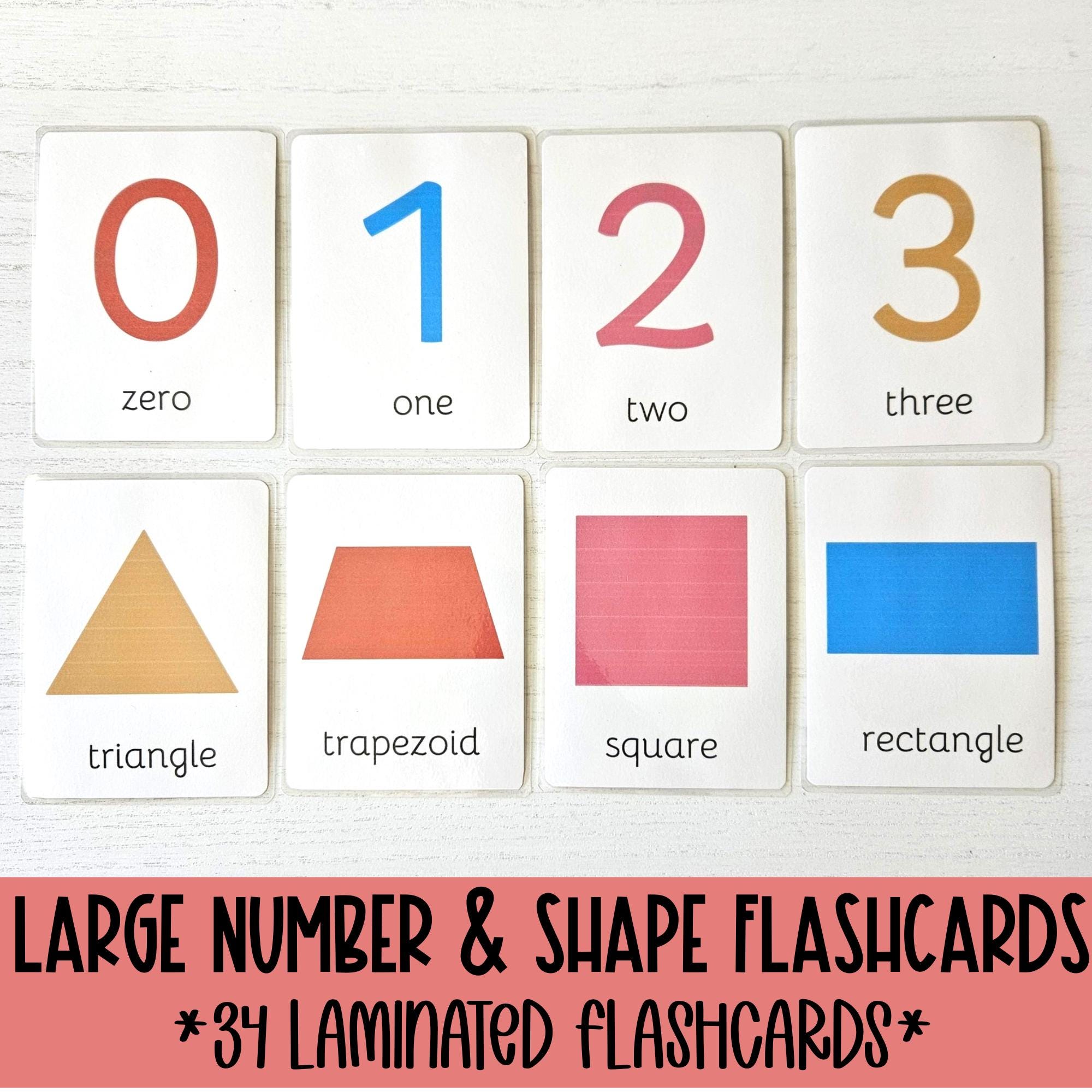
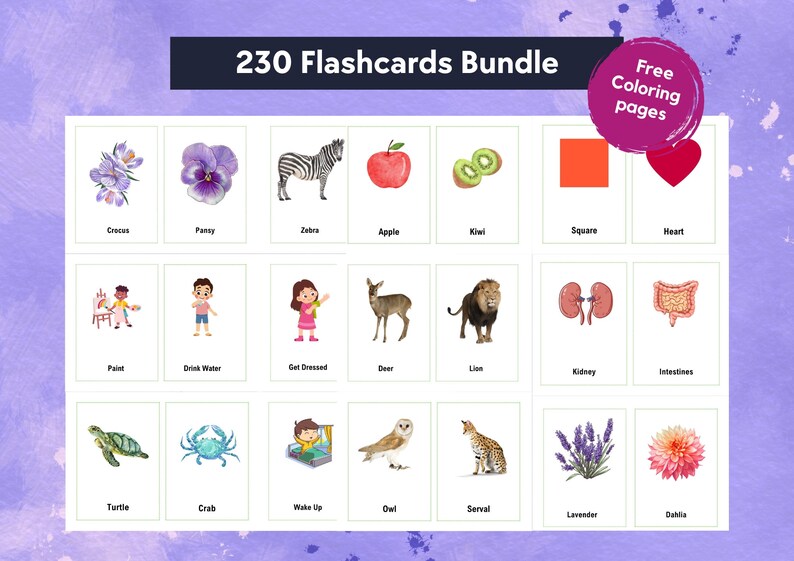
Large picture flashcards serve as oversized visual reference cards designed to bridge concrete photographic observation and abstract spatial reasoning in early childhood development. According to the National Association for the Education of Young Children (NAEYC), high-contrast, large-scale visual media significantly enhance cognitive mapping, visual memory retention, and fine-motor coordination in young learners. Integrating large pictorial resources alongside printable Grid Drawing worksheets transforms standard art lessons into structured cognitive exercises. Educators utilize these oversized visual aids to ground abstract drawing concepts in tangible photographic reality, establishing an essential foundation for early geometry, proportion estimation, and visual literacy without relying on text-heavy instruction.
Visual Learning & Skill Snapshot:
- Core Focus: Large picture flashcards provide high-detail photographic references scaled for developmental visual processing.
- Target Skill: Spatial reasoning, visual discrimination, fine-motor proportion, and quadrant-based observation.
- Key Recommendation: Pair physical large-scale photo cards directly with corresponding grid-lined drawing worksheets to improve coordinate mapping.
Core Principles and Visual Learning Overview
Spatial awareness and proportional estimation develop most effectively when children translate large-scale visual cues into smaller physical drawings using systematic grid frameworks. Utilizing verified Photo Flashcards ensures children examine authentic photographic details—such as lighting gradients, object boundaries, and spatial positioning—rather than simplified cartoon outlines. By scaling images up for easy viewing, educators remove eye-strain and cognitive overload, allowing young artists to isolate specific sections within a grid. This method reinforces observational patience, hand-eye coordination, and accurate size comparison across diverse subjects ranging from nature specimens to geometric architectural forms.
Key Specifications and Breakdown
| Age / Learning Stage | Visual Skill & Grid Ratio | Pedagogical Application & Scaffolding |
|---|---|---|
| Ages 4–5 (Early Exploration) | 2×2 Grid with high-contrast photographic subjects | Focuses on basic shape recognition and matching isolated visual quadrants without complex measurement. |
| Ages 6–7 (Developing Precision) | 3×3 Grid featuring detailed real-world objects | Builds proportional awareness, encouraging direct comparison between adjacent photo squares and paper cells. |
| Ages 8+ (Advanced Observation) | 4×4 or Complex Grids with intricate natural scenes | Refines spatial accuracy, shading estimation, and independent grid-coordinate tracking for artistic mastery. |
Visual-spatial training through structured graphic grids measurably accelerates geometric comprehension and fine-motor planning in early childhood. — National Art Education Association (NAEA)
Step-by-Step Practical Application and Printing Guidelines
Executing successful visual drawing exercises requires printing large picture flashcards on heavy cardstock and pairing them with uniform coordinate worksheets. Begin by selecting high-resolution photographic cards and setting the printer scaling to 100 percent to prevent image distortion. Laminate both the reference cards and the matching grid sheets to ensure durability during repeated classroom or homeschool handling. Instruct learners to place the oversized flashcard directly above the drawing workspace, encouraging scanning from top-left to bottom-right quadrants. Emphasize analyzing empty space and line intersections within each grid cell before committing pencil strokes to paper, fostering methodical problem-solving habits.
Common Challenges and How to Avoid Them
Young learners frequently struggle with proportional distortion when attempting to draw entire complex images without isolating individual grid segments first. To resolve this challenge, provide opaque window cards or cardboard cutout frames that allow children to isolate a single quadrant on both the flashcard and the worksheet simultaneously. Discourage rushing through intricate details by guiding observation toward anchor points, such as where a curved line intersects a grid border. Implementing short, focused drawing intervals prevents visual fatigue and maintains high engagement levels across all developmental stages.
💬 Frequently Asked Questions
Explore More Free Learning Printables and Visual Activities on WePhotoAgency
Developing robust visual-spatial skills requires continuous access to high-quality, professionally formatted resources designed for early childhood educators and parents. Explore the full library of printable assets, step-by-step drawing guides, and photographic learning tools available across the main catalog at WePhotoAgency.com to support comprehensive cognitive development.
Visual Reference Gallery