Introduction
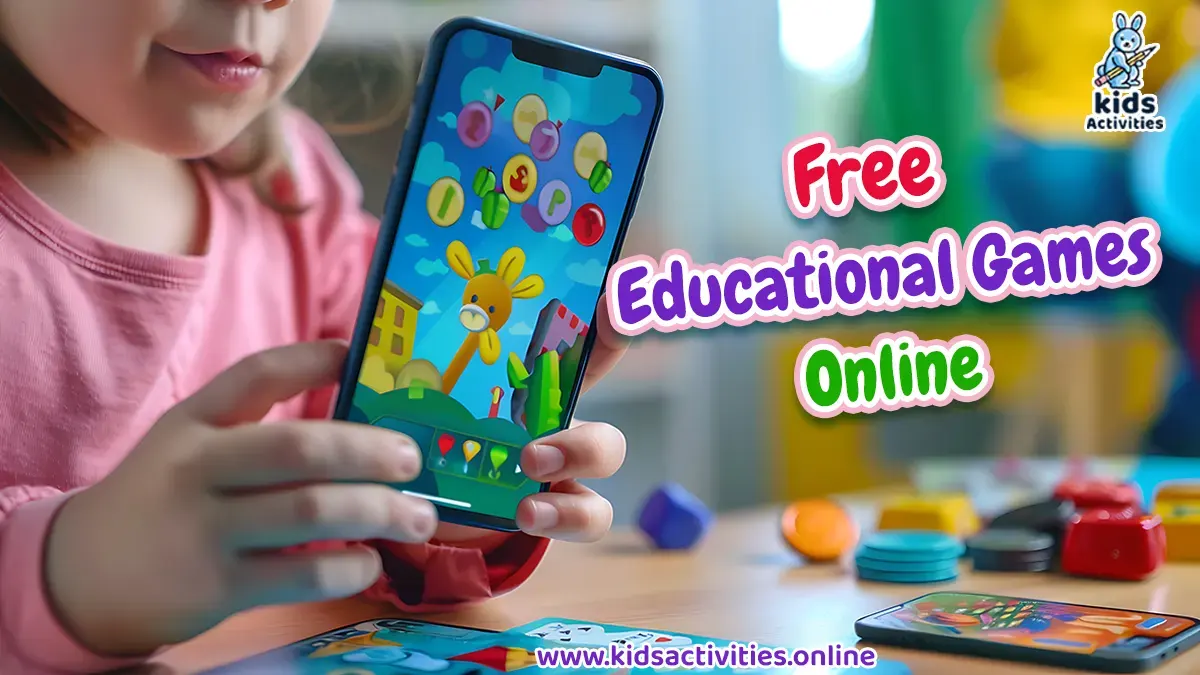
Fun educational games for kids on iPad successfully bridge digital engagement and tactile cognitive growth when paired with offline, screen-free analog exercises. According to the National Association for the Education of Young Children (NAEYC), interactive media should be deliberately integrated alongside physical, hands-on learning tasks to optimize early childhood brain development and spatial reasoning. Integrating digital visual references with tactile mediums helps young learners translate abstract digital pixels into concrete physical proportions. Early educators and homeschoolers frequently combine digital stimulus with Grid Drawing to anchor fine-motor control, visual discrimination, and proportion estimation. Furthermore, structured digital-analog hybrids prevent passive screen consumption by demanding active visual analysis, precise hand-eye coordination, and deliberate spatial calculation. Exploring diverse methods within early childhood learning ensures children develop robust observation skills that transfer seamlessly across both digital displays and physical paper.
Visual Learning & Skill Snapshot:
- Core Focus: Fun educational games for kids on iPad combine digital visual prompts with tactile drawing and observation exercises.
- Target Skill: Spatial reasoning, visual discrimination, fine-motor proportion, and photo-based concept mastery.
- Key Recommendation: Always pair iPad reference imagery with physical paper worksheets to reinforce tactile fine-motor control.
Core Principles and Visual Learning Overview
Visual learning requires structured observational frameworks that train the developing brain to decode complex environmental information into manageable geometric components. When children analyze high-contrast real photo visual flashcards on a tablet screen, visual processing pathways activate rapidly to identify contours, lighting, shadows, and relative scale. Transitioning this digital observation into paper-based activities requires targeted scaffolding, such as utilizing structured Photo Flashcards to test memory, categorization, and visual recall. Educators leverage these multi-sensory techniques to strengthen working memory and enhance attention to detail in early elementary students. By breaking complex real-world scenes into simple grid coordinates and proportional segments, children master foundational art and mathematics competencies simultaneously.
Key Specifications and Breakdown
| Age / Learning Stage | Visual Skill & Grid Ratio | Pedagogical Application & Scaffolding |
|---|---|---|
| Ages 4-5 (Early Explorers) | 1×1 to 2×2 Large Grid Blocks | Focuses on basic shape recognition, broad contour tracing, and direct photographic matching using simplified visual flashcards. |
| Ages 6-7 (Developing Artists) | 3×3 to 4×4 Intermediate Grids | Targets proportion estimation, line symmetry, and breaking complex objects into smaller spatial quadrants via Educational Activities. |
| Ages 8+ (Advanced Observers) | 5×5+ High-Density Grids | Emphasizes detailed observation, negative space calculation, precise coordinate mapping, and scaled drawing replication. |
Early childhood technology integration must balance active digital exploration with rigorous tactile, physical manipulation of materials to support optimal neurological development. — National Association for the Education of Young Children (NAEYC)
Step-by-Step Practical Application and Printing Guidelines
Executing an effective hybrid digital-physical lesson plan begins with securing high-resolution reference images on the iPad and pairing them with clean, precisely printed worksheets. Educators should display the source photograph on the tablet screen at eye-level while positioning the corresponding grid template on a flat, well-lit clipboard or desk surface. Instruct young learners to examine one grid quadrant at a time on the digital screen, counting the grid rows and columns before replicating the lines onto the paper worksheet with a soft graphite pencil. This systematic workflow eliminates overwhelm by teaching children to segment large, complex visual stimuli into digestible, manageable components. Utilizing heavy-stock paper for all printed worksheets ensures that repeated erasing and redrawing will not tear the page, allowing children to refine their proportion estimates without frustration.
Common Challenges and How to Avoid Them
Rushing through proportion estimation and failing to cross-reference grid coordinates accurately are the most frequent challenges young learners encounter during hybrid visual art exercises. When children attempt to draw freehand without consulting the specific grid intersections on both the iPad screen and the worksheet, spatial distortion invariably occurs. Adults can easily prevent this by encouraging children to use a finger or a straightedge to point directly at the active grid coordinate on the screen before drawing the corresponding line on paper. Providing clear step-by-step demonstrations helps learners understand that observation is a deliberate, methodical process rather than a rushed guessing game. Consistent, patient guidance builds foundational confidence and transforms meticulous observation into an enjoyable, rewarding educational habit.
💬 Frequently Asked Questions
Explore More Free Learning Printables and Visual Activities on WePhotoAgency
Enhance early childhood visual art curricula by accessing a wide array of expert-designed resources, printable grid templates, and observation tools available directly through the primary library at WePhotoAgency.com. Integrating structured offline printables with digital references guarantees a well-rounded, engaging educational journey for every young learner.
Visual Reference Gallery