Introduction
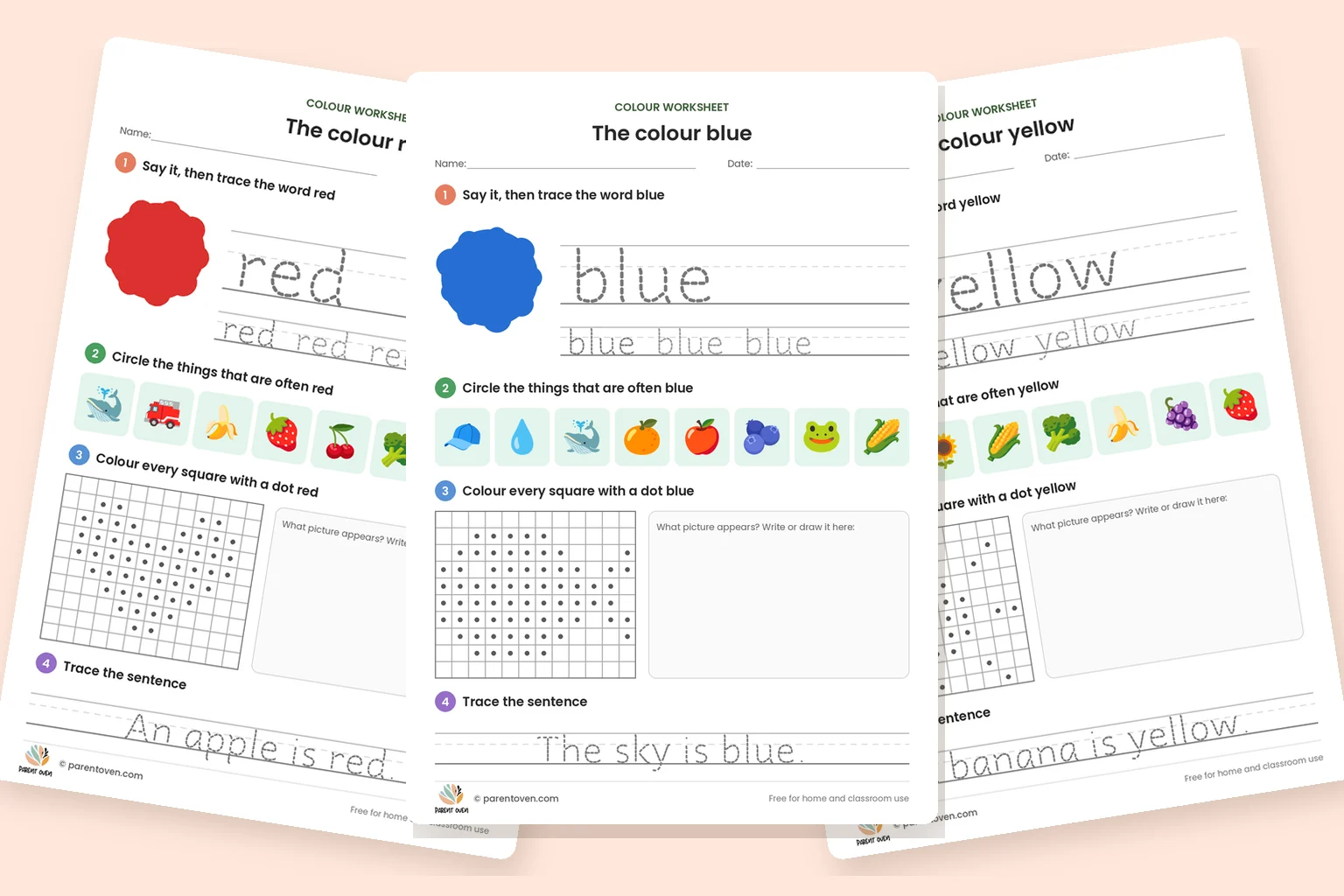
Free printable color flashcards serve as foundational visual tools that accelerate early childhood cognitive development, color recognition, and spatial processing. According to the National Association for the Education of Young Children (NAEYC), purposeful exposure to high-contrast visual learning materials significantly enhances observational accuracy and memory retention in developing minds. Utilizing carefully curated Photo Flashcards alongside structured visual exercises bridges the gap between abstract conceptualization and concrete artistic execution. Educators, parents, and developmental specialists continuously seek accessible resources that transform static color identification into active, hands-on spatial problem-solving.
Visual Learning & Skill Snapshot:
- Core Focus: Implementation of free printable color flashcards for targeted cognitive and artistic growth.
- Target Skill: Spatial reasoning, precise visual discrimination, and hand-eye proportion estimation.
- Key Recommendation: Pair photographic color cards directly with proportional Grid Drawing worksheets to maximize observational precision.
Core Principles and Visual Learning Overview
Visual learning requires children to decode environmental stimuli, isolate individual color wavelengths, and replicate spatial proportions onto a physical medium. Free printable color flashcards act as primary reference points that train young eyes to notice subtle tonal shifts, highlights, and shadow gradients rather than relying on generalized mental symbols. When children engage in structured Educational Activities that combine real photography with geometric framing, neural pathways responsible for spatial awareness and fine-motor coordination strengthen rapidly. Integrating photographic references rather than cartoon illustrations anchors learning in the physical world, fostering superior visual literacy.
Key Specifications and Breakdown
| Age / Learning Stage | Visual Skill & Grid Ratio | Pedagogical Application & Scaffolding |
|---|---|---|
| Ages 3-4 (Early Explorer) | Basic color matching and 2×2 grid coordination | Utilize primary and secondary color flashcards alongside simple block grids to establish basic spatial orientation. |
| Ages 5-6 (Developing Artist) | Subtle hue differentiation and 3×3 grid scaling | Introduce photographic nature flashcards to practice contour mapping and proportional line translation within restricted grid cells. |
| Ages 7-9 (Advanced Observer) | Complex tonal gradient analysis and 4×4 coordinate mapping | Combine multi-tonal photographic flashcards with detailed grid drawing sheets to master accurate scaling, perspective, and color blending. |
Structured visual materials paired with direct observational practice measurably improve spatial memory and fine motor accuracy in early elementary learners — National Art Education Association (NAEA)
Step-by-Step Practical Application and Printing Guidelines
Executing successful visual arts lessons requires durable materials and precise physical preparation of all printed assets. Educators must print color flashcards on heavy cardstock (at least 110 lb weight) using high-resolution printer settings to preserve the exact chromatic values of the original photographs. Laminating the cut cards ensures longevity during repeated handling in bustling classrooms and home-school environments. Instructors should place the chosen reference card adjacent to the student’s workspace, encouraging children to physically measure distances with their fingers or pencils before sketching coordinates onto corresponding grid worksheets.
Common Challenges and How to Avoid Them
Young learners frequently struggle with proportion distortion and color misidentification when transitioning from a small flashcard to a larger drawing grid. To prevent frustration, instructors should guide students to isolate individual grid squares, comparing one quadrant of the photographic reference at a time rather than attempting to render the entire image simultaneously. Furthermore, ensuring consistent lighting in the workspace eliminates distracting shadows that alter perceived color values on the printed cards. Providing tactile framing tools, such as cardboard viewfinders, further helps children isolate specific sections of complex visual data.
💬 Frequently Asked Questions
Explore More Free Learning Printables and Visual Activities on WePhotoAgency
Discover a comprehensive library of professional visual resources, developmental worksheets, and creative art assets designed to elevate early childhood education by visiting WePhotoAgency.com. Accessing these curated printables empowers educators and parents to cultivate lifelong observational skills, spatial reasoning, and artistic confidence in every young learner.
Visual Reference Gallery