Introduction
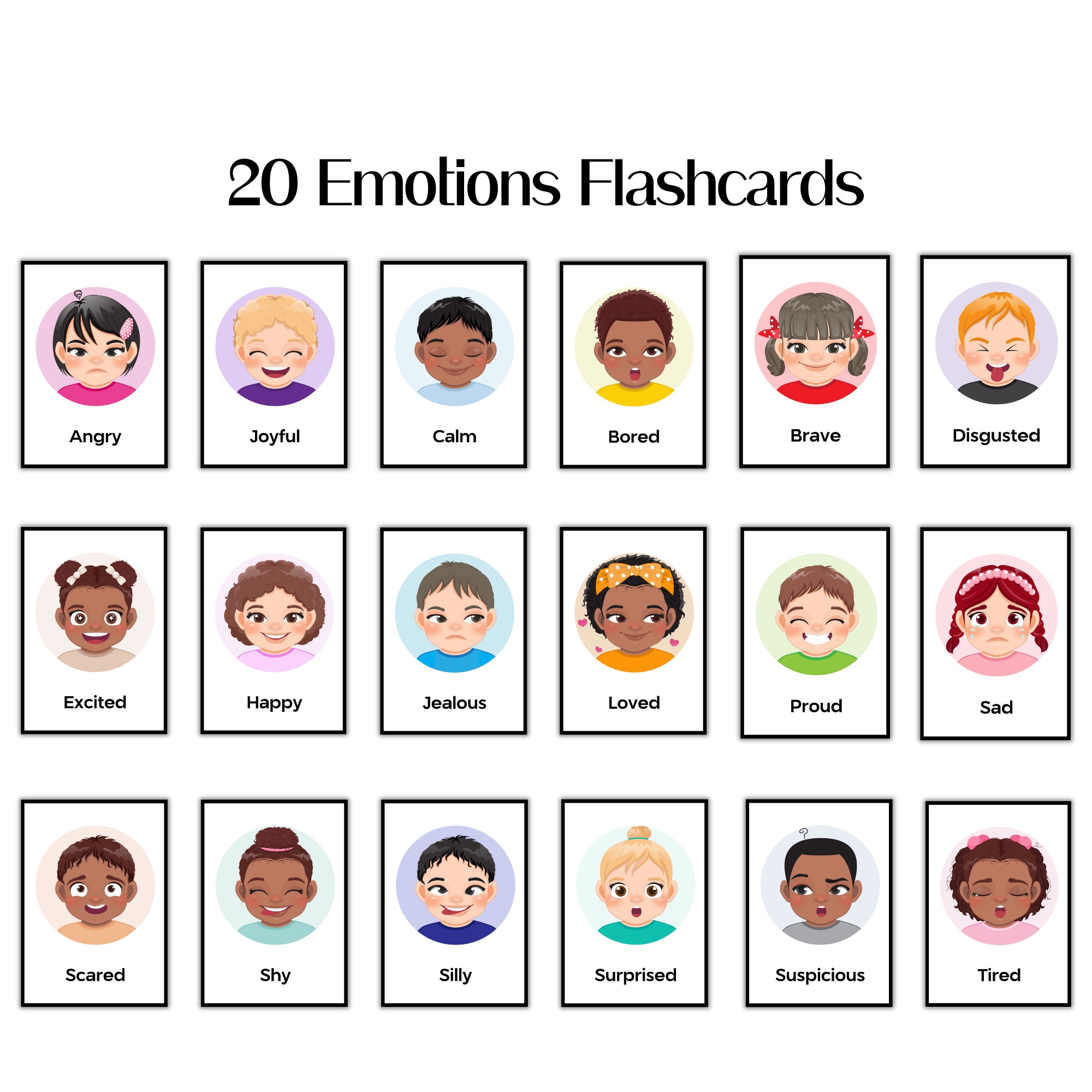
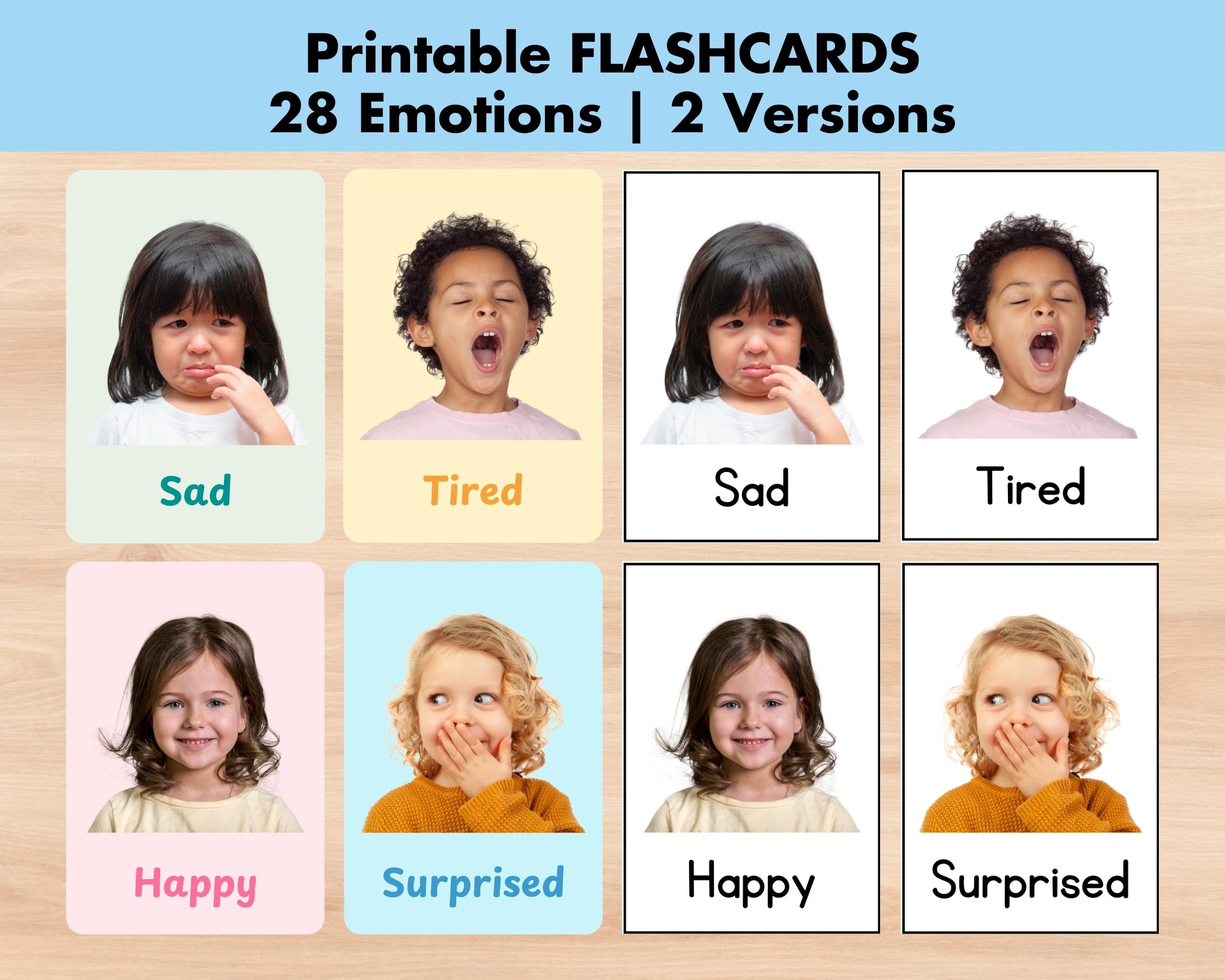
Emotion picture flashcards are tangible photographic tools displaying authentic human facial expressions designed to simultaneously foster affective recognition and precise visual literacy. According to the National Association for the Education of Young Children (NAEYC), purposeful exposure to realistic photo-based visual materials significantly accelerates cognitive mapping, emotional vocabulary acquisition, and observational drawing precision in early childhood. Integrating these photographic resources into structured Photo Flashcards routines bridges psychological development with foundational studio art competencies. Observers must decode nuanced micro-expressions, analyze facial symmetry, and translate dynamic biological geometry into controlled lines. By pairing real photography with structured exercises, educators cultivate critical spatial awareness and accurate proportion estimation before children advance to complex rendering. This comprehensive methodology transforms standard affective identification tasks into rigorous visual arts curricula.
Visual Learning & Skill Snapshot:
- Core Focus: Utilizing emotion picture flashcards to bridge emotional literacy with foundational proportion estimation and grid-based visual arts skills.
- Target Skill: Spatial reasoning, visual discrimination, fine-motor proportion control, and affective recognition.
- Key Recommendation: Pair photographic prompts directly with structured drawing worksheets to ground abstract facial features into concrete spatial grids.
Core Principles and Visual Learning Overview
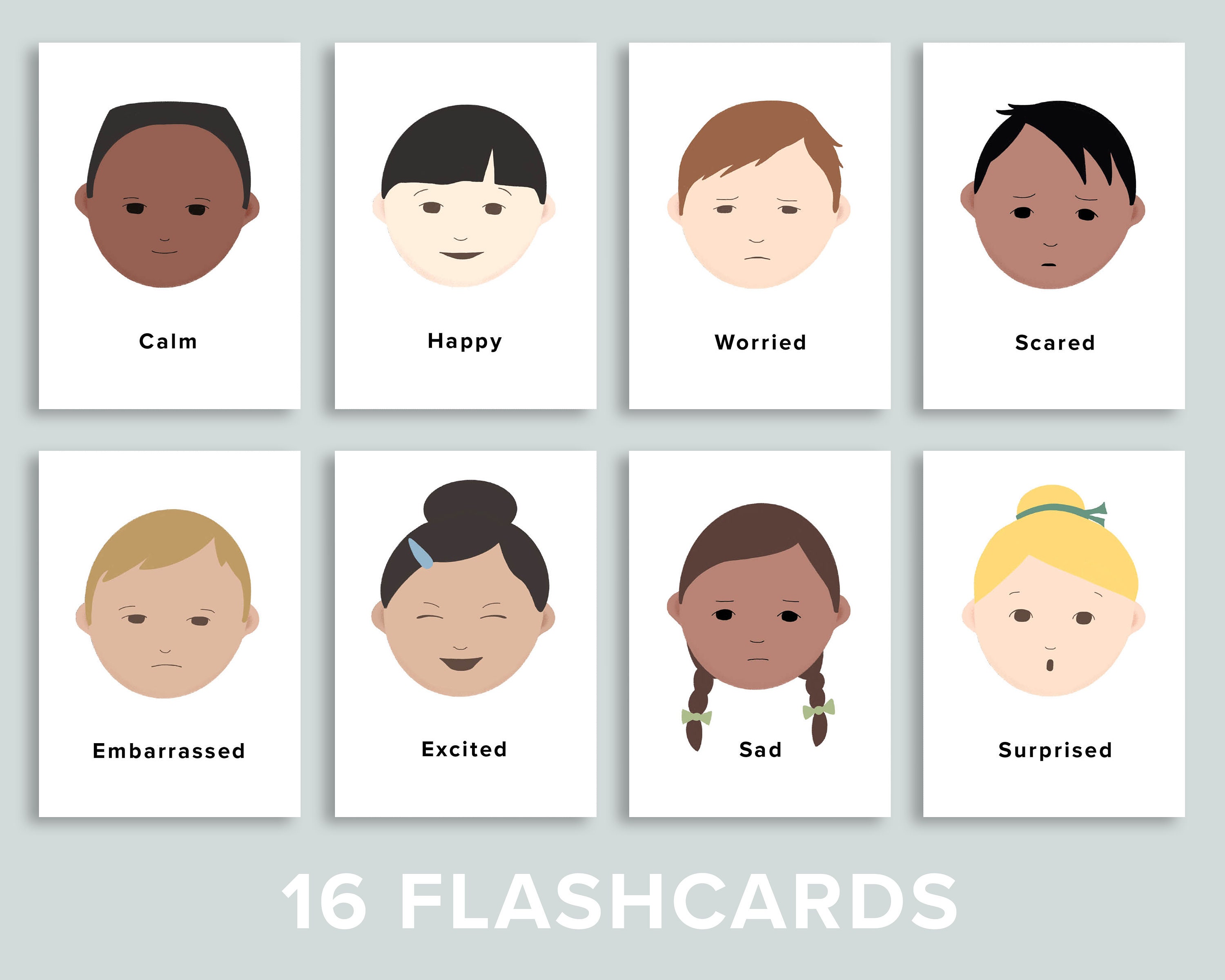
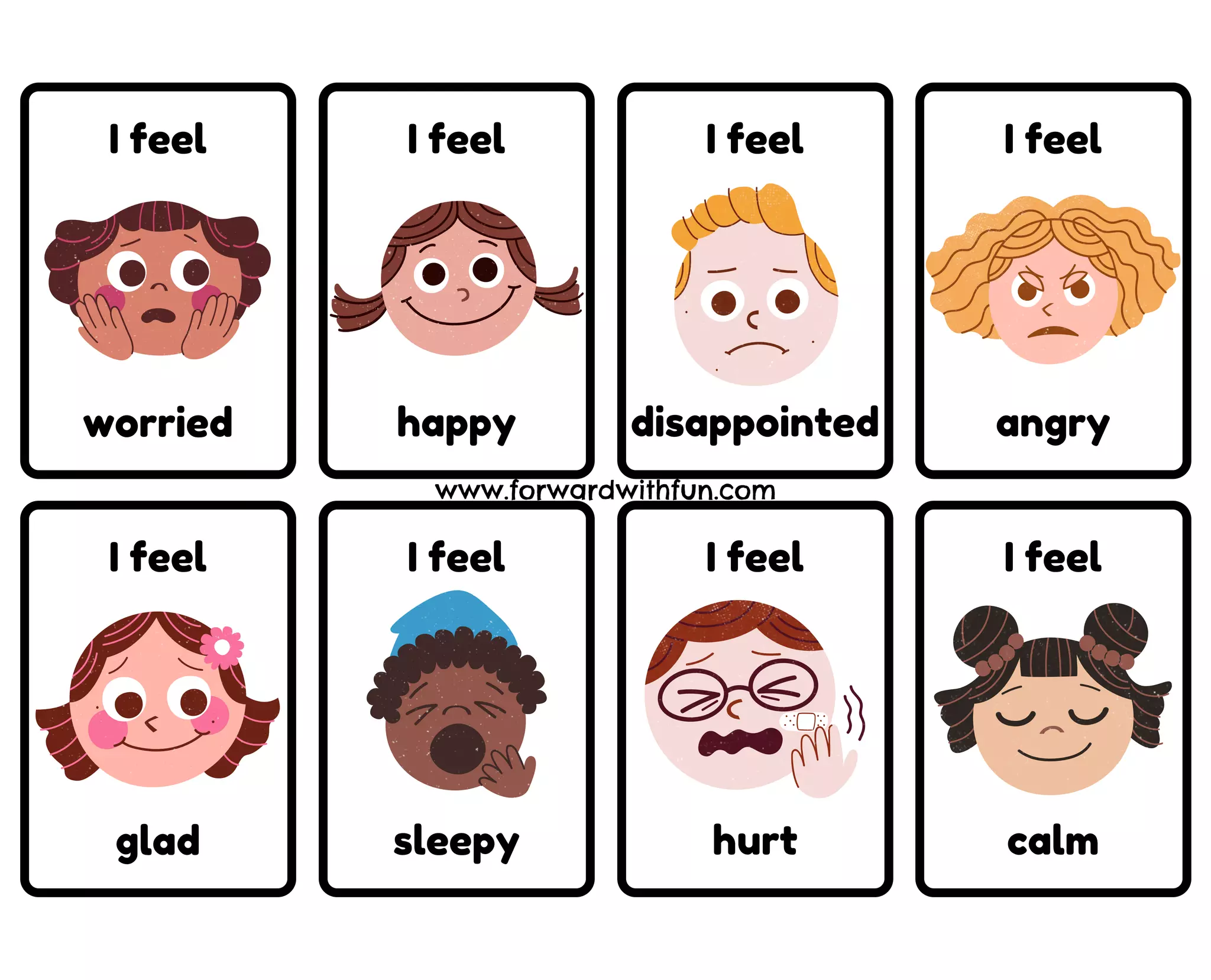
Emotion picture flashcards establish an essential anchor for visual art learners by replacing abstract cartoon representations with genuine photographic data. Children learn to observe subtle cranial proportions, such as the distance between ocular structures and the curvature of the zygomatic arch, directly from real subjects. When combined with printable Grid Drawing worksheets, learners transfer 2D photographic details into coordinate-based drawing spaces. This dual-action approach trains the brain to bypass symbolic assumptions—such as drawing generic oval eyes—and instead render exact visual evidence. Spatial awareness deepens as learners measure coordinate intersections, evaluate negative space around facial contours, and estimate proportional relationships across horizontal and vertical axes.
Key Specifications and Breakdown
| Age / Learning Stage | Visual Skill & Grid Ratio | Pedagogical Application & Scaffolding |
|---|---|---|
| Early Years (Ages 3-4) | 1×1 to 2×2 Low-Density Grids | Focus on primary emotion identification, coarse shape mapping, and basic hand-eye coordination using large photographic cards. |
| Early Elementary (Ages 5-7) | 3×3 to 4×4 Medium Grids | Emphasis on proportional estimation, contour tracing, and mapping specific facial landmarks like mouth curvature and brow angles. |
| Advanced Young Artists (Ages 8-10) | 6×6 High-Density Grids | Advanced tonal rendering, precise spatial measurement, and the faithful replication of subtle micro-expressions from real photo references. |
Photographic reference materials fundamentally enhance cognitive mapping by engaging mirror neurons and reinforcing precise visual-spatial encoding during early childhood drawing tasks. — National Art Education Association (NAEA)
Step-by-Step Practical Application and Printing Guidelines
Implementing emotion picture flashcards effectively requires high-resolution cardstock printing, uniform scaling, and consistent alignment with corresponding drawing grids. Instructors should print photographic reference cards at exact dimensions, ensuring that the grid lines overlaying the photo match the blank coordinate grid sheets provided to the child. Begin the session by encouraging learners to study the photographic card independently, identifying the primary emotional state and discussing the specific facial features that convey that state. Next, guide learners to isolate individual grid squares, analyzing what lines, curves, or blank spaces occupy each specific sector. Finally, encourage light-handed pencil sketching on the coordinate worksheet, validating careful observation over speed. Additional hands-on projects and printable resources are readily accessible within broader Educational Activities collections to sustain long-term engagement.
Common Challenges and How to Avoid Them
Rushing through proportional estimation and ignoring grid coordinates represent the primary obstacles encountered when children render faces from photographic flashcards. Young learners frequently abandon systematic grid observation out of frustration, attempting to draw the entire eye or mouth freehand rather than breaking the feature down into manageable geometric fragments. Educators can counteract this tendency by introducing viewfinder tools or opaque paper masks that isolate a single grid square at a time, eliminating visual overwhelm. Furthermore, enforcing light preparatory sketching ensures that misaligned proportions can be easily adjusted before finalized linework is applied. Cultivating patience during the initial observation phase guarantees stronger spatial reasoning and vastly superior artistic outcomes.
💬 Frequently Asked Questions
Explore More Free Learning Printables and Visual Activities on WePhotoAgency
Discover an extensive, professionally curated repository of educational resources designed to elevate early childhood visual arts instruction. Educators, parents, and developmental specialists can access high-quality printables by visiting WePhotoAgency.com to download supplementary classroom materials today.
Visual Reference Gallery