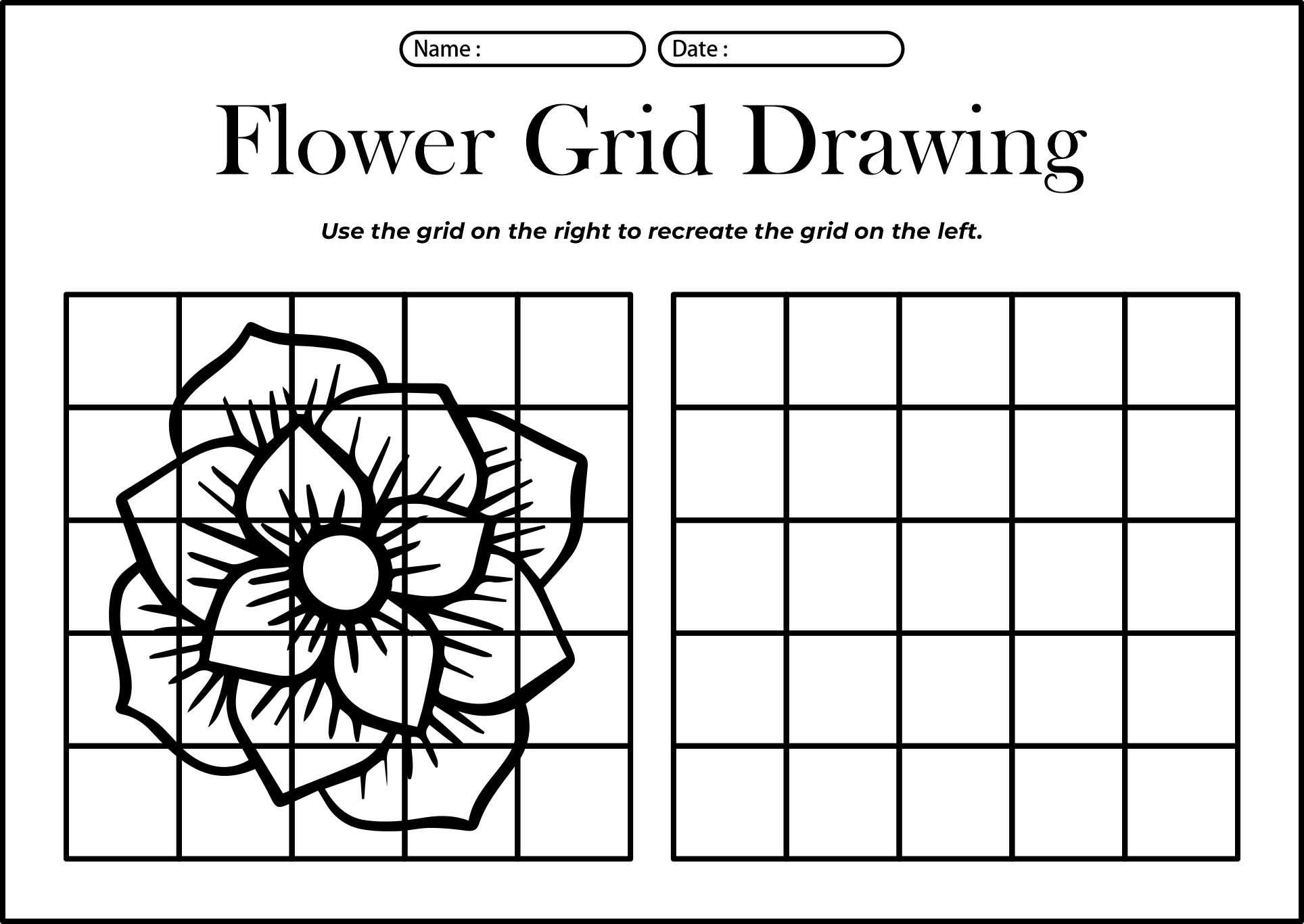
Introduction
A grid drawing system is a proven visual arts methodology that breaks complex images down into manageable geometric squares, enabling young learners to accurately replicate proportions, develop advanced spatial awareness, and translate real-world imagery onto paper square by square. According to the National Art Education Association (NAEA), structured observational drawing techniques effectively scaffold early cognitive development by building hand-eye coordination and enhancing the child’s ability to analyze visual relationships. Integrating this foundational technique with printable grid drawing worksheets transforms intimidating artistic tasks into structured Educational Activities that foster patience, focus, and geometric literacy in early elementary students.
Visual Learning & Skill Snapshot:
- Core Focus: Systematic decomposition of visual source material using coordinate-based graphing squares.
- Target Skill: Spatial reasoning, visual discrimination, fine-motor proportion, and photo-based concept mastery.
- Key Recommendation: Pair high-contrast real photo visual flashcards with matching oversized grids to ease early cognitive tracking.
Core Principles and Visual Learning Overview
The grid drawing system operates by establishing a Cartesian coordinate framework over a reference image, which systematically shifts a child’s cognitive processing from global object recognition to targeted local observation. When children utilize Grid Drawing printables alongside high-resolution Photo Flashcards, the brain learns to isolate lines, negative space, and tonal values within isolated coordinate boundaries rather than attempting to draw a complex whole simultaneously. This reduction of visual complexity aligns directly with Jean Piaget’s cognitive milestones for early learners transitioning from pre-operational to concrete operational thought, validating the use of geometric grids for tangible spatial mapping.
Key Specifications and Breakdown
| Age / Learning Stage | Visual Skill & Grid Ratio | Pedagogical Application & Scaffolding |
|---|---|---|
| Ages 4-5 (Early Pre-K) | 2×2 or 3×3 simple square grid | Focuses on basic shape tracking using high-contrast photo references and bold grid lines. |
| Ages 6-7 (Kindergarten / 1st Grade) | 4×4 balanced coordinate grid | Encourages line continuity, proportion estimation, and tracking single square intersections. |
| Ages 8-9 (Early Elementary) | 6×6 or finer detailed matrix | Refines intricate observational accuracy, shading transfer, and independent grid scaling. |
Systematic visual division and geometric scaffolding accelerate spatial reasoning and fine-motor precision during foundational development years. — National Art Education Association (NAEA)
Step-by-Step Practical Application and Printing Guidelines
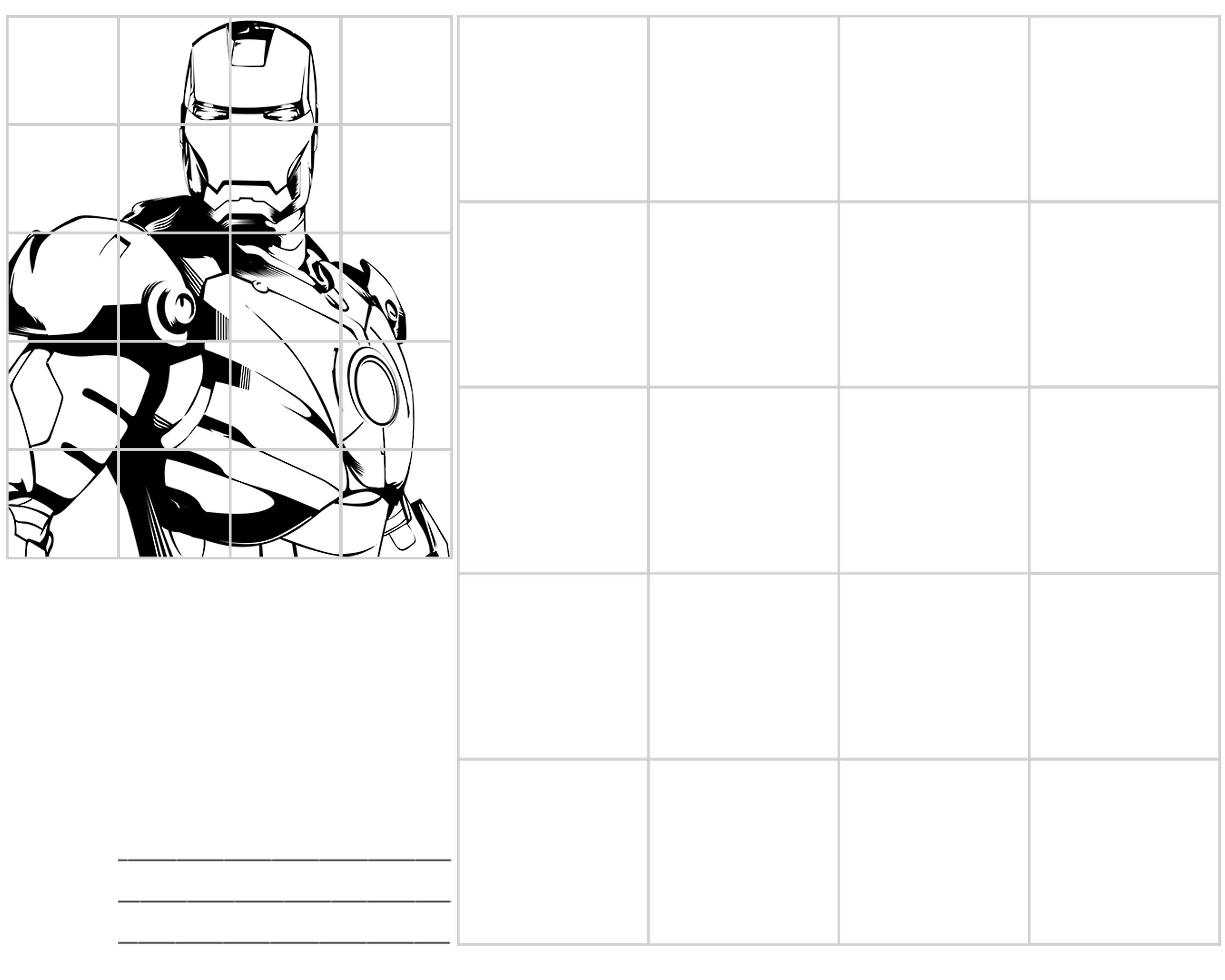
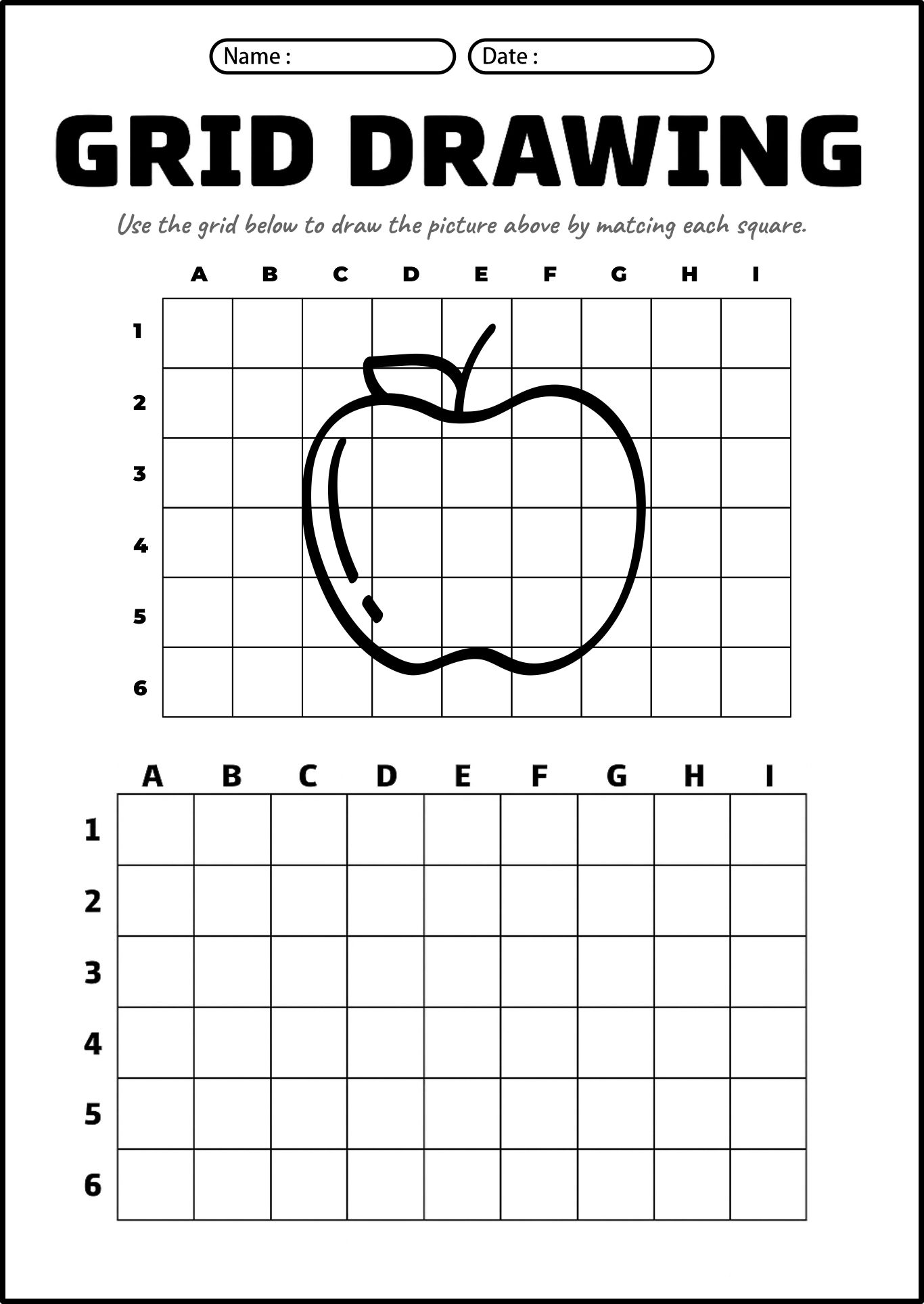
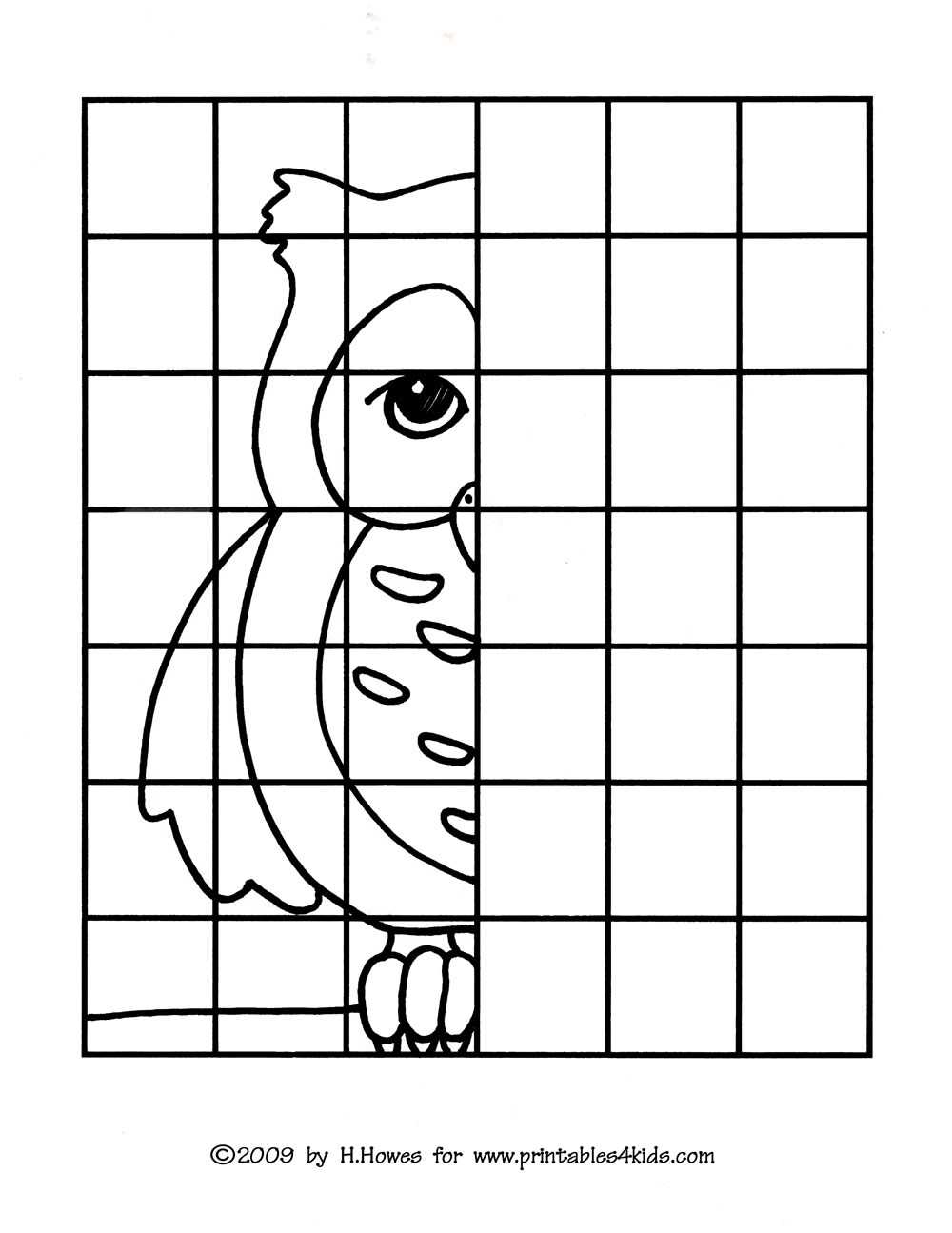
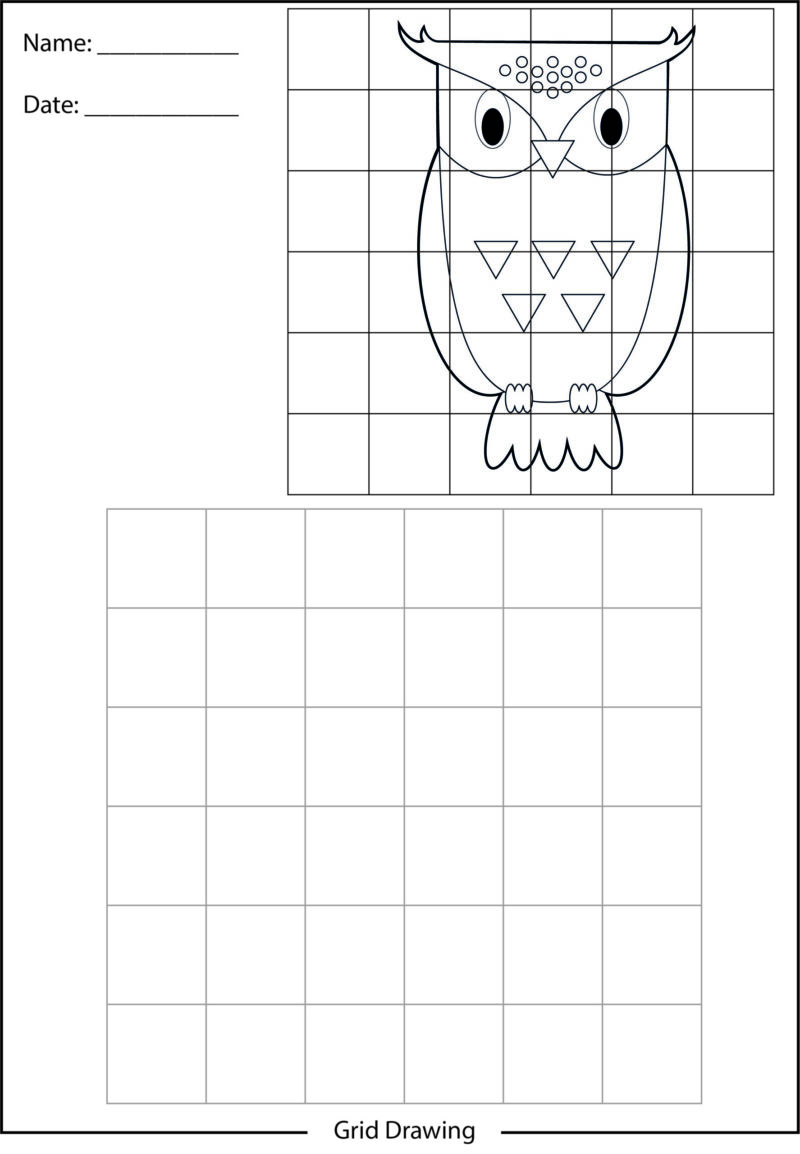
Implementing a grid drawing system successfully requires pairing a clear, high-contrast reference photo with a blank grid sheet featuring identical row and column counts. Educators and parents should print worksheets onto heavyweight matte cardstock to withstand repeated erasing and pencil pressure by young hands. Instructors can guide students to point at one specific coordinate square on the master reference image, analyze where intersecting lines touch the grid borders, and meticulously duplicate those exact coordinates onto the corresponding empty square on the drawing sheet.
Common Challenges and How to Avoid Them
Young learners often struggle with the grid drawing system when they attempt to draw entire objects across multiple squares instead of focusing on one isolated cell at a time. To prevent frustration, educators should provide sliding paper masks or framing cards that allow children to block out surrounding squares and concentrate intensely on a single coordinate region. Furthermore, starting with low-density 2×2 or 3×3 grids ensures that children master the mechanics of coordinate mapping before progressing to complex multi-square photographic compositions.
💬 Frequently Asked Questions
Explore More Free Learning Printables and Visual Activities on WePhotoAgency
Accessing comprehensive educational resources empowers parents, homeschoolers, and educators to deliver structured, high-impact instruction without unnecessary preparation hurdles. Discover an extensive library of printable worksheets, visual flashcards, and step-by-step guides by exploring the complete collection at WePhotoAgency.com to elevate early childhood visual arts and cognitive development.
Visual Reference Gallery