Introduction
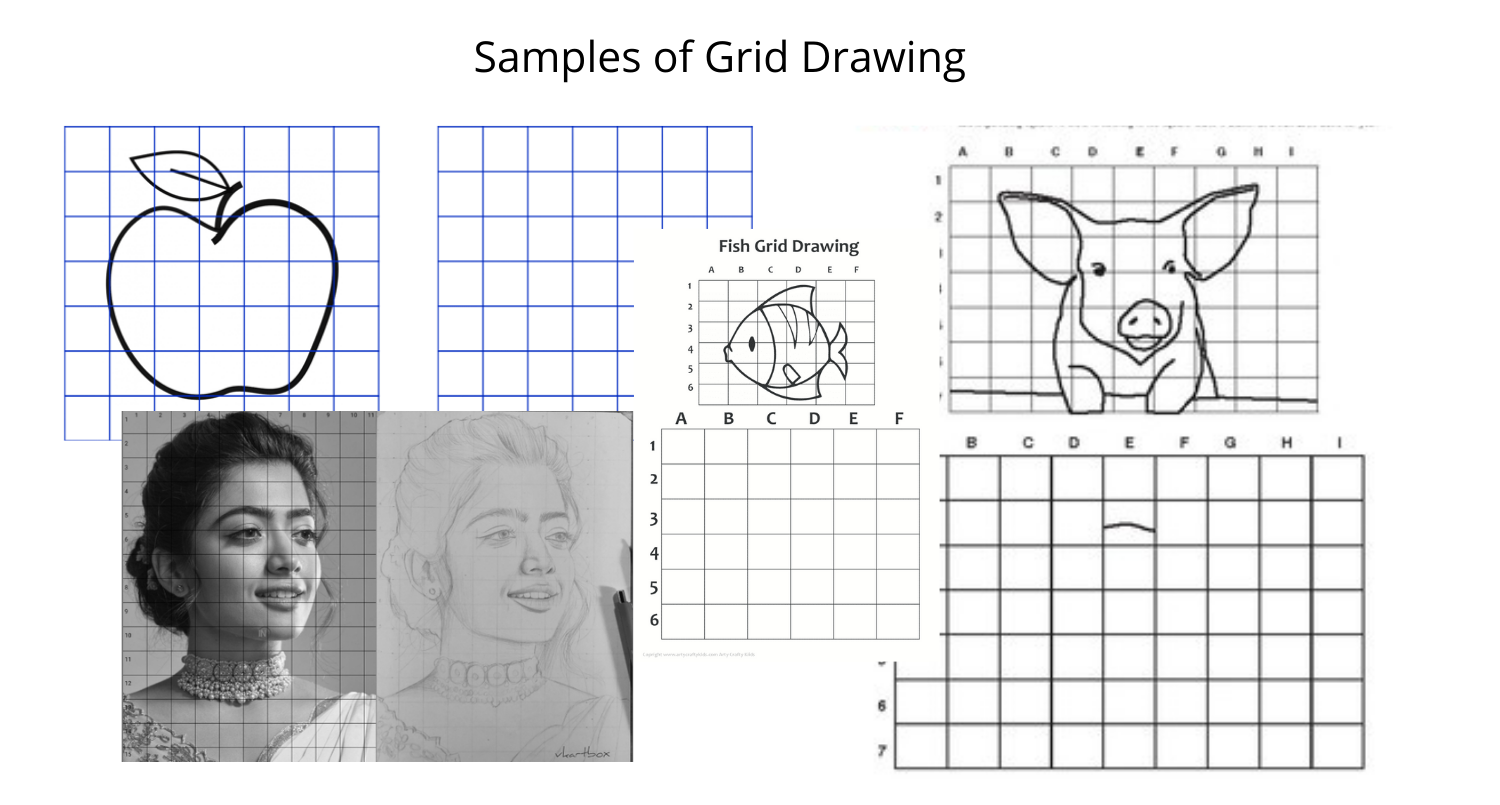
The grid drawing technique is a foundational visual arts methodology that breaks complex images into smaller, manageable coordinate squares to teach spatial awareness, proportion estimation, and hand-eye coordination. According to the National Art Education Association (NAEA), structured observational drawing exercises significantly enhance children’s fine motor precision and visual-spatial processing abilities by training the brain to analyze shapes as abstract geometric relationships rather than overwhelming whole objects. Educators, homeschoolers, and early childhood specialists rely on printable Grid Drawing resources paired with real photo visual flashcards to scaffold early cognitive development. By isolating sections of an image, young learners overcome intimidation, develop methodical scanning patterns, and build lasting confidence in rendering realistic perspectives.
Visual Learning & Skill Snapshot:
- Core Focus: Systematic coordinate-based visual fragmentation for accurate artistic reproduction.
- Target Skill: Spatial reasoning, visual discrimination, fine-motor proportion, and observation accuracy.
- Key Recommendation: Pair simple 2×2 or 3×3 photographic grids with high-contrast real photo visual flashcards for optimal cognitive scaffolding.
Core Principles and Visual Learning Overview
Grid drawing functions by superintending visual attention, compelling the developing brain to shift from left-hemisphere symbol-making (drawing what is thought to be there) to right-hemisphere observational processing (drawing exact lines, angles, and negative spaces as they actually appear). When children utilize printable worksheets featuring real photo visual flashcards, they learn to isolate coordinates, compare line intersections relative to grid lines, and synthesize individual quadrant details into a cohesive final rendering. This structured breakdown prevents cognitive overload in early elementary learners, making complex forms accessible while reinforcing foundational geometry concepts such as symmetry, alignment, and scale transformation.
Key Specifications and Breakdown
| Age / Learning Stage | Visual Skill & Grid Ratio | Pedagogical Application & Scaffolding |
|---|---|---|
| Ages 4–5 (Preschool/Pre-K) | 2×2 Grid (4 squares), basic geometric outlines | Focus on tracking simple shapes and horizontal-vertical alignments using tactile props and Photo Flashcards. |
| Ages 6–7 (Early Elementary) | 3×3 to 4×4 Grid, everyday object photographs | Emphasize intersecting lines, negative space recognition, and proportional scaling through structured Educational Activities. |
| Ages 8+ (Advanced Elementary) | 5×5+ Grid, complex nature and architectural details | Refine coordinate mapping, tonal shading translation, and multi-step visual problem-solving independence. |
Structured observational drawing methodologies reliably accelerate spatial reasoning, visual discrimination, and fine-motor control by converting holistic perceptual challenges into sequential cognitive tasks — National Art Education Association (NAEA)
Step-by-Step Practical Application and Printing Guidelines
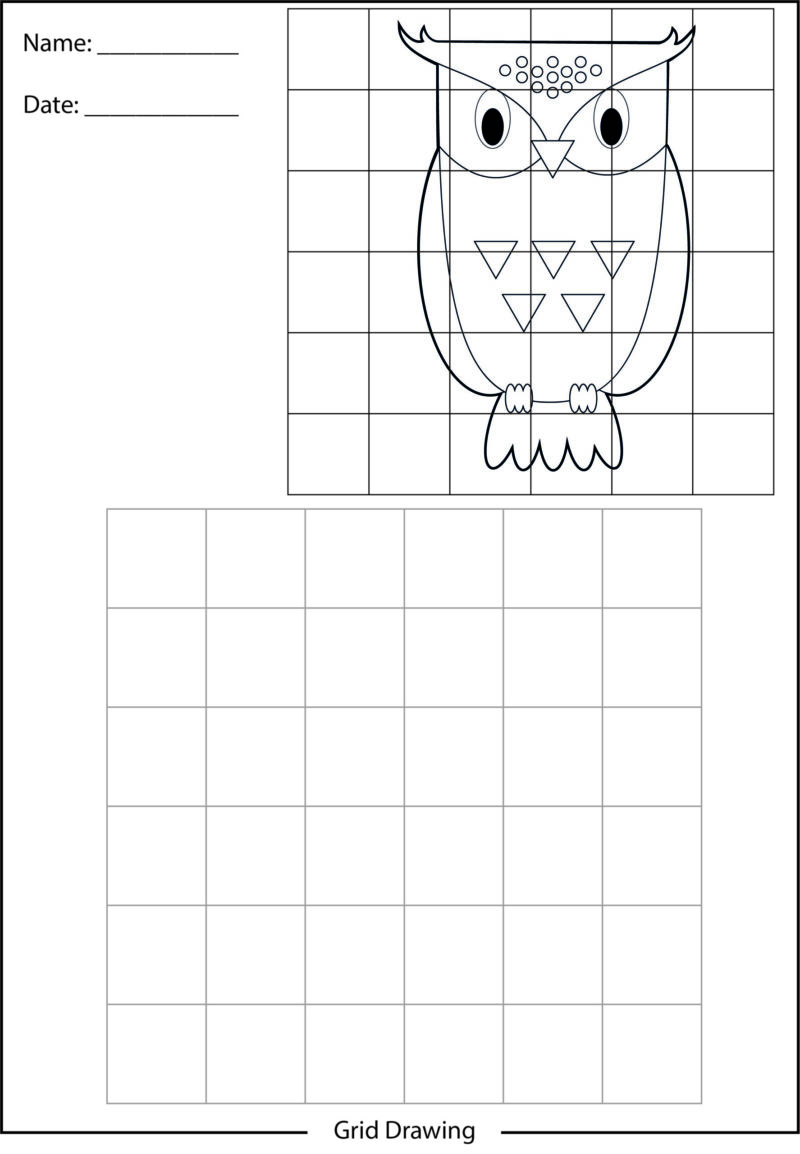
Implementing the grid drawing technique requires high-contrast source imagery, cleanly formatted grid overlays, and durable drawing paper to ensure young children can easily cross-reference coordinates. Educators begin by selecting clear, high-resolution photographs, such as real-world animals or everyday objects, printed with an identical grid size alongside an empty, matching coordinate grid for the child’s drawing surface. Instructors guide learners to tackle one square at a time, starting from the top-left quadrant and moving systematically across and down, similar to reading text. This disciplined scanning path curbs impulsive sketching, reinforces attention to detail, and guarantees that proportions remain accurate across the entire composition.
Common Challenges and How to Avoid Them
Rushing proportions and skipping coordinate checks represent the most frequent obstacles young learners face when attempting grid-based visual exercises. Children naturally tend to look at the entire picture at once, which often results in skewed scale representations and distorted angles if a single line wanders out of its designated square. To prevent frustration, educators should encourage students to cover surrounding squares with a blank index card, isolating the immediate coordinate in view. Furthermore, utilizing simple, low-density grids initially ensures that early learners master coordinate tracking before advancing to high-density photographic reference sheets.
💬 Frequently Asked Questions
Explore More Free Learning Printables and Visual Activities on WePhotoAgency
Accessing comprehensive collections of printable grid drawing templates, educational worksheets, and visual learning resources empowers educators and parents to foster lifelong cognitive and artistic excellence. Visit WePhotoAgency.com today to discover an extensive library designed to elevate early childhood spatial reasoning and creative confidence through engaging, hands-on visual activities.
Visual Reference Gallery