Introduction
Grid drawing goku utilizes structured square matrices overlaid on reference images of the popular anime character to teach children proportion estimation, spatial mapping, and fine-motor coordination. According to the National Art Education Association (NAEA), breaking complex visual subjects down into manageable geometric segments significantly reduces cognitive overload in early learners, making advanced line work accessible. Integrating pop-culture iconography into structured visual exercises leverages intrinsic motivation, transforming intimidating artistic tasks into approachable puzzles. Exploring resources like Grid Drawing printables provides structured frameworks that reinforce foundational geometry and observational skills simultaneously. Beyond mechanical copying, this method trains the brain to isolate lines, angles, and negative spaces rather than relying on abstract mental symbols.
Visual Learning & Skill Snapshot:
- Core Focus: Structured geometric subdivision of reference photographs to build proportion accuracy.
- Target Skill: Spatial reasoning, visual discrimination, fine-motor proportion, and observation-based rendering.
- Key Recommendation: Pair simple 4×4 or 6×6 grids with high-contrast photo references before advancing to complex multi-box matrices.
Core Principles and Visual Learning Overview
Grid drawing goku operates on the cognitive principle of chunking, where complex visual information is subdivided into localized micro-tasks that young brains can process sequentially. When children analyze a single grid square containing a fragment of hair, an eye, or a uniform edge, visual noise disappears, allowing precise hand-eye coordination to take over. This analytical process aligns closely with strategies used in Photo Flashcards training, where real-world imagery builds rapid visual categorization. Utilizing specific thematic characters captures attention spans, anchoring abstract mathematical grid concepts to concrete, highly engaging imagery.
Key Specifications and Breakdown
| Age / Learning Stage | Visual Skill & Grid Ratio | Pedagogical Application & Scaffolding |
|---|---|---|
| Ages 5-6 (Early Elementary) | 2×2 or 3×3 simple grids | Focuses on basic quadrant location, gross shape identification, and pencil grip control. |
| Ages 7-8 (Mid Elementary) | 4×4 moderate matrices | Emphasizes proportion estimation, angle replication, and connecting lines across grid intersections. |
| Ages 9+ (Advanced Beginners) | 6×6 detailed proportions | Refines intricate line weight, symmetry mapping, and independent error checking against reference photos. |
Structured visual decomposition significantly enhances spatial working memory and fine-motor precision by reducing holistic cognitive load into manageable perceptual units. — National Art Education Association (NAEA)
Step-by-Step Practical Application and Printing Guidelines
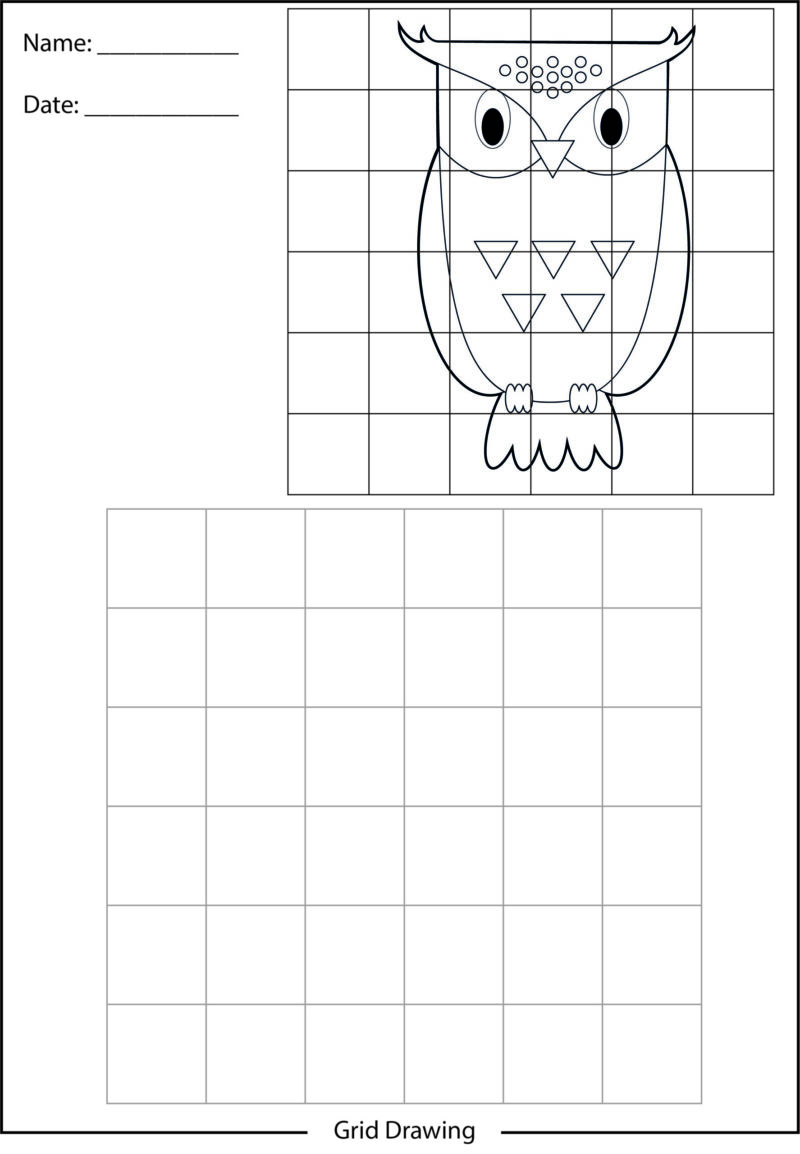
Implementing grid drawing goku requires high-contrast printouts, stable workspaces, and properly labeled coordinate axes to prevent student confusion. Educators should print identical grid lines on both the reference sheet and the blank drawing template to maintain exact 1:1 scaling ratios. Pairing these drawing sheets with Educational Activities expands cognitive benefits by linking geometric drawing tasks with storytelling and character identification. Instruct learners to tackle the grid box by box, starting from the top-left corner and moving systematically across rows to prevent smudging and spatial disorientation.
Common Challenges and How to Avoid Them
Misjudging line coordinates and rushing through individual box details represent the most frequent obstacles encountered by developing artists using geometric grids. When children attempt to draw the entire character at once instead of focusing exclusively on one bounded square, proportion distortions inevitably occur. Educators can prevent frustration by masking adjacent grid squares with a blank index card, forcing the learner to isolate visual information strictly to the active box under observation. Providing pre-printed starter lines or light grey reference points within complex hair or clothing sections further scaffolds the learning experience without diminishing educational value.
💬 Frequently Asked Questions
Explore More Free Learning Printables and Visual Activities on WePhotoAgency
Educators and parents seeking comprehensive visual learning assets can discover an extensive selection of printable resources, structured drawing sheets, and cognitive development tools directly at WePhotoAgency.com. Every material is intentionally designed to bridge creative expression with critical spatial thinking, supporting children through every stage of visual literacy mastery.
Visual Reference Gallery