Introduction
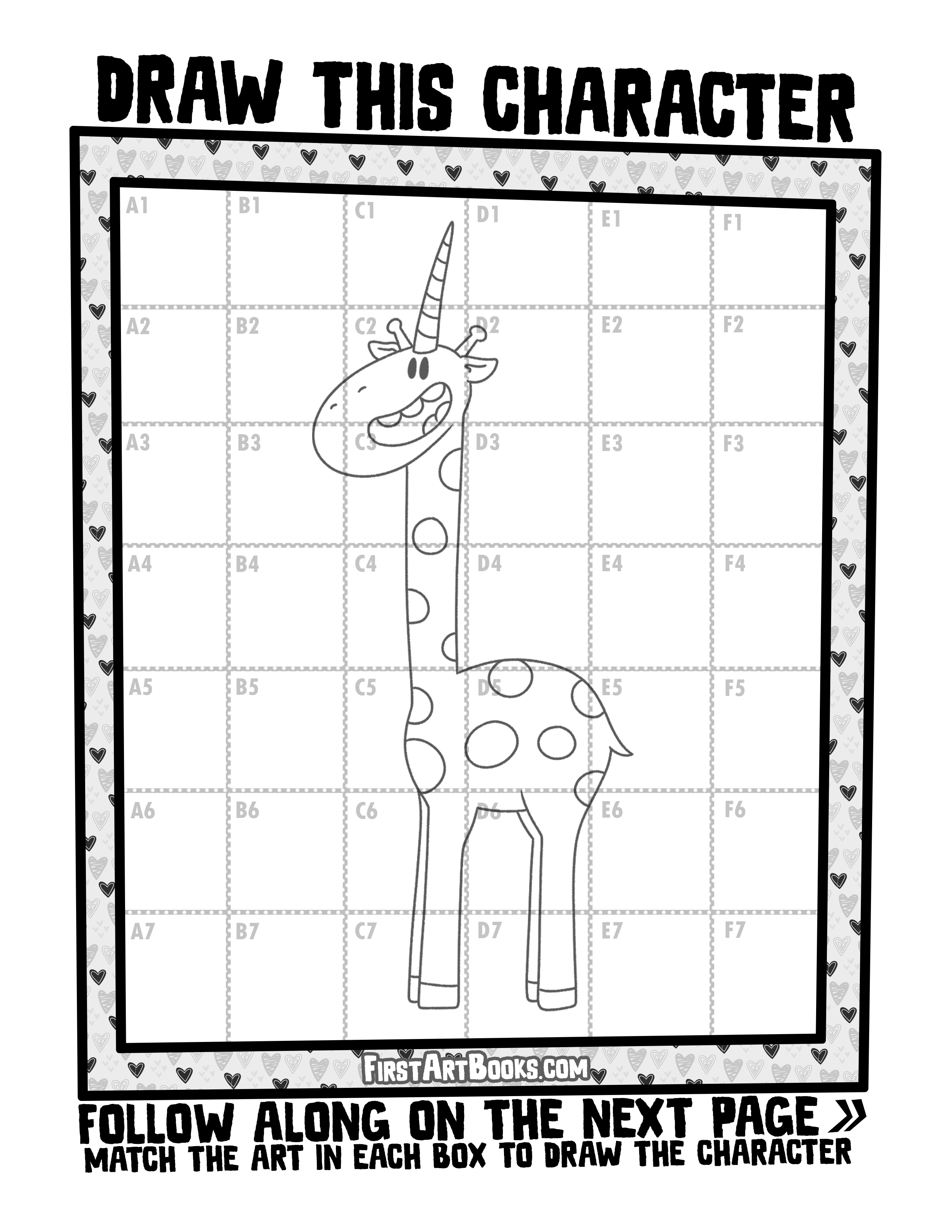
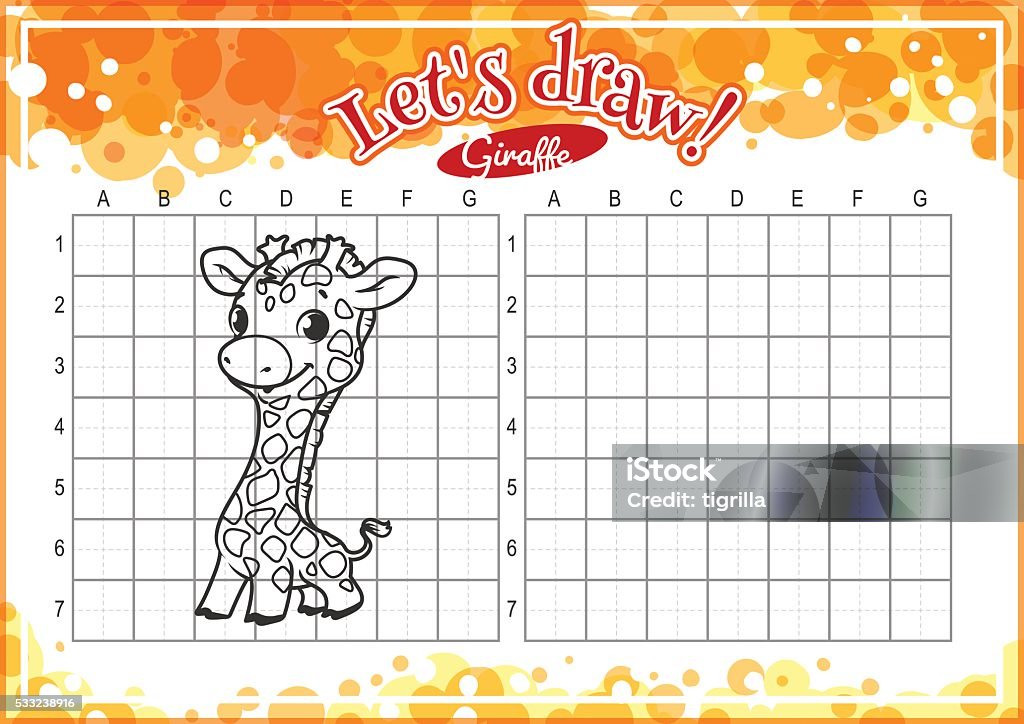
Grid drawing giraffe activities combine structured coordinate mapping with realistic photographic subjects to systematically build spatial awareness, observation accuracy, and fine-motor control in early childhood education. According to the National Association for the Education of Young Children (NAEYC), hands-on engagement with structured visual media significantly accelerates cognitive processing and spatial representation skills during early developmental stages. Utilizing printable worksheets alongside real-life animal imagery bridges the gap between abstract geometric frameworks and tangible biological forms, making complex biological proportions accessible to young learners. These targeted instructional resources are designed to transform intimidating drawing tasks into manageable, confidence-boosting coordinate exercises that reinforce foundational geometry alongside artistic expression.
Visual Learning & Skill Snapshot:
- Core Focus: Systematic coordinate-based drawing of a giraffe using proportional grid frameworks.
- Target Skill: Spatial reasoning, visual discrimination, fine-motor proportion, and photo-based concept mastery.
- Key Recommendation: Pair initial grid worksheets with Photo Flashcards to strengthen accurate visual observation before pencil execution.
Core Principles and Visual Learning Overview
Grid drawing giraffe exercises require children to copy line segments square-by-square, fundamentally shifting cognitive focus from generalized object identification to precise shape and angle analysis. When learners break a complex biological subject—such as the distinct spots, long neck, and angular head of a giraffe—into isolated grid boxes, the challenge reduces from overwhelming visual data to isolated spatial estimation. This decomposition technique aligns closely with foundational mathematical mapping principles, allowing children to practice coordinate identification and scale translation naturally. Educators and parents can leverage specialized resources found within Grid Drawing collections to systematically introduce varying grid densities, moving from large two-by-two layouts for younger age groups up to detailed multi-square matrices for advancing elementary students.
Key Specifications and Breakdown
| Age / Learning Stage | Visual Skill & Grid Ratio | Pedagogical Application & Scaffolding |
|---|---|---|
| Ages 4–5 (Preschool) | 2×2 or 3×3 Large Grid | Focuses on basic top-bottom and left-right spatial orientation using simplified animal contours. |
| Ages 6–7 (Early Elementary) | 4×4 Medium Grid | Develops line continuity, angle estimation, and observation of distinctive coat pattern clusters. |
| Ages 8+ (Advanced Practice) | 6×6+ Detailed Grid | Refines proportional scaling, negative space awareness, and intricate anatomical accuracy. |
Visual-spatial training through structured coordinate mapping enhances problem-solving capabilities and geometric comprehension in early childhood development. — National Art Education Association (NAEA)
Step-by-Step Practical Application and Printing Guidelines
Executing a successful grid drawing session involves preparing high-contrast printable worksheets, securing clean writing utensils, and guiding the learner to isolate one coordinate square at a time using an opaque window card or index card blocker. Instructors should encourage children to examine the specific intersections where lines enter and exit each grid box, rather than attempting to draw the entire animal silhouette simultaneously. Integrating these exercises into broader Educational Activities provides cross-curricular enrichment, linking wildlife biology with geometry and fine motor skill practice. Printing reference sheets on heavy-card stock ensures durability during repeated handling, while maintaining clear, dark coordinate lines that prevent visual fatigue in young participants.
Common Challenges and How to Avoid Them
Children frequently encounter difficulties when they attempt to draw freehand across multiple grid lines instead of anchoring their pencil strokes firmly within individual coordinate boxes. To mitigate this common hurdle, educators should provide physical masking tools that isolate a single square on both the reference photo and the blank drawing grid, eliminating visual clutter. Another frequent obstacle involves scaling errors where features expand beyond the boundaries of the target square; guiding children to check primary reference points—such as where the giraffe ear intersects a horizontal coordinate line—instantly rectifies proportion drift and reinforces analytical self-correction.
💬 Frequently Asked Questions
Explore More Free Learning Printables and Visual Activities on WePhotoAgency
Comprehensive educational collections provide infinite opportunities to support cognitive development, spatial reasoning, and artistic expression through structured visual resources. Discover a vast assortment of printables, flashcards, and step-by-step drawing guides by visiting the primary resource library at WePhotoAgency.com to elevate daily learning experiences.
Visual Reference Gallery