Introduction
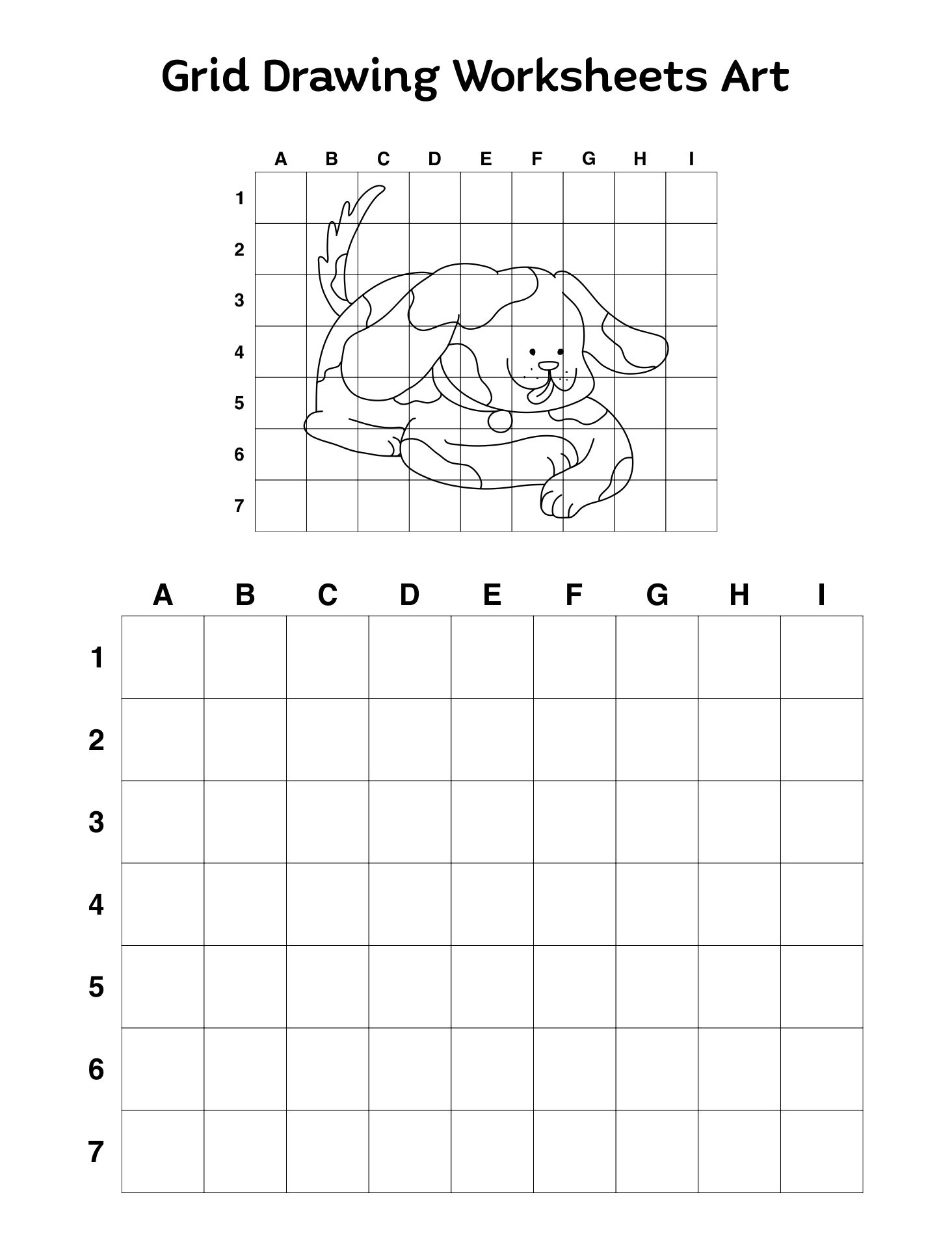
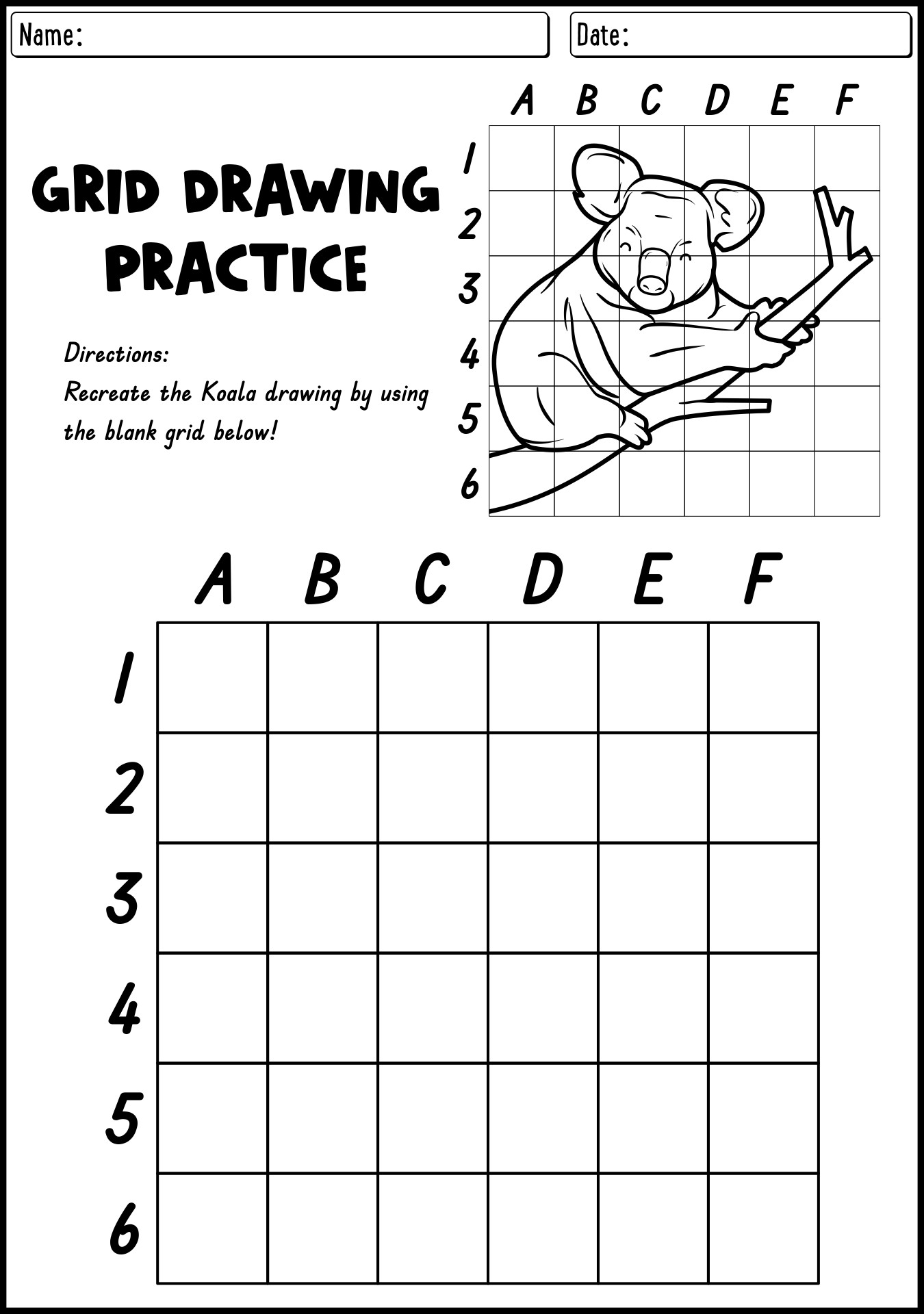
A grid drawing board is a structured spatial-mapping tool that partitions visual references into manageable segments to teach children precise proportion estimation, visual analysis, and fine-motor coordination. According to the National Art Education Association (NAEA), breaking complex visual information into discrete coordinate cells significantly enhances a child’s observational accuracy, visual-spatial reasoning, and foundational drawing confidence. When paired with printable grid drawing worksheets and real photo visual flashcards, this educational approach transforms overwhelming artistic tasks into step-by-step cognitive challenges. Educators and parents utilize these tools within broader Educational Activities to bridge the gap between abstract visual perception and concrete hand-eye execution.
Visual Learning & Skill Snapshot:
- Core Focus: Systematic coordinate-based visual translation using grid partitioning.
- Target Skill: Spatial reasoning, visual discrimination, fine-motor proportion, and observation.
- Key Recommendation: Pair high-contrast photo references with matching low-density grids to build early success.
Core Principles and Visual Learning Overview
Visual mastery develops as children learn to isolate details within single coordinate boxes rather than attempting to render an entire complex image simultaneously. This methodology relies on breaking down global visual stimuli into local geometric data points, training the brain to evaluate negative space, contour angles, and relative scale accurately. Utilizing a physical grid drawing board alongside standardized printouts helps young learners anchor their gaze, shift attention between whole objects and microscopic sections, and develop rigorous visual discrimination. Incorporating Photo Flashcards as reference templates bridges real-world object recognition with abstract graphic translation, ensuring that cognitive processing remains grounded in tangible visual experiences.
Key Specifications and Breakdown
| Age / Learning Stage | Visual Skill & Grid Ratio | Pedagogical Application & Scaffolding |
|---|---|---|
| Ages 4–6 (Early Years) | 2×2 or 3×3 simple cell grids | Use bold, high-contrast Grid Drawing printables to teach basic quadrant tracking and pencil control. |
| Ages 7–9 (Early Elementary) | 4×4 to 6×6 intermediate coordinates | Transition to real-world photo references to strengthen proportion estimation and shape boundary identification. |
| Ages 10+ (Advanced Primary) | 8×8 complex structural matrices | Encourage independent scaling, symmetrical adjustments, and fine-line precision without adult cueing. |
Systematic visual partitioning accelerates spatial cognition by reducing cognitive overload and training ocular-motor fixation patterns. — National Art Education Association (NAEA)
Step-by-Step Practical Application and Printing Guidelines
Executing effective grid-based lessons requires printing reference images and working grids at identical dimensions to maintain a seamless one-to-one visual ratio. Educators should secure both sheets side-by-side on a stable flat surface using low-tack tape to prevent shifting during intensive observation tasks. Learners begin by identifying the top-left coordinate, analyzing line intersections within that singular box, and replicating the exact stroke in the corresponding target square. Teachers must encourage starting with dominant vertical and horizontal axes before filling in intricate diagonal contours. Maintaining organized workspaces and utilizing sharp, short pencils ensures that young artists preserve clean grid lines and precise coordinate boundaries throughout the exercise.
Common Challenges and How to Avoid Them
Frustration occurs when children attempt to draw entire objects across multiple grid lines instead of focusing strictly on one isolated square at a time. To prevent this common observational error, adults should provide physical window masks or index cards to cover surrounding squares, forcing the brain to isolate individual spatial segments. Another frequent hurdle involves scale distortion caused by working on mismatched grid dimensions; educators must verify that printable worksheets feature perfectly square cells. Providing praise focused on deliberate observation rather than flawless final lines maintains intrinsic motivation and encourages resilient problem-solving during complex visual tasks.
💬 Frequently Asked Questions
Explore More Free Learning Printables and Visual Activities on WePhotoAgency
Unlock a comprehensive collection of printable educational resources, structured drawing sheets, and visual teaching aids designed to support developmental milestones at WePhotoAgency.com. Educators, parents, and homeschool leaders can immediately access high-quality assets engineered to foster creativity, concentration, and spatial intelligence.
Visual Reference Gallery