Introduction
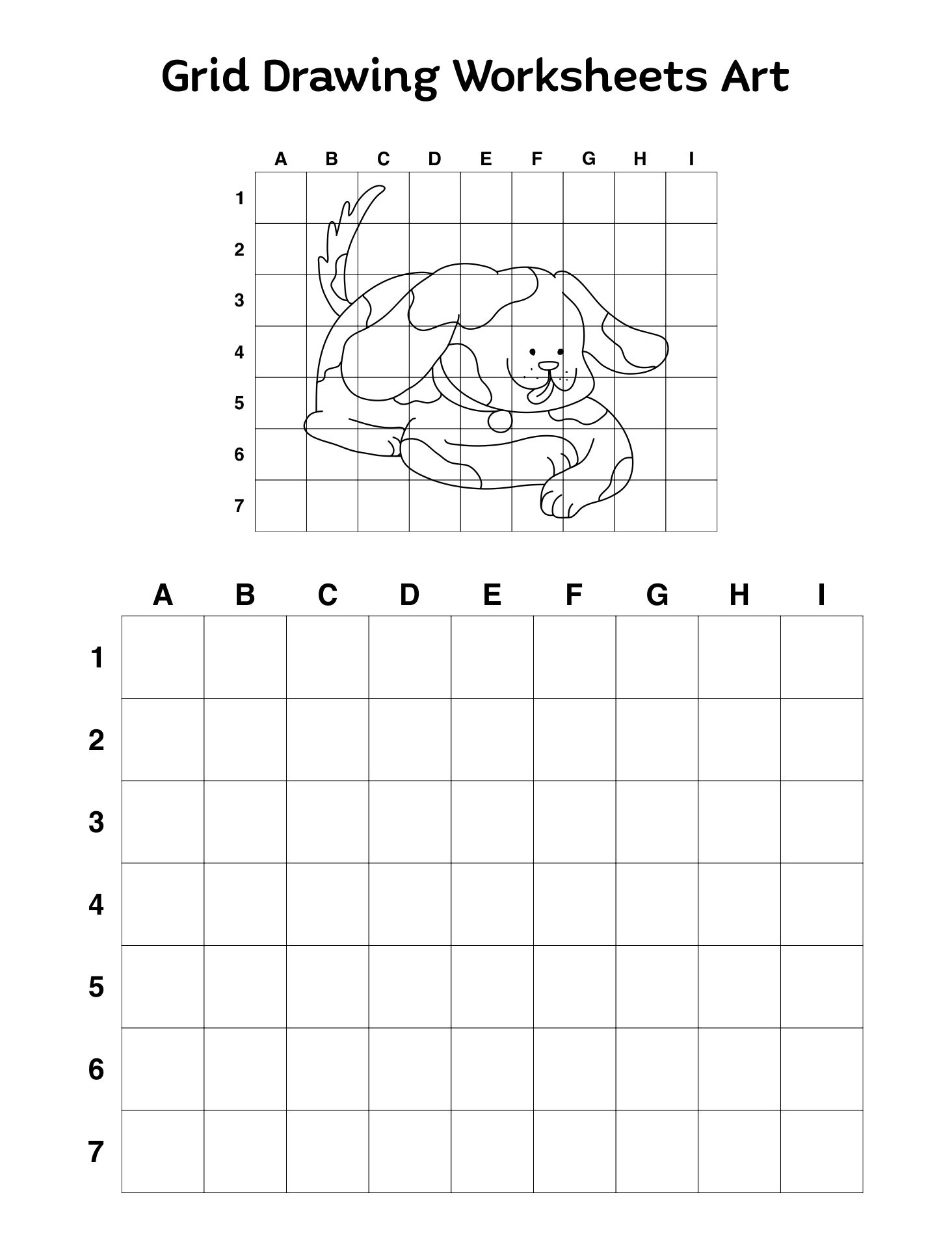
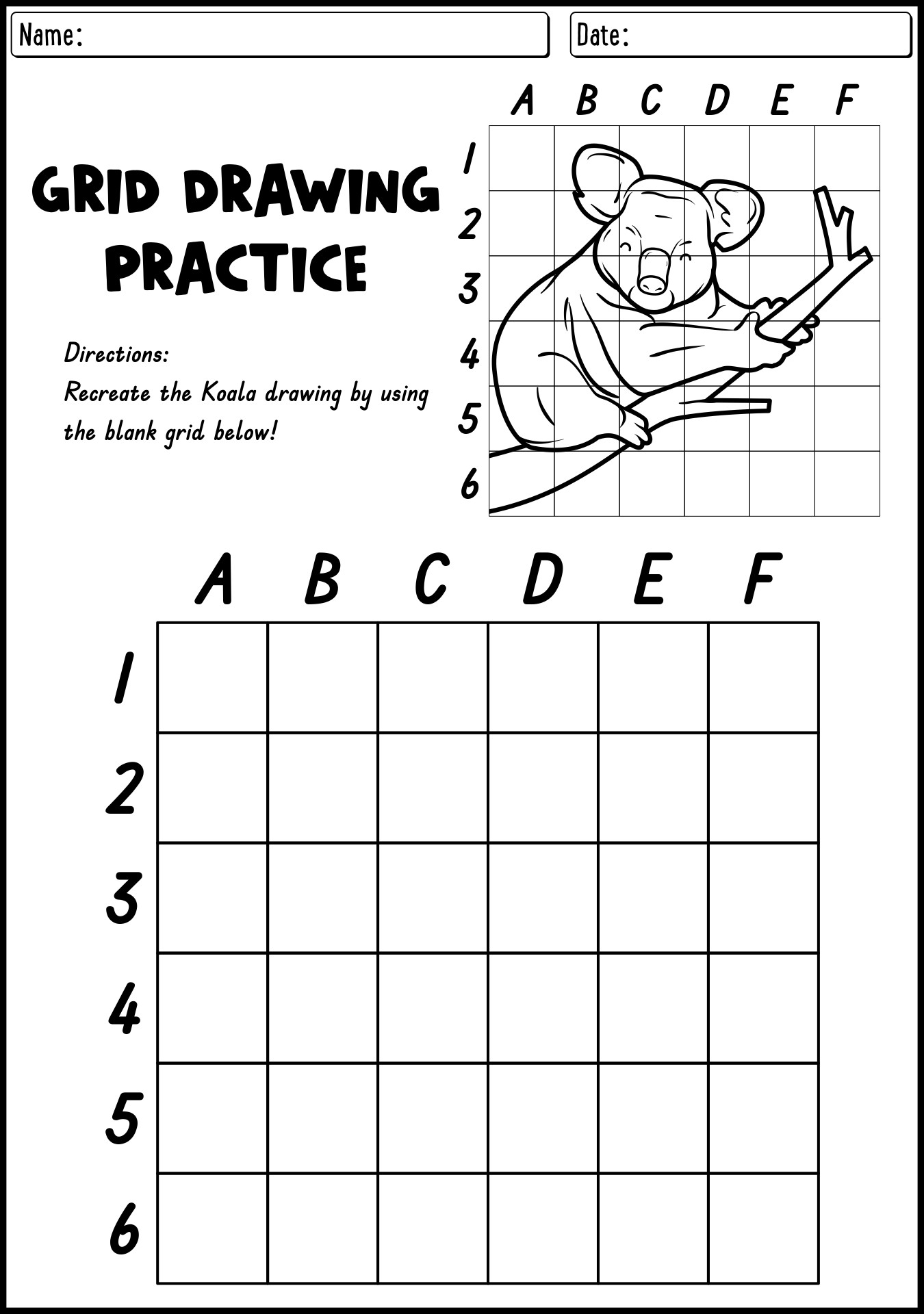
Drawing using grid paper is an effective structural method that breaks complex visual forms down into manageable coordinate squares to teach spatial awareness and proportion estimation. According to the National Art Education Association (NAEA), structured visual exercises that incorporate grid systems actively support children in developing advanced observational skills, geometric comprehension, and accurate hand-eye coordination. By translating organic forms from printable worksheets or real photo visual flashcards into a defined matrix, young learners bypass the frustration of freehand proportion errors. Educators and parents integrate these targeted Grid Drawing methodologies to transition early learners from abstract observation to concrete graphical execution.
Visual Learning & Skill Snapshot:
- Core Focus: Systematic coordinate transfer for accurate early childhood drawing.
- Target Skill: Spatial reasoning, visual discrimination, fine-motor proportion, and photo-based concept mastery.
- Key Recommendation: Pair large-format 1-inch grids with vivid Photo Flashcards to ground abstract lines in tangible real-world objects.
Core Principles and Visual Learning Overview
Visual learning through segmented matrices transforms overwhelming visual stimuli into discrete, highly digestible drawing tasks. When children engage with drawing using grid paper, the cognitive load of rendering a complete object is divided among individual squares, allowing the brain to focus on line direction, angle intersection, and relative scale within a restricted frame. This methodical approach strengthens hemispheric brain function by demanding simultaneous analytical grid decoding and creative motor output. Implementing these structured Educational Activities during early development builds foundational competencies necessary for advanced geometry, handwriting legibility, and artistic realism.
Key Specifications and Breakdown
| Age / Learning Stage | Visual Skill & Grid Ratio | Pedagogical Application & Scaffolding |
|---|---|---|
| Ages 4-5 (Early Explorers) | Large 1-inch grid, simple 2×2 or 3×3 matrices | Focuses on tracing basic shapes and matching solid geometric blocks using high-contrast references. |
| Ages 6-7 (Emerging Artists) | Medium 0.5-inch grid, 4×4 or 5×5 matrices | Encourages observational drawing of everyday objects and detailed photo flashcard subjects block by block. |
| Ages 8+ (Proficient Learners) | Standard 0.25-inch grid, complex multi-square layouts | Targets fine proportion estimation, diagonal line tracing, and advanced spatial translation. |
Systematic grid mapping enhances cognitive visuospatial organization by breaking complex perceptual stimuli into localized coordinate processing units. — National Art Education Association (NAEA)
Step-by-Step Practical Application and Printing Guidelines
Successful implementation of grid-based drawing requires high-contrast printouts and proper scaling tools to prevent visual fatigue in young learners. Begin by selecting a source image alongside a matching grid worksheet that shares the exact same row and column count. Instruct children to isolate their focus on one single square at a time, using a paper mask or index card to cover the remaining sections of the reference sheet. Encourage pencil light sketching first for easy proportion adjustments, followed by bold ink tracing once the intersecting lines align correctly. Printing worksheets on heavy cardstock ensures that repeated erasing and redrawing will not tear the paper fibers during active classroom or home learning sessions.
Common Challenges and How to Avoid Them
Children frequently struggle with grid drawing when they attempt to draw the entire subject at once instead of focusing exclusively on individual grid intersections. Overcoming this hurdle involves introducing masking tools to obscure surrounding grid cells, thereby forcing the visual cortex to concentrate on local coordinates rather than global shapes. Another common obstacle arises when the reference grid proportions mismatch the drawing grid, leading to distorted scaling and frustrated learners. Educators must always verify that reference images and printable practice sheets utilize identical dimension ratios before distributing materials to early elementary students.
💬 Frequently Asked Questions
Explore More Free Learning Printables and Visual Activities on WePhotoAgency
Expanding early childhood art curricula is seamless when utilizing professionally designed visual resources, scaffolded worksheets, and structured instructional assets found across the WePhotoAgency.com digital library. Educators, homeschoolers, and parents can continuously access fresh printing materials specifically engineered to enhance visual discrimination, spatial reasoning, and artistic confidence in young learners.
Visual Reference Gallery