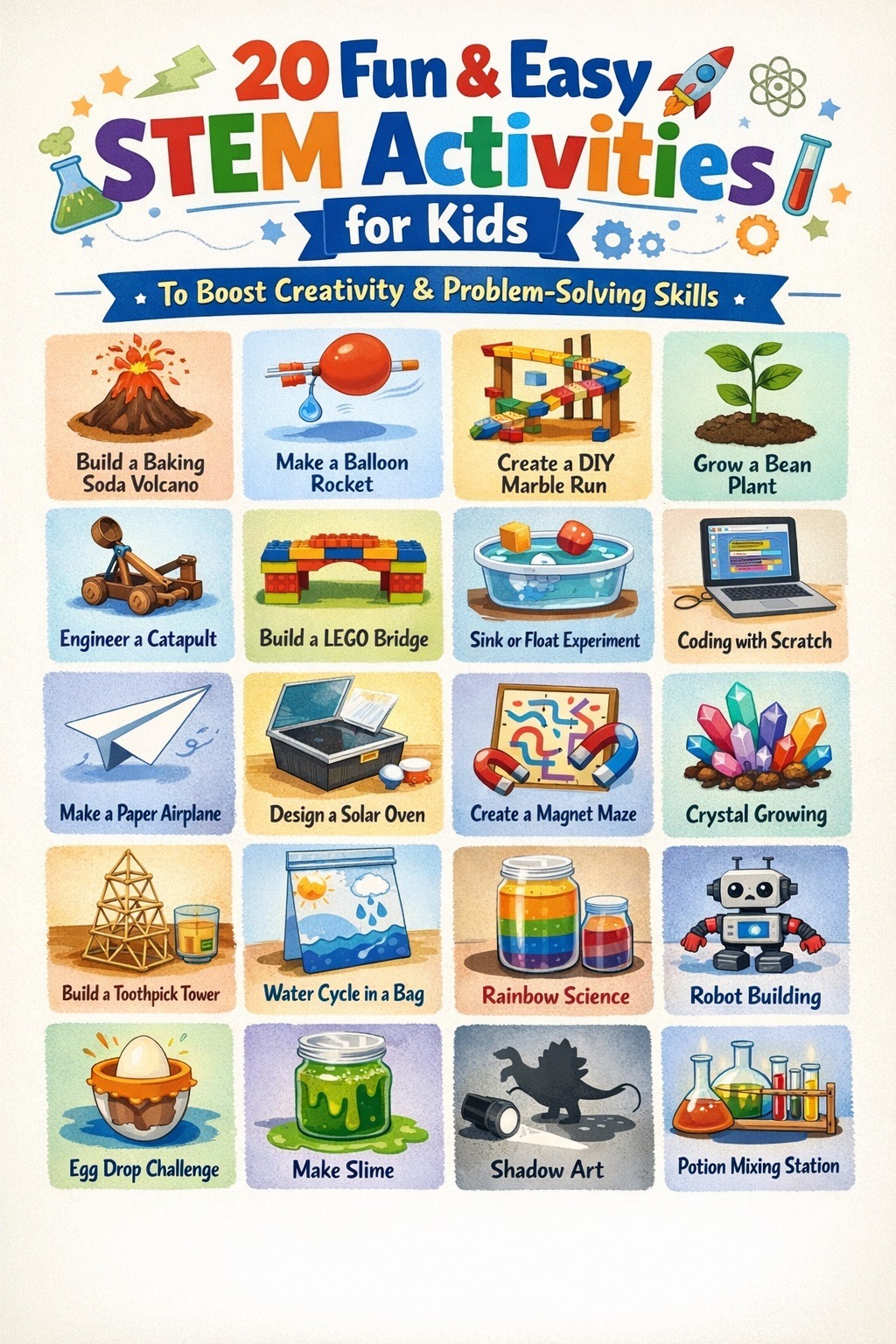
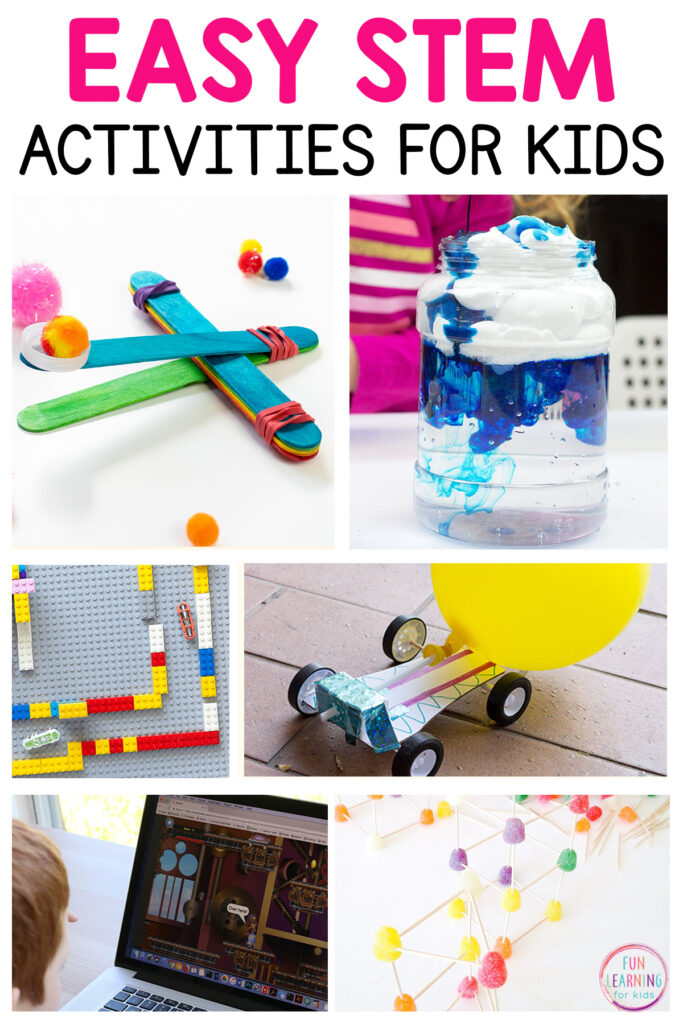
Introduction
STEM activities for kids full form translates to Science, Technology, Engineering, and Mathematics, representing an integrated interdisciplinary framework that builds critical thinking through hands-on tactile investigation. According to the National Association for the Education of Young Children (NAEYC), young children learn best when curriculum strands are interconnected through concrete, visually engaging problem-solving tasks rather than isolated academic subjects. Integrating fine arts, spatial observation, and analytical engineering practices cultivates essential neurological pathways during early childhood development. Educators frequently deploy tools such as Grid Drawing worksheets to merge mathematical coordinate logic with observational precision.
Visual Learning & Skill Snapshot:
- Core Focus: STEM activities for kids full form merges scientific observation with mathematical grid logic and artistic representation.
- Target Skill: Spatial reasoning, visual discrimination, fine-motor proportion, and photo-based concept mastery.
- Key Recommendation: Pair photographic references with structured coordinate systems to bridge concrete visual perception and abstract mathematical thinking.
Core Principles and Visual Learning Overview
STEM activities for kids full form ground abstract concepts in tangible realities by leveraging concrete visual stimuli and structured spatial exercises. Utilizing real photo visual flashcards allows learners to analyze authentic textures, lighting, and geometric forms before attempting to render them on paper. When children break down complex photographic subjects into manageable grid coordinates, they inherently apply mathematical ratios, measurement, and engineering design processes. This cross-disciplinary approach transforms passive viewing into active analytical engagement, supporting diverse learning modalities within early elementary classrooms and home environments.
Key Specifications and Breakdown
| Age / Learning Stage | Visual Skill & Grid Ratio | Pedagogical Application & Scaffolding |
|---|---|---|
| Ages 4-5 (Preschool) | 2×2 Large-Cell Grid | Utilize Photo Flashcards to practice basic shape recognition and macro-scale visual matching. |
| Ages 6-7 (Early Elementary) | 4×4 Standard Coordinate Grid | Introduce proportion estimation and spatial symmetry through guided observation and step-by-step drawing prompts. |
| Ages 8-10 (Advanced Primary) | 8×8 Complex Coordinate Grid | Incorporate multi-step measurement, scale transformation, and detailed architectural or botanical drawings. |
Visual-spatial integration exercises significantly accelerate early mathematical proportion comprehension and fine-motor precision among early elementary learners — National Art Education Association (NAEA)
Step-by-Step Practical Application and Printing Guidelines
Implementing structured visual engineering tasks requires high-contrast printing, durable cardstock, and systematic quadrant isolation to prevent cognitive overload. Educators should print reference materials and blank coordinate sheets at 100 percent scale to ensure accurate spatial ratios during execution. Instruct learners to cover all grid sections except the active quadrant using a blank index card, isolating visual data and encouraging targeted line-of-sight observation. Integrating diverse Educational Activities ensures that children connect these drawing techniques to broader scientific classification and measurement principles.
Common Challenges and How to Avoid Them
Frustration during proportional drawing typically stems from attempting to render entire visual scenes at once rather than addressing individual grid intersections sequentially. Instructors can mitigate this hurdle by teaching children to identify anchor points—such as corners and intersecting lines—within a single square before drawing curves. Encouraging the use of light sketching pencils allows young learners to adjust proportions easily without developing perfectionist blocks during foundational engineering exercises.
💬 Frequently Asked Questions
Explore More Free Learning Printables and Visual Activities on WePhotoAgency
Discover an extensive collection of professional-grade printables designed to enhance visual literacy, spatial reasoning, and interdisciplinary learning by visiting WePhotoAgency.com today.
Visual Reference Gallery