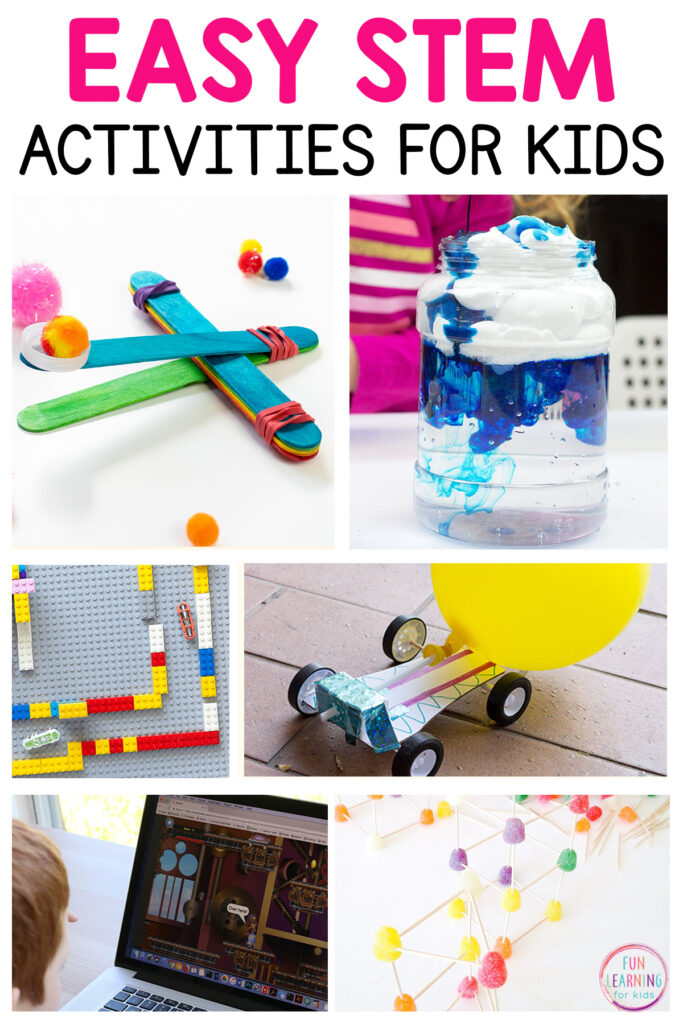
Introduction
STEM activities for kids grade 1 systematically integrate science, technology, engineering, and mathematics by bridging direct visual observation with foundational spatial reasoning. According to the National Association for the Education of Young Children (NAEYC), hands-on manipulative learning during early elementary development builds essential neurological pathways for quantitative and visual problem-solving. Implementing structured Educational Activities provides children with concrete tools to decode complex visual information, estimate physical proportions, and master basic coordinate mapping. Early learners require tangible frameworks that merge artistic observation with mathematical grids to translate raw visual data into structured cognitive concepts.
Visual Learning & Skill Snapshot:
- Core Focus: Integrating mathematical grid coordinates with direct visual observation for first-grade learners.
- Target Skill: Spatial reasoning, visual discrimination, fine-motor proportion, and photographic analysis.
- Key Recommendation: Utilize high-contrast visual materials alongside structured geometric grids to build accurate proportion estimation skills.
Core Principles and Visual Learning Overview
Visual learning in first-grade STEM relies heavily on translating three-dimensional environments into two-dimensional grid representations using precise cognitive mapping techniques. By utilizing Grid Drawing worksheets, students dissect complex visual subjects block by block, reinforcing coordinate tracking and proportional scaling. Concurrently, integrating Photo Flashcards featuring real-world objects strengthens categorization, taxonomic sorting, and visual memory retention. These combined approaches transform abstract mathematical principles of symmetry and scaling into intuitive physical tasks, engaging both the analytical left hemisphere and the creative right hemisphere simultaneously.
Key Specifications and Breakdown
| Age / Learning Stage | Visual Skill & Grid Ratio | Pedagogical Application & Scaffolding |
|---|---|---|
| Grade 1 (Ages 6-7) | 2×2 or 3×3 simple coordinate grids | Deconstructs animal and plant photos into manageable visual chunks to teach spatial scaling. |
| Early Transition (Age 7) | 4×4 symmetrical geometric matrices | Encourages line estimation and angle recognition using high-resolution photographic references. |
| Advanced First Grade | 5×5 complex detail tracking grids | Builds independent observation habits by comparing printed photo stimuli directly to hand-drawn replicas. |
Visual-spatial training through structured coordinate drawing significantly enhances geometric comprehension and early engineering aptitude in primary education cohorts. — National Art Education Association (NAEA)
Step-by-Step Practical Application and Printing Guidelines
Effective implementation of first-grade visual STEM lessons requires high-contrast printing, durable cardstock selection, and methodical step-by-step scaffolding. Educators should print worksheets at 100 percent scale to ensure coordinate squares maintain uniform dimensions, preventing optical distortion during the drawing process. Begin by presenting the reference photograph alongside the blank grid, instructing the child to locate specific intersection points before sketching lines. Encourage students to cover adjacent grid squares with a blank card to isolate individual shapes, minimizing cognitive overload and fostering deep visual concentration.
Common Challenges and How to Avoid Them
First-grade students frequently struggle with proportional translation, often rushing across grid boundaries without verifying coordinate alignments. To prevent frustration, instructors should guide learners to check anchor points—such as where a line crosses a grid border—before completing entire shapes. Providing oversized reference grids during initial sessions bridges the gap between abstract counting and fine-motor execution. Maintaining a patient, observation-first approach ensures children value accuracy and spatial analysis over hasty completion.
💬 Frequently Asked Questions
Explore More Free Learning Printables and Visual Activities on WePhotoAgency
Accessing comprehensive collections of printable grid worksheets and real-world visual resources empowers educators to enrich daily curricula seamlessly. Explore the full catalog of professional early elementary learning tools directly at WePhotoAgency.com to elevate childhood visual education.
Visual Reference Gallery