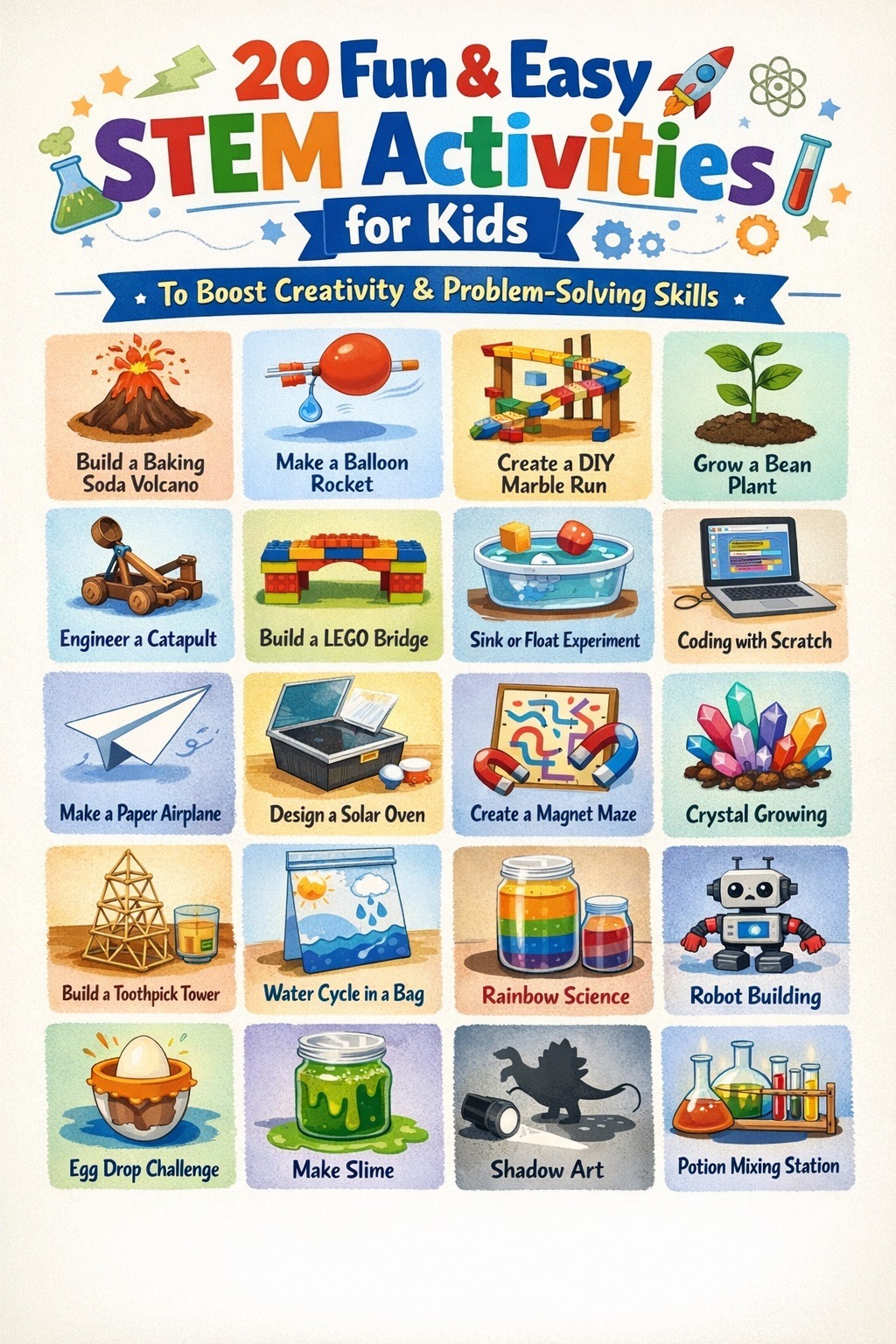
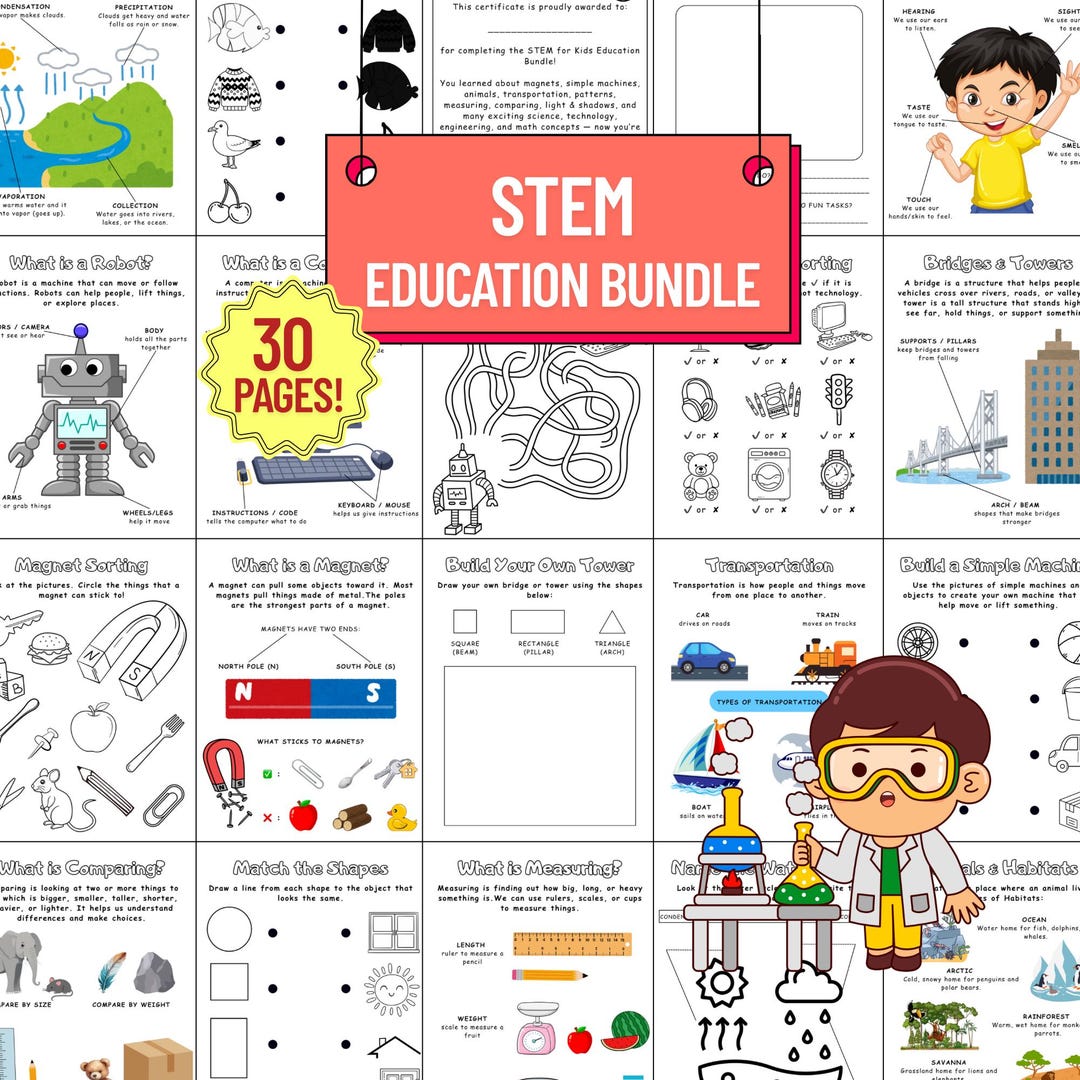
Introduction
STEM activities for kids integrate science, technology, engineering, and mathematics by leveraging visual observation, geometric proportion estimation, and structured spatial reasoning tasks. According to the National Association for the Education of Young Children (NAEYC), engaging young learners in structured visual-spatial manipulation builds the foundational cognitive architecture required for advanced mathematical and engineering problem-solving. By bridging artistic observation with mathematical precision through printable grid drawing worksheets and real photo visual flashcards, educators foster critical analytical capabilities in early childhood.
Visual Learning & Skill Snapshot:
- Core Focus: STEM activities for kids utilizing grid coordinates and photographic reference material to teach spatial scaling.
- Target Skill: Spatial reasoning, visual discrimination, fine-motor proportion, and observation-based estimation.
- Key Recommendation: Pair photographic references with low-complexity coordinate grids to gradually build observational accuracy.
Core Principles and Visual Learning Overview
Visual STEM activities for kids ground abstract mathematical concepts in tangible, observation-driven practices that enhance cognitive development. Utilizing Grid Drawing exercises teaches children how to break complex real-world images down into manageable geometric quadrants. This process reinforces coordinate mapping, scaling ratios, and proportional analysis. Simultaneously, integrating Photo Flashcards exposes children to high-resolution photographic stimuli, training the brain to notice fine details, textures, and spatial relationships that standard cartoon illustrations often omit.
Key Specifications and Breakdown
| Age / Learning Stage | Visual Skill & Grid Ratio | Pedagogical Application & Scaffolding |
|---|---|---|
| Ages 4-5 (Early Explorers) | 2×2 or 3×3 simple grids with high-contrast photo references | Develops basic visual tracking and motor control by copying single geometric shapes within individual cells. |
| Ages 6-7 (Developing Analysts) | 4×4 coordinate grids featuring real-world objects and nature scenes | Strengthens proportional estimation, left-to-right tracking, and coordinate mapping via Educational Activities. |
| Ages 8-10 (Advanced Observers) | 6×6 or complex multi-quadrant grids with detailed photography | Refines precision engineering mindset, analytical breakdown of complex visual data, and fine-motor execution. |
Spatial visualization and fine-motor coordination developed through structured grid-based drawing significantly enhance cognitive performance in geometry and engineering design tasks. — National Art Education Association (NAEA)
Step-by-Step Practical Application and Printing Guidelines
Implementing effective STEM activities for kids requires clear printing specifications and step-by-step instructional scaffolding to prevent cognitive overload. Educators and parents should print grid worksheets on heavy cardstock at 100 percent scale to ensure coordinate lines remain crisp and undistorted. Begin the exercise by having children study a single cell on a photo reference card before replicating those exact spatial coordinates onto the blank grid sheet. Encourage learners to use a lightweight drafting pencil and ruler to measure intersections, reinforcing precision engineering habits early in the learning lifecycle.
Common Challenges and How to Avoid Them
Over-complicated initial grid ratios and rushing through visual observation represent the most frequent obstacles encountered during early STEM drawing tasks. Children often attempt to copy an entire image at once rather than isolating individual grid squares, leading to frustration and distorted proportions. To resolve this challenge, cover the remaining grid sections with a blank piece of paper, forcing the learner to focus exclusively on one coordinate block at a time. This isolation technique mirrors engineering decomposition strategies, teaching children how to solve massive problems by breaking them into manageable components.
💬 Frequently Asked Questions
Explore More Free Learning Printables and Visual Activities on WePhotoAgency
Discover an extensive collection of professional-grade educational printables designed to foster observation, engineering thinking, and cognitive growth at WePhotoAgency.com.
Visual Reference Gallery