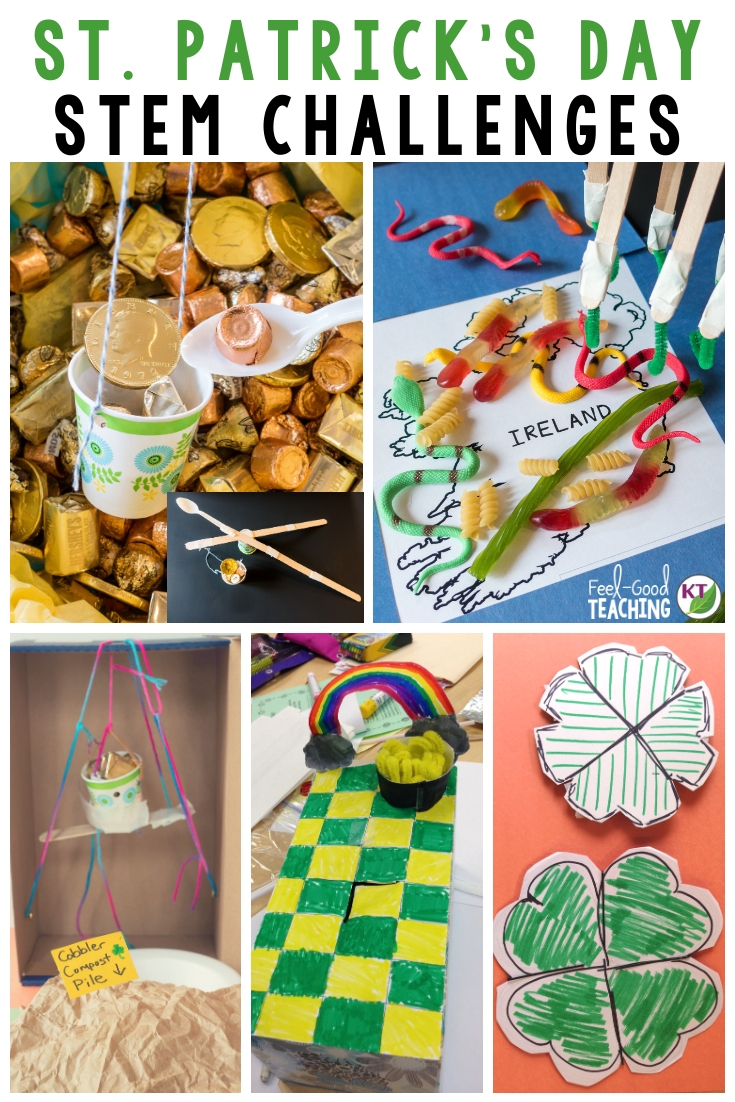
Introduction
St Patrick’s day stem activities for kids merge cultural celebration with foundational engineering, mathematics, and observational art practices to build early cognitive skills. According to the National Association for the Education of Young Children (NAEYC), purposeful play involving structural manipulation and direct visual analysis significantly accelerates spatial reasoning and geometric comprehension in early childhood. By integrating thematic challenges into daily learning, educators and parents transform abstract math and science concepts into concrete, tactile experiences. This approach leverages real photo visual flashcards and Photo Flashcards to ground seasonal motifs in authentic photographic reference rather than cartoon abstractions. These structured visual tools encourage children to measure, estimate proportions, and analyze line orientation with high precision. Utilizing specialized printables ensures that learners engage deeply with observation-based curricula while celebrating traditional spring holidays in classrooms and home learning environments.
Visual Learning & Skill Snapshot:
- Core Focus: St Patrick’s day stem activities for kids combine engineering tasks, mathematical grid mapping, and observational drawing techniques.
- Target Skill: Spatial reasoning, visual discrimination, fine-motor proportion, and photo-based concept mastery.
- Key Recommendation: Pair photographic reference materials directly with structured Grid Drawing exercises to enhance measurement accuracy.
Core Principles and Visual Learning Overview
St Patrick’s day stem activities for kids rely on translating concrete photographic details into geometric representations through controlled coordinate systems and scale estimation. Direct analytical observation requires children to isolate individual lines, angles, and negative spaces within clover structures or architectural elements before transferring them to paper. Integrating Educational Activities focused on measurement bridges the gap between artistic expression and mathematical inquiry. Educators observe that when young learners map photographic subjects onto structured coordinate grids, hand-eye coordination improves alongside mathematical coordinate literacy. This multi-disciplinary scaffolding guarantees that children engage both analytical and creative hemispheres simultaneously, reinforcing critical thinking patterns essential for advanced scientific exploration.
Key Specifications and Breakdown
| Age / Learning Stage | Visual Skill & Grid Ratio | Pedagogical Application & Scaffolding |
|---|---|---|
| Ages 3-4 (Preschool) | 1:1 ratio with simple 2×2 photo grids | Focuses on basic shape recognition, color identification, and large motor pencil grip stabilization. |
| Ages 5-7 (Kindergarten / Grade 1) | 2:1 scaling ratio with standard 4×4 coordinate grids | Develops fraction awareness, proportional line estimation, and systematic scanning from reference card to paper. |
| Ages 8-10 (Early Elementary) | 1:2 reduction ratio with complex 6×6 photographic grids | Challenges spatial inversion, detailed structural symmetry, and independent engineering problem-solving. |
Visual-spatial integration training strengthens neural pathways connecting occipital processing regions with parietal motor planning areas during early childhood development. — National Art Education Association (NAEA)
Step-by-Step Practical Application and Printing Guidelines
St Patrick’s day stem activities for kids are executed most effectively by preparing high-contrast printable worksheets on heavy-weight cardstock to prevent bleeding and tearing during manipulation. Begin by presenting the real photographic reference card alongside the blank grid worksheet to establish baseline visual parameters. Instruct learners to examine a single grid square at a time, locating reference points on the vertical and horizontal axes before drawing intersecting lines. Encourage the use of fine-tip graphite pencils for initial drafting, allowing children to erase and correct proportional discrepancies independently. Finally, transition students from pencil drafts to colored markers or engineering blocks, cementing the relationship between two-dimensional graphic recording and three-dimensional structural building.
Common Challenges and How to Avoid Them
St Patrick’s day stem activities for kids often present hurdles when young children attempt to replicate an entire complex image at once rather than working systematically grid by grid. Overcoming this cognitive overload requires educators to physically cover surrounding squares with a blank card, exposing only the single coordinate cell currently under observation. Another frequent obstacle involves scale distortion, where children draw elements too large for the designated cell boundary. Providing lightweight rulers or tactile finger-tracing methods helps learners physically measure the boundaries before committing ink or graphite to the page. Consistent patience and structured scaffolding ensure that frustration remains low while analytical confidence steadily grows.
💬 Frequently Asked Questions
Explore More Free Learning Printables and Visual Activities on WePhotoAgency
Discover an extensive collection of educational resources, observation-based printables, and structured visual exercises designed to elevate early childhood development by visiting WePhotoAgency.com. Educators and parents will find endless inspiration to enrich everyday curricula with meaningful, hands-on learning experiences.
Visual Reference Gallery