Introduction
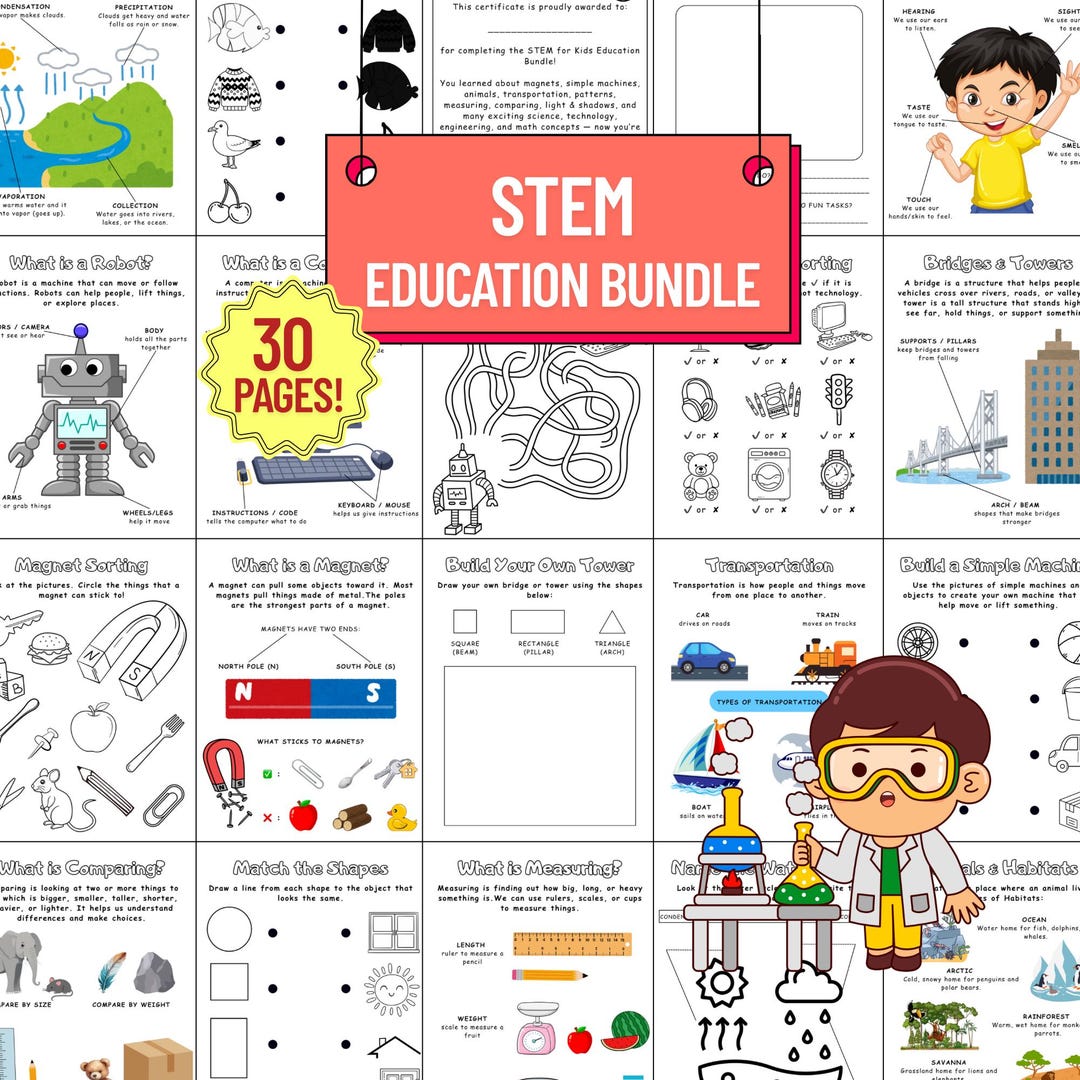
Stem activities for kids elementary integrate science, technology, engineering, and mathematics with foundational visual arts training to build critical spatial awareness and cognitive problem-solving skills in young learners. According to the National Association for the Education of Young Children (NAEYC), purposeful integration of structured visual observation and hands-on making supports early mathematical proportional reasoning and neurological development in children aged five to nine. Utilizing printable grid drawing worksheets, real photo visual flashcards, and structured geometry exercises transforms abstract academic concepts into tangible manipulative learning experiences. Educators and parents seeking comprehensive resources can discover curated tools within the Educational Activities directory to enhance daily curricula.
Visual Learning & Skill Snapshot:
- Core Focus: Bridging STEM subjects with visual arts through structured grids and photographic observation.
- Target Skill: Spatial reasoning, visual discrimination, fine-motor proportion, and coordinate mapping.
- Key Recommendation: Pair high-contrast photo references with proportional square grids to anchor abstract concepts in concrete visual evidence.
Core Principles and Visual Learning Overview
Spatial reasoning and proportion estimation form the foundational pillars connecting visual arts practices with elementary STEM curricula. When children analyze a photographic reference point and transfer specific contours square by square onto a coordinate map, they engage in rigorous data analysis, scaling, and spatial coordinate plotting. This cross-disciplinary approach strengthens cognitive processing by requiring learners to deconstruct complex whole images into manageable geometric units. Utilizing tactile printables helps children build concentration, patience, and fine-motor control while naturally absorbing principles of symmetry, axis, and ratio.
Key Specifications and Breakdown
| Age / Learning Stage | Visual Skill & Grid Ratio | Pedagogical Application & Scaffolding |
|---|---|---|
| Early Elementary (Ages 5-6) | 2×2 or 3×3 Large Scale Grids | Focuses on basic contour tracking, matching high-contrast real photo visual flashcards, and simple symmetry recognition. |
| Mid Elementary (Ages 7-8) | 4×4 to 6×6 Intermediate Grids | Develops precise proportion estimation, angle identification, and coordinate-based mapping through Grid Drawing exercises. |
| Advanced Elementary (Ages 9-10) | 8×8 Complex Scale Grids | Enhances multi-step spatial planning, mathematical scaling ratios, and detailed visual observation of Photo Flashcards. |
Visual-spatial integration directly supports mathematical achievement by activating mental rotation networks in the parietal cortex during early childhood development. — National Art Education Association (NAEA)
Step-by-Step Practical Application and Printing Guidelines
Effective implementation requires pairing high-resolution photographic reference cards directly alongside identical grid-divided drawing templates on heavy cardstock paper. Begin by selecting clear, real photo visual flashcards depicting familiar animals, architectural elements, or botanical structures to maintain high engagement. Instruct learners to isolate one grid square at a time using an L-shaped viewfinder card, reducing cognitive overload and encouraging deep observation of line intersections. Educators should print materials at 100% scale without scaling-to-fit adjustments to ensure coordinate lines match physical measurement tools and rulers accurately.
Common Challenges and How to Avoid Them
Young learners frequently struggle with spatial disorientation when attempting to draw entire objects across complex grids instead of focusing on individual coordinate squares one at a time. Overcoming this hurdle involves using masking paper to temporarily hide surrounding grid squares so children can isolate visual data within a single coordinate boundary. Furthermore, maintaining identical grid dimensions between the reference image and the working canvas prevents severe proportion distortion and eliminates frustration during the scaling process.
💬 Frequently Asked Questions
Explore More Free Learning Printables and Visual Activities on WePhotoAgency
Expanding early childhood educational toolkits is effortless with the comprehensive resource libraries available at WePhotoAgency.com. Educators, parents, and homeschool specialists can access hundreds of printable grid drawing templates, real photo flashcards, and cross-curricular learning materials designed to foster curiosity, spatial intelligence, and artistic confidence in young minds.
Visual Reference Gallery