Introduction
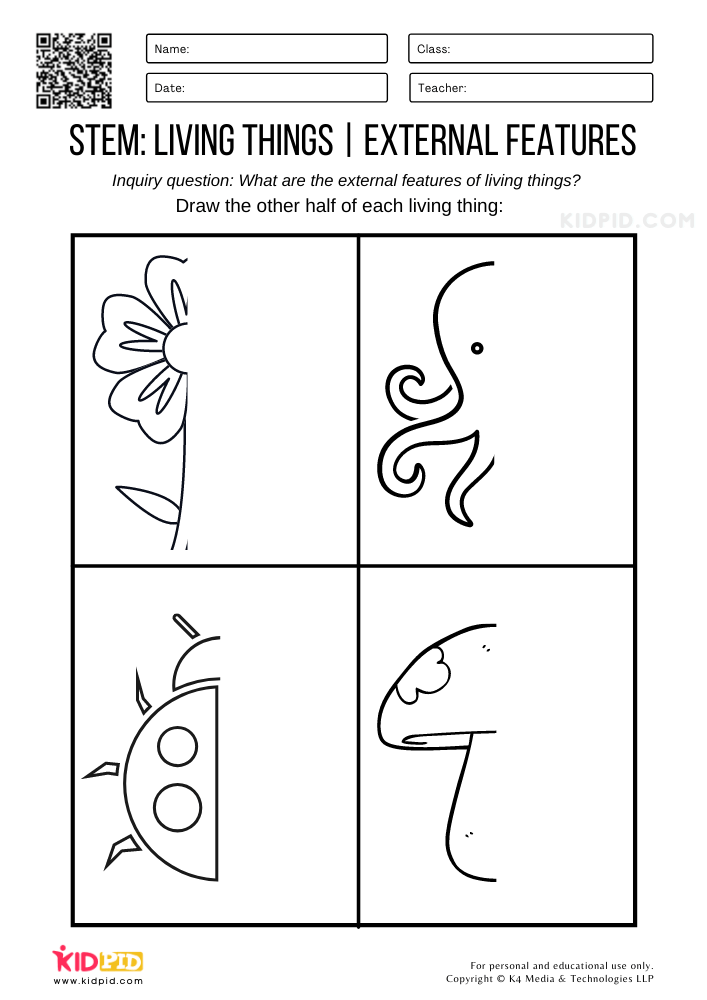
Stem activities for kids 3rd grade systematically integrate science, technology, engineering, and mathematics by leveraging structured visual observation, precise coordinate mapping, and proportional spatial reasoning. According to the National Art Education Association (NAEA), integrating foundational visual arts exercises with rigorous analytical tasks significantly accelerates cognitive processing, spatial problem-solving, and cross-disciplinary comprehension in elementary learners. By moving beyond traditional worksheets, educators and parents can utilize concrete Grid Drawing templates to bridge abstract mathematical coordinates with tangible observational drawing.
Visual Learning & Skill Snapshot:
- Core Focus: Engineering spatial accuracy and mathematical proportionality through structured visual art methodologies.
- Target Skill: Spatial reasoning, visual discrimination, fine-motor proportion, and photo-based concept mastery.
- Key Recommendation: Pair photographic references with partitioned grids to train systematic coordinate mapping and analytical observation.
Core Principles and Visual Learning Overview
Core principles of stem activities for kids 3rd grade rely upon breaking complex visual stimuli into manageable geometric components that foster cognitive analysis. Utilizing detailed Photo Flashcards alongside coordinate grids teaches eight- and nine-year-old students how to isolate details, measure relative angles, and scale proportions accurately from reference images onto blank paper. This methodical breakdown strengthens working memory and reinforces algebraic thinking long before formal secondary math concepts are introduced in the classroom or homeschool setting.
Key Specifications and Breakdown
| Age / Learning Stage | Visual Skill & Grid Ratio | Pedagogical Application & Scaffolding |
|---|---|---|
| Early Third Grade (8 Years) | 2×2 to 4×4 coordinate grids | Focuses on basic symmetry, quadrant isolation, and direct photographic line matching. |
| Mid Third Grade (8.5 Years) | 4×4 to 6×6 proportional squares | Introduces angular measurement, negative space identification, and curved line scaling. |
| Advanced Third Grade (9 Years) | 6×6 to 8×8 complex coordinate arrays | Synthesizes multi-step engineering designs, perspective reduction, and independent error correction. |
Structured visual art exercises directly enhance mathematical spatial reasoning by activating the parietal cortex, which governs numerical magnitude and physical coordinate processing — National Art Education Association (NAEA)
Step-by-Step Practical Application and Printing Guidelines
Implementing effective stem activities for kids 3rd grade requires high-contrast printouts, durable paper stock, and a clear step-wise instructional workflow for children. Educators should begin by selecting authentic photographic subjects from trusted Educational Activities databases to ensure appropriate visual complexity. Print both the reference image overlay and the blank corresponding grid at exact 100 percent scaling to prevent proportion distortion. Instruct learners to tackle the grid one specific square at a time, using a straightedge to verify coordinate alignment before committing pencil lines to paper.
Common Challenges and How to Avoid Them
Common challenges during third-grade spatial engineering tasks involve children rushing through quadrant copying or becoming overwhelmed by intricate background details in photographs. To mitigate these errors, provide students with opaque viewing windows or index cards to isolate a single grid square at a time, effectively eliminating visual clutter. Encouraging regular self-assessment against the reference photo ensures learners catch proportion discrepancies early, transforming potential frustration into a valuable engineering iteration cycle.
💬 Frequently Asked Questions
Explore More Free Learning Printables and Visual Activities on WePhotoAgency
Empowering elementary students with cross-disciplinary competencies is seamless when utilizing high-quality, professionally designed visual learning assets. Discover a comprehensive library of downloadable resources, structured templates, and creative teaching tools by visiting the main collection at WePhotoAgency.com to elevate daily instructional practices.
Visual Reference Gallery