Introduction
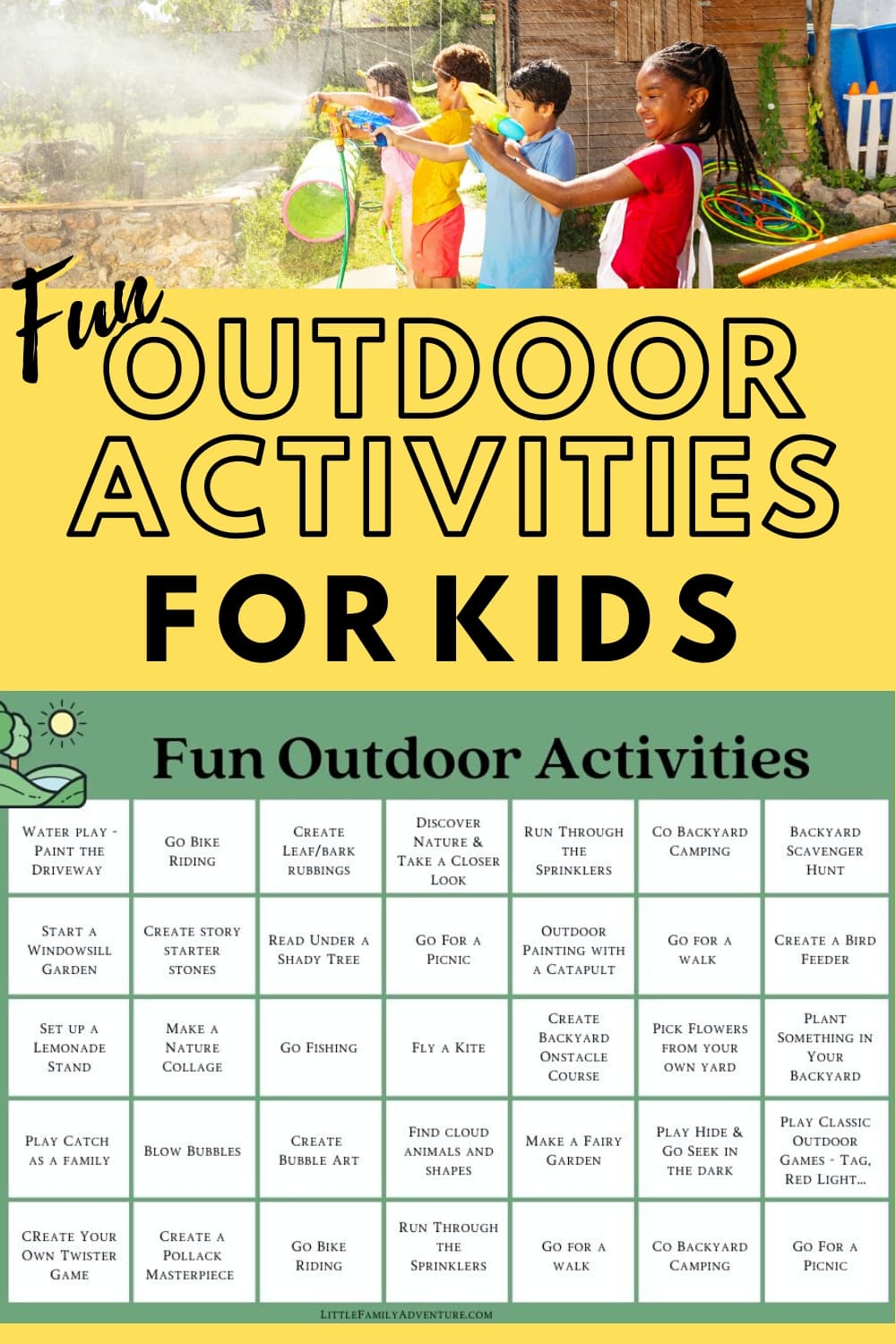
Outdoor educational activities for kids bridge natural experiential learning and foundational cognitive development by translating organic spatial observations into structured artistic representations. According to the National Association for the Education of Young Children (NAEYC), hands-on environmental exploration significantly enhances early childhood spatial awareness, visual discrimination, and fine-motor coordination when paired with structured graphic tools. Incorporating printable grid drawing worksheets and real photo visual flashcards allows educators and parents to anchor abstract mathematical proportions and biological concepts into tangible, real-world experiences. Engaging young learners through structured outdoor observation transforms unstructured play into rigorous cognitive practice, supporting early elementary skill acquisition across multiple developmental domains. Integrating targeted Educational Activities into outdoor lesson plans ensures children develop both gross-motor confidence and acute visual-spatial literacy.
Visual Learning & Skill Snapshot:
- Core Focus: Outdoor educational activities for kids combine nature-based visual observation with structured grid-drawing and real photographic analysis.
- Target Skill: Spatial reasoning, proportion estimation, fine-motor precision, and botanical or environmental classification.
- Key Recommendation: Pair high-contrast reference imagery with physical grid scales to anchor observational drawing tasks firmly in tactile reality.
Core Principles and Visual Learning Overview
Outdoor educational activities for kids foster essential analytical skills by requiring children to deconstruct complex organic forms into manageable geometric coordinates. Spatial reasoning develops systematically when young learners physically compare real-world flora and fauna against high-resolution Photo Flashcards before transferring those observations onto structured paper. By utilizing precise Grid Drawing worksheets outdoors, educators help children isolate individual grid cells to examine negative space, line weight, and relative scale without becoming overwhelmed by visual clutter. This deliberate scaffolding builds neural pathways responsible for mathematical mapping, visual memory, and advanced perspective estimation.
Key Specifications and Breakdown
| Age / Learning Stage | Visual Skill & Grid Ratio | Pedagogical Application & Scaffolding |
|---|---|---|
| Ages 4–5 (Preschool) | 1×1 to 2×2 Large Cell Grids | Focuses on basic contour recognition using macro-photographic flashcards of leaves and textured bark. |
| Ages 6–7 (Early Elementary) | 3×3 to 4×4 Intermediate Grids | Emphasizes proportion estimation, symmetry, and botanical detail mapping via structured outdoor worksheets. |
| Ages 8–10 (Advanced Primary) | 5×5+ High-Density Grids | Challenges spatial accuracy, cross-contour rendering, and environmental scale comparisons in natural settings. |
Visual-spatial integration in early childhood curricula accelerates mathematical problem-solving and geometric comprehension through structured physical manipulation of environmental stimuli. — National Art Education Association (NAEA)
Step-by-Step Practical Application and Printing Guidelines
Executing outdoor educational activities for kids requires preparing durable, high-contrast print materials that withstand environmental variables like bright sunlight and light breezes. Educators must print grid worksheets and photographic references on heavy-weight matte cardstock to eliminate glare and prevent pencil tear-through during outdoor sketching sessions. Begin the exercise by gathering children in a designated natural zone, distributing matching flashcard sets, and guiding them to locate corresponding patterns, symmetry, or textures in the immediate environment. Instruct learners to isolate one grid square at a time, using simple cardboard viewfinder frames if necessary to reduce cognitive overload and encourage meticulous observational discipline.
Common Challenges and How to Avoid Them
Common challenges during outdoor educational activities for kids typically stem from visual overload, inappropriate grid scaling, or insufficient stabilization of drawing surfaces on uneven terrain. Children frequently attempt to draw entire organic subjects at once rather than focusing on individual grid intersections, which leads to frustration and distorted proportions. To counter this, educators should provide lightweight clipboard supports, mandate single-cell isolation techniques, and supply pre-measured grid templates tailored precisely to the developmental stage of the child.
💬 Frequently Asked Questions
Explore More Free Learning Printables and Visual Activities on WePhotoAgency
Discover an extensive, professionally curated collection of pedagogical tools designed to elevate visual literacy and spatial reasoning by visiting WePhotoAgency.com. Access specialized printable worksheets, structured drawing guides, and high-resolution visual resources to enrich every lesson plan.
Visual Reference Gallery