Introduction
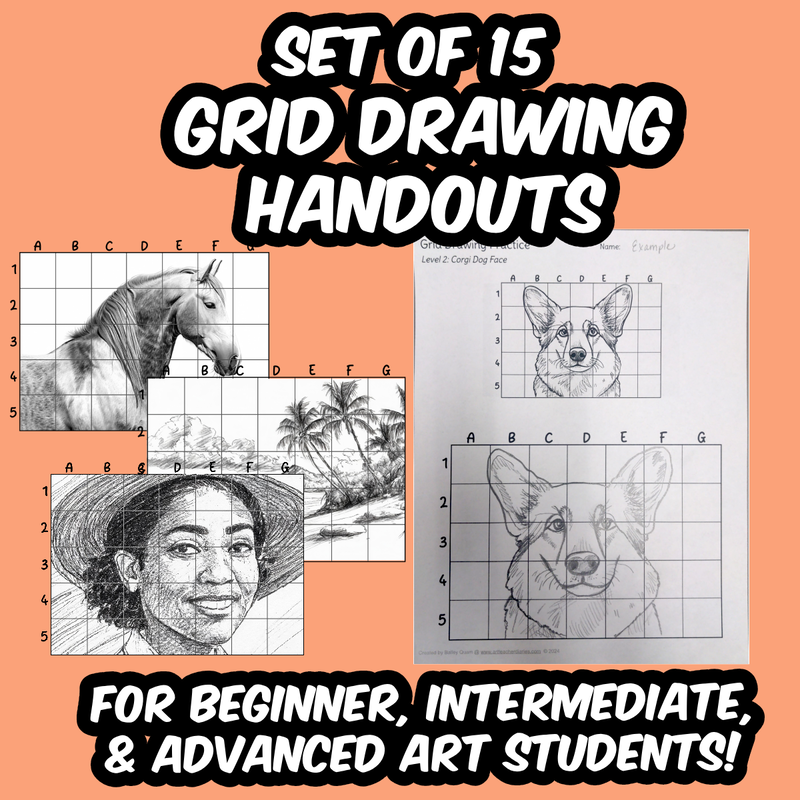
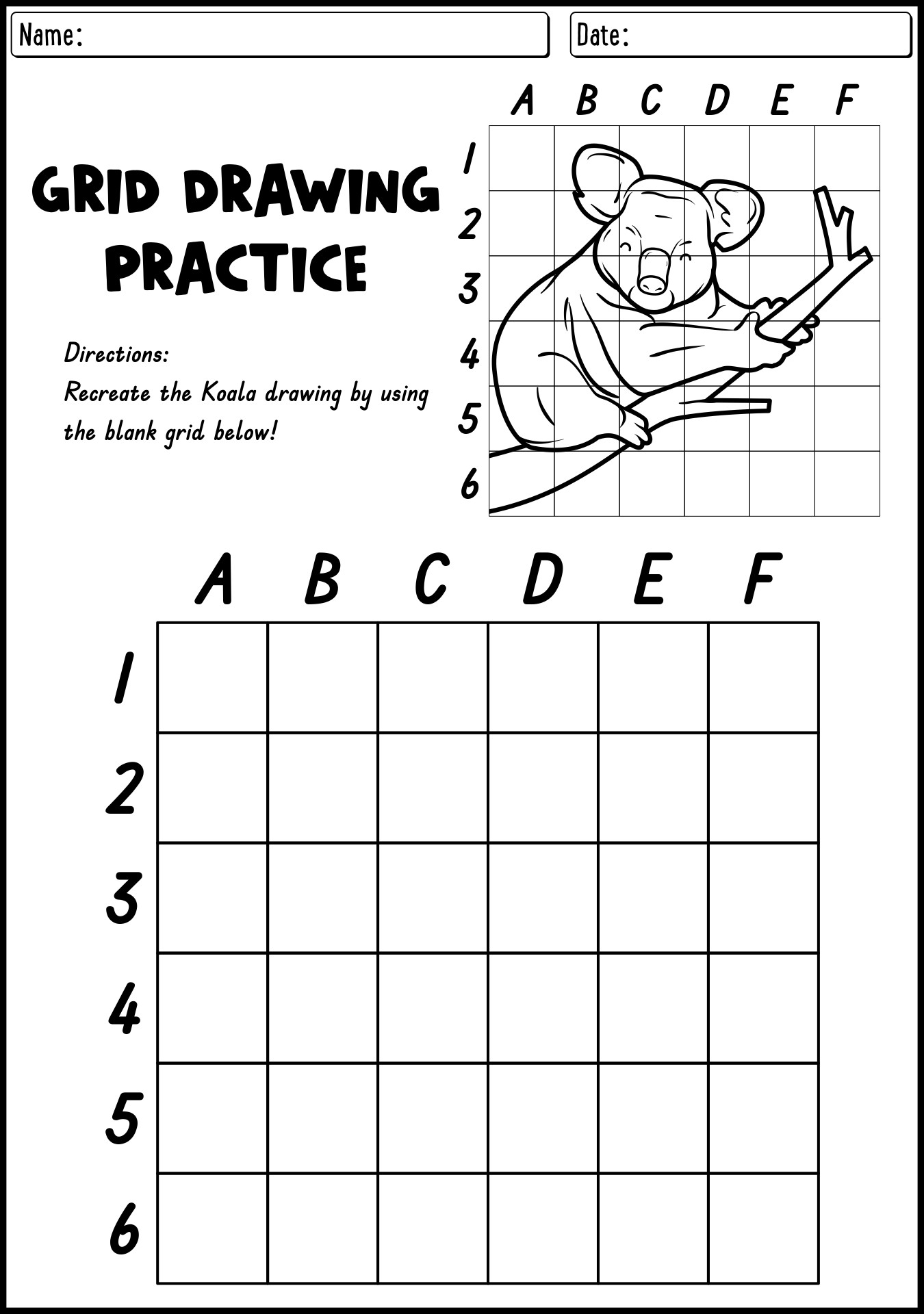
Grid method drawing for beginners is an effective foundational technique that breaks complex visual references down into smaller, manageable coordinate squares to teach spatial proportion and observational accuracy. According to the National Art Education Association (NAEA), structured observational drawing techniques significantly enhance visual-spatial processing and cognitive mapping abilities in young learners. Early childhood educators utilize printable grid worksheets alongside high-contrast Photo Flashcards to bridge the gap between abstract visual perception and concrete fine-motor execution. Mastering this systematic approach removes the intimidation factor of blank paper, allowing children to focus on individual line placements rather than the overwhelming whole. The foundational process relies on identical matrix ratios overlaid onto both the source image and the target drawing surface, fostering systematic scanning habits essential for both artistic and mathematical literacy.
Visual Learning & Skill Snapshot:
- Core Focus: Coordinate-based visual decomposition for accurate proportional drawing.
- Target Skill: Spatial reasoning, visual discrimination, fine-motor proportion, and photo-based concept mastery.
- Key Recommendation: Start early learners with large 4×4 coordinate grids before progressing to dense multi-square matrices.
Core Principles and Visual Learning Overview
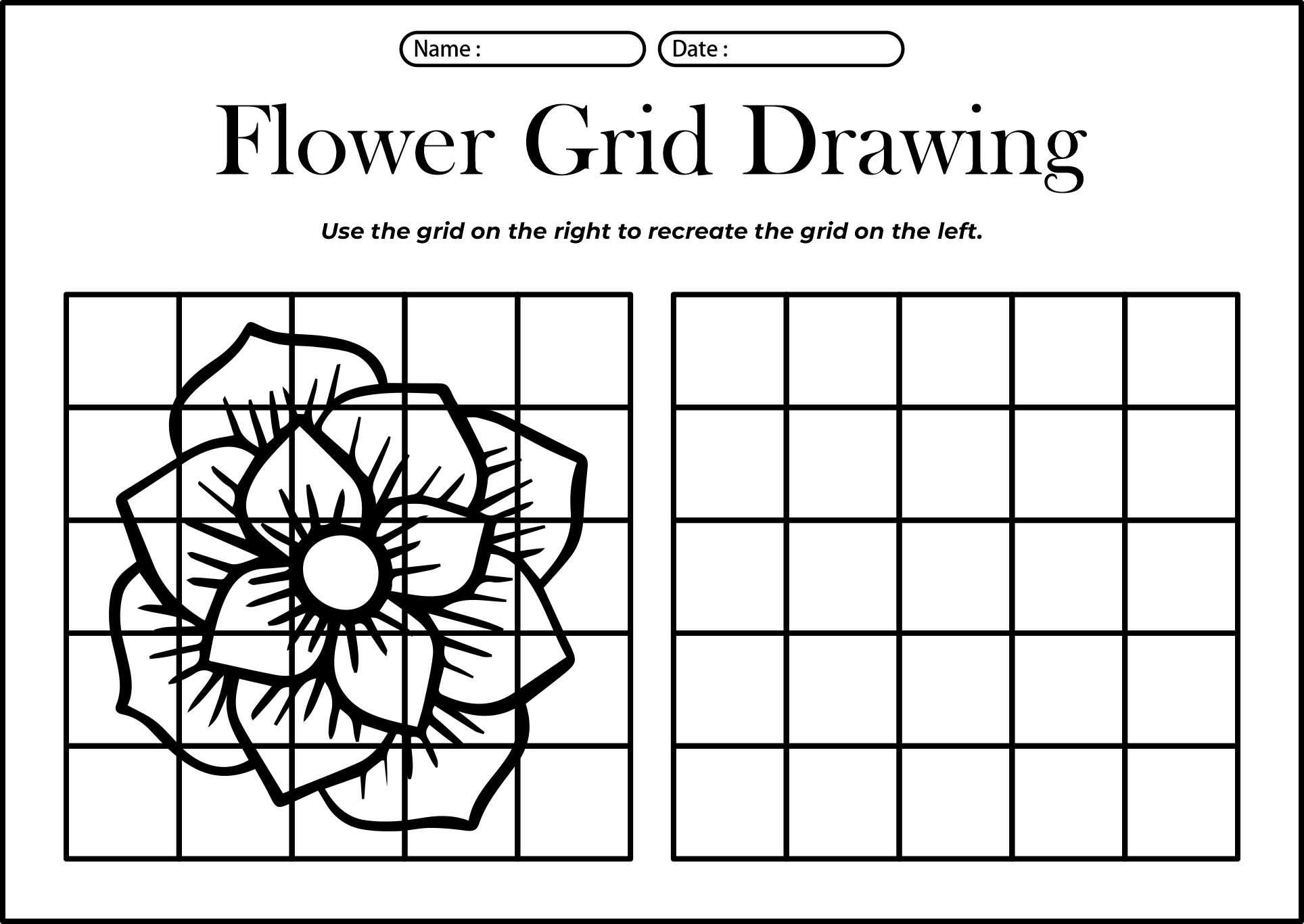
Grid method drawing for beginners functions by capitalizing on the human brain’s natural ability to recognize and replicate geometric patterns within localized boundaries. When children isolate a single square from a larger Grid Drawing template, cognitive load decreases, eliminating the tendency to draw preconceived symbols instead of actual observed shapes. This practice heavily reinforces hand-eye coordination as students visually measure angles, curves, and intersections relative to vertical and horizontal grid lines. Utilizing realistic photo references ensures that young artists ground their creative exercises in genuine visual data rather than cartoon abstractions, supporting superior cognitive development and visual literacy.
Key Specifications and Breakdown
| Age / Learning Stage | Visual Skill & Grid Ratio | Pedagogical Application & Scaffolding |
|---|---|---|
| Ages 4–6 (Early Preschool) | 2×2 or 3×3 simple square matrix | Use oversized squares with thick black borders to teach basic quadrant location and shape mapping. |
| Ages 7–9 (Early Elementary) | 4×4 balanced coordinate grid | Incorporate photographic flashcards of animals and everyday objects to refine proportional estimation. |
| Ages 10+ (Advanced Beginners) | 6×6 detailed proportional grid | Transition toward freehand observational scaling by reducing grid dependency through progressive fading. |
Systematic visual chunking through grid-based drawing frameworks measurably reduces cognitive overload and accelerates spatial reasoning development in primary education. — National Art Education Association (NAEA)
Step-by-Step Practical Application and Printing Guidelines
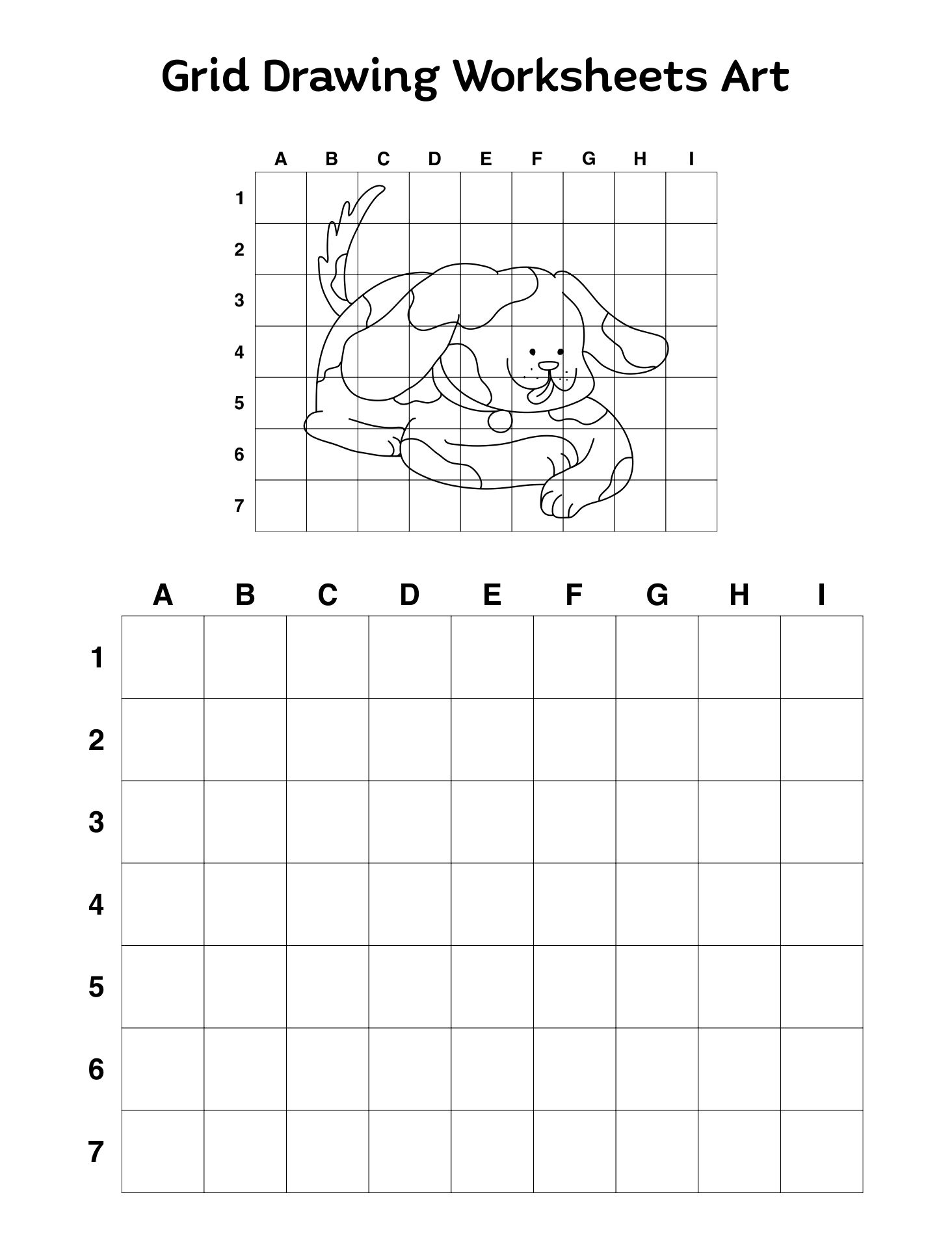
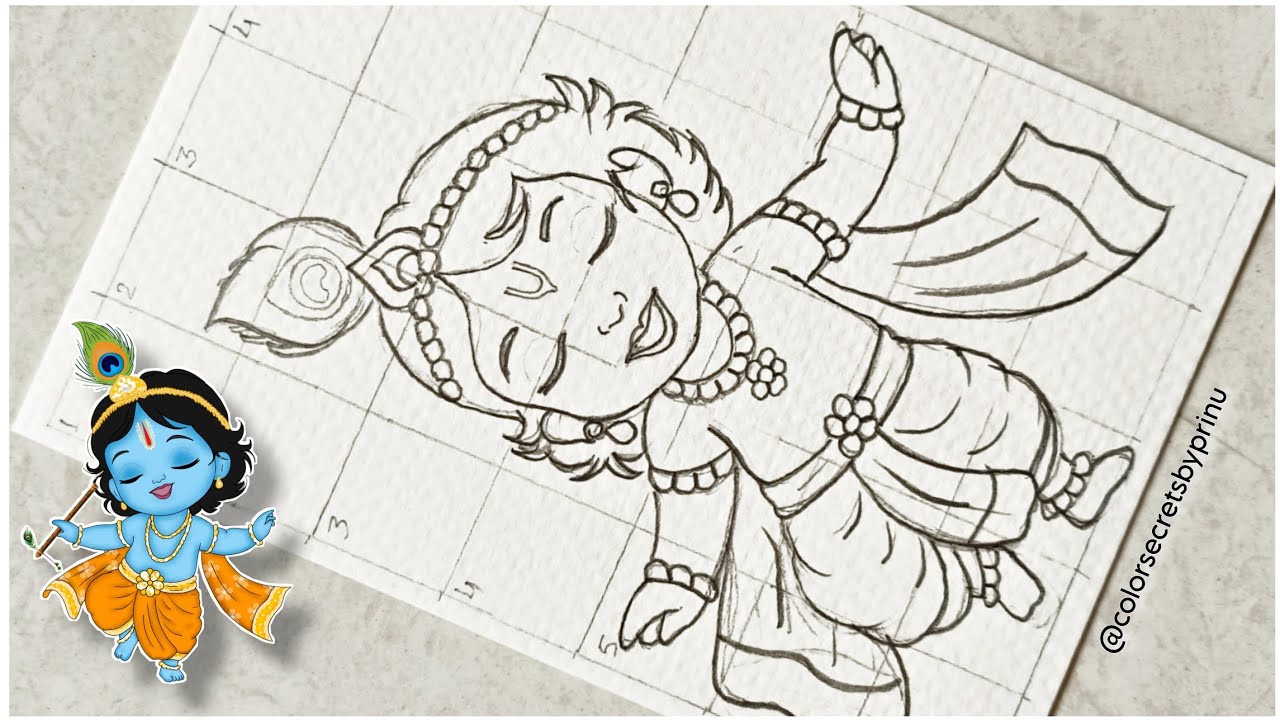
Grid method drawing for beginners requires carefully aligned printing parameters to ensure the source image grid matches the drawing template precisely. Educators should print both the reference photograph and the blank drawing sheet at a standardized 1:1 scale using heavy cardstock to prevent paper warping during pencil sketching. Instructors guide students to label horizontal rows with letters (A, B, C) and vertical columns with numbers (1, 2, 3) to establish a clear coordinate vocabulary. Learners then isolate one grid cell at a time using an L-shaped paper mask, sketching only the lines visible inside that specific boundary before advancing to the adjacent square.
Common Challenges and How to Avoid Them
Grid method drawing for beginners often falters when students attempt to draw the entire image at once instead of focusing strictly on isolated grid intersections. To prevent distortion, supervisors must teach children to locate specific anchor points where lines cross grid boundaries before executing smooth contour strokes. Another common hurdle involves improper scaling; utilizing pre-formatted printable worksheets eliminates manual measurement errors and keeps frustration levels low. Encouraging the use of light construction lines initially allows young artists to erase and adjust proportions accurately before committing to final ink or dark pencil definitions.
💬 Frequently Asked Questions
Explore More Free Learning Printables and Visual Activities on WePhotoAgency
Comprehensive visual art curricula require a steady supply of high-quality, educator-approved templates that foster critical thinking and spatial awareness. Parents, teachers, and homeschoolers can access an extensive library of printable resources, progressive worksheets, and developmental tools directly by visiting WePhotoAgency.com to support continuous creative growth in early childhood education.
Visual Reference Gallery