Introduction
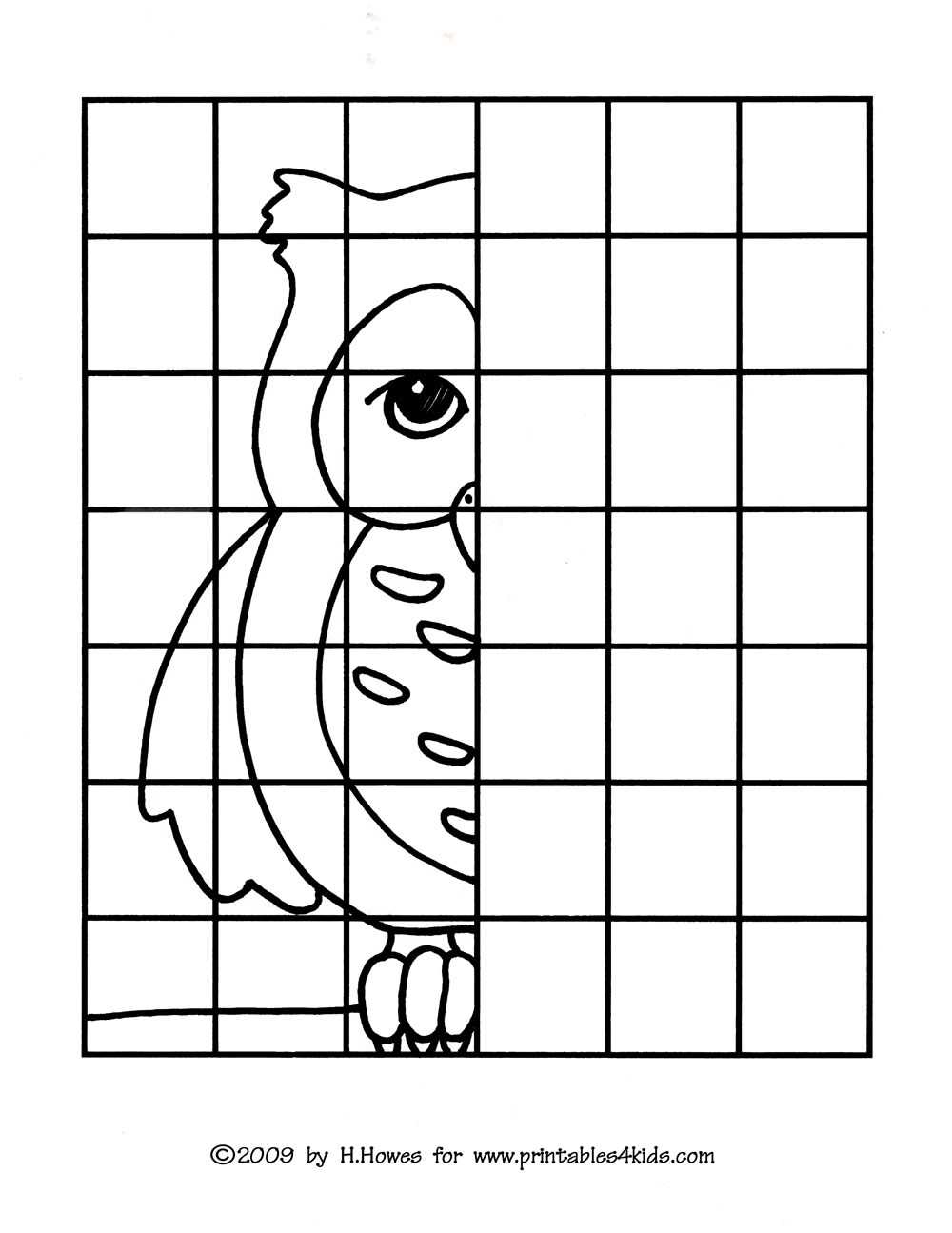
A grid drawing reference photo divides a complex image into manageable geometric sections to teach children spatial awareness, fine-motor proportion estimation, and visual observation skills. According to the National Art Education Association (NAEA), structured visual observation tasks systematically accelerate cognitive development and perceptual organization in early childhood education. Utilizing printable Grid Drawing worksheets transforms intimidating artistic challenges into accessible spatial puzzles, encouraging young learners to break down whole subjects into isolated segments.
Visual Learning & Skill Snapshot:
- Core Focus: Breaking complex reference photos into coordinate-based grid squares for accurate physical reproduction.
- Target Skill: Spatial reasoning, visual discrimination, fine-motor proportion, and photo-based concept mastery.
- Key Recommendation: Pair high-contrast printable grids with real photo visual references to anchor abstract drawing exercises in concrete reality.
Core Principles and Visual Learning Overview
Grid drawing mechanics rely on coordinate mapping, allowing developing minds to focus exclusively on one isolated square at a time rather than becoming overwhelmed by an entire composition. By overlaying a uniform matrix onto a target picture, children isolate shapes, lines, and negative space without relying on symbolic drawing conventions. This method builds essential hand-eye coordination and teaches the brain to measure visual relationships objectively. Educators often pair these structured drawing sheets with Photo Flashcards to reinforce early visual literacy, memory retention, and shape recognition before pencil hits paper.
Key Specifications and Breakdown
| Age / Learning Stage | Visual Skill & Grid Ratio | Pedagogical Application & Scaffolding |
|---|---|---|
| Ages 4-5 (Early Years) | 2×2 or 3×3 simple matrix with thick reference lines | Focuses on basic contour tracing and large-scale shape identification using simple everyday objects. |
| Ages 6-8 (Early Elementary) | 4×4 balanced grid with photographic subjects | Emphasizes proportion estimation, angle replication, and connecting lines across intersecting axes. |
| Ages 9-11 (Advanced Elementary) | 6×6 detailed grid with high-contrast imagery | Refines complex shading, perspective analysis, and precise scale transfer from photo to paper. |
Structured visual partitioning significantly enhances visuospatial working memory and fine-motor execution by offloading cognitive overload into concrete spatial increments — National Art Education Association (NAEA)
Step-by-Step Practical Application and Printing Guidelines
Implementing grid drawing exercises requires careful preparation of both the reference image and the blank drawing sheet to ensure exact dimensional correspondence. Educators must print identical grid dimensions—such as one-inch squares—onto both the source picture and the blank working paper, labeling horizontal columns with letters and vertical rows with numbers. Children should be guided to examine one individual square at a time, locating the specific grid coordinate on the reference sheet and replicating only the lines contained within that specific boundary onto the blank corresponding box. Expanding Educational Activities to include varied subject matter keeps student engagement high while systematically reinforcing methodical observation habits.
Common Challenges and How to Avoid Them
Children frequently struggle when attempting to draw the entire subject at once rather than focusing strictly on individual grid squares, leading to proportion distortion and frustration. Instructors can prevent this common pitfall by utilizing index cards or opaque cutouts to cover surrounding grid cells, forcing the learner to isolate the exact coordinate being rendered. Another frequent obstacle involves mismatched grid dimensions between the photo and the drawing pad; verifying that both templates share exact proportional scaling resolves alignment errors immediately. Emphasizing patience over speed ensures learners develop analytical observation rather than hurried approximation.
💬 Frequently Asked Questions
Explore More Free Learning Printables and Visual Activities on WePhotoAgency
Empowering children with structured observational tools creates a lasting foundation for both academic success and creative expression. Discover an extensive collection of printable resources, targeted exercises, and visual learning aids by visiting the main hub at WePhotoAgency.com to support continuous growth in every classroom and homeschool environment.
Visual Reference Gallery