Introduction
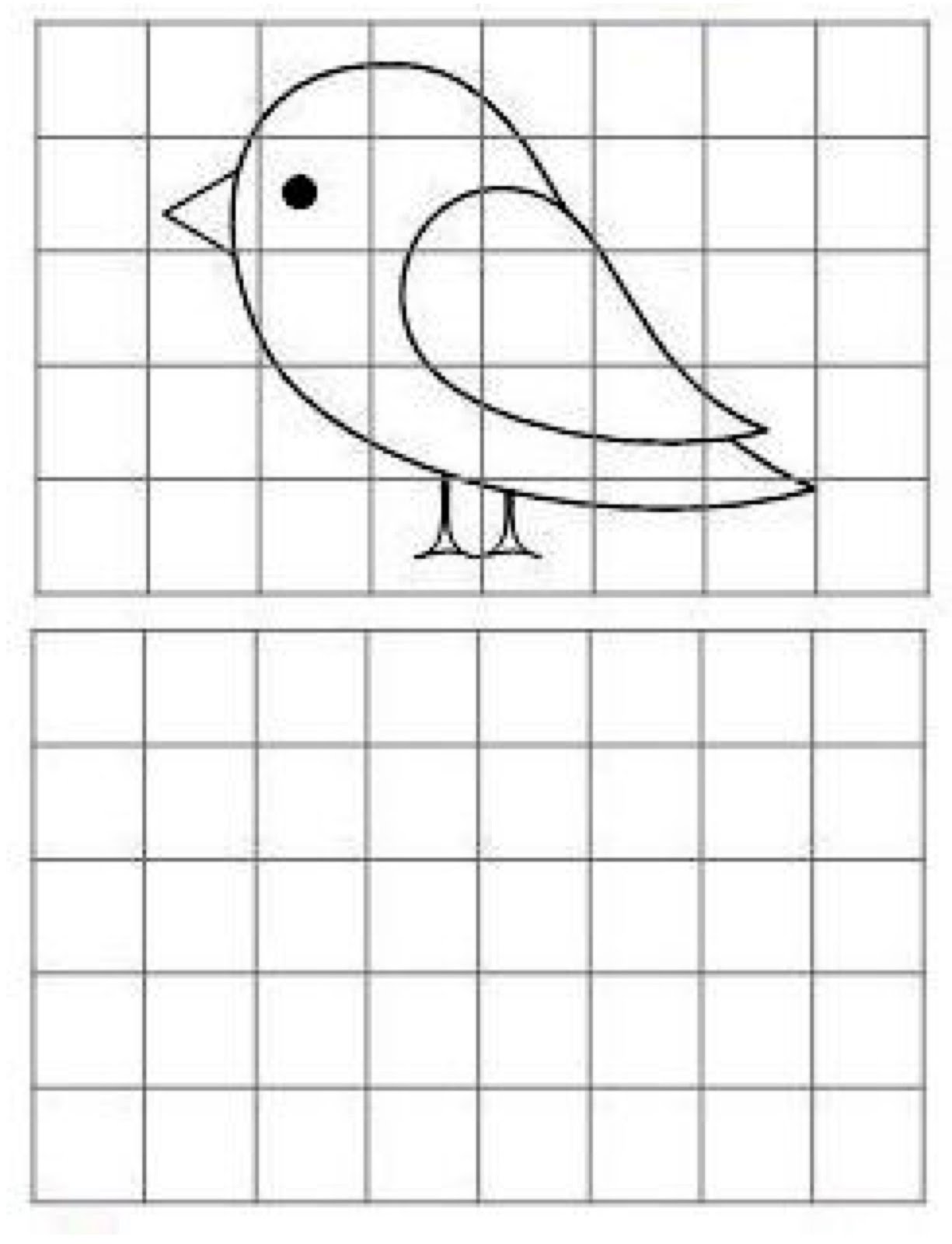
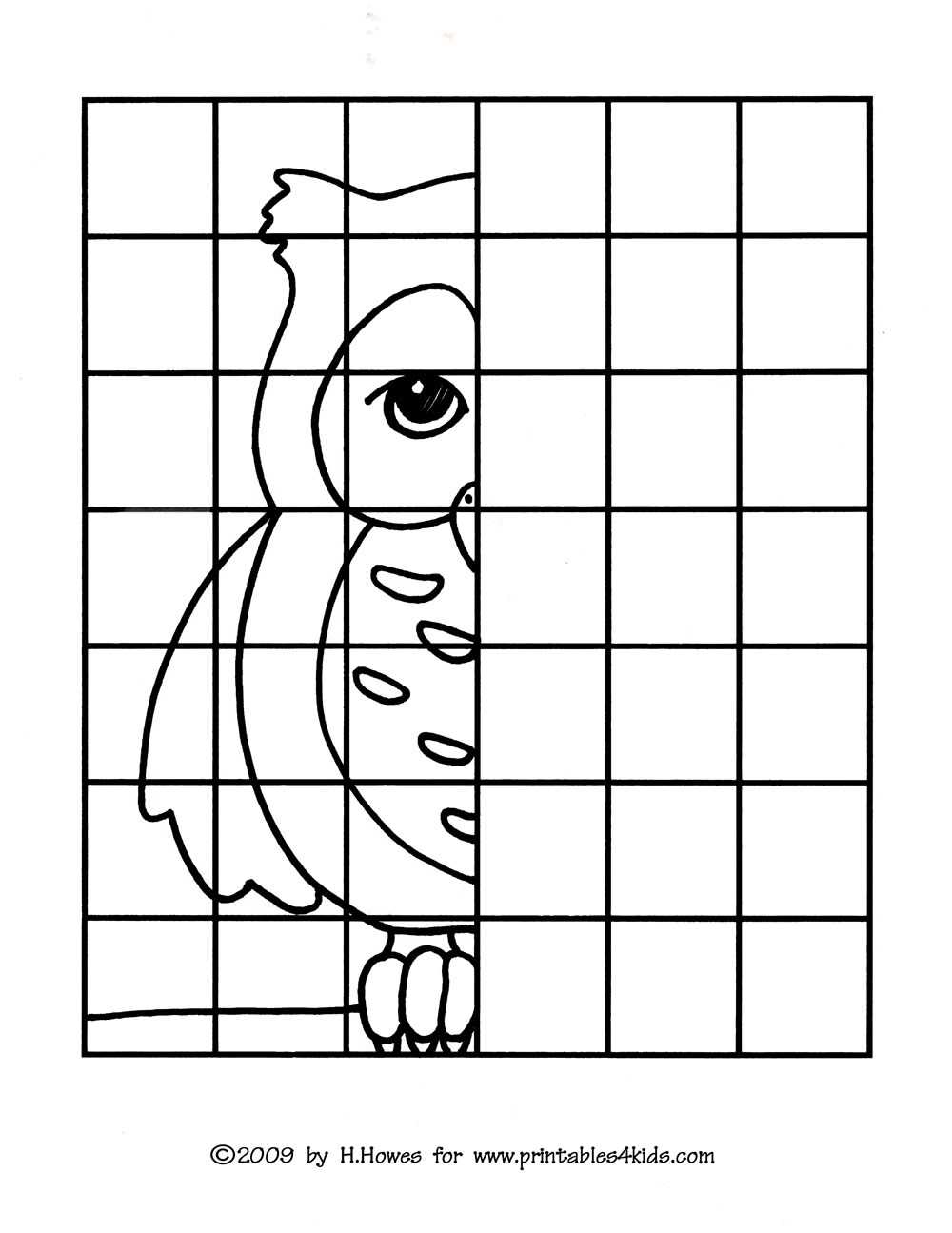
Grid drawing paper serves as a foundational educational tool that divides visual fields into manageable coordinate squares to systematically enhance children’s spatial awareness, proportion estimation, and hand-eye coordination. According to the National Association for the Education of Young Children (NAEYC), structured visual-spatial manipulation during early childhood directly strengthens cognitive architecture and foundational mathematics readiness. By breaking down complex visual forms into smaller coordinate sectors, young learners transition from intuitive scribbling to precise observational rendering. Educators utilize these structured layouts alongside resources like Grid Drawing templates to bridge abstract geometrical concepts with tangible artistic creation. This systematic methodology supports early childhood development by transforming overwhelming visual stimuli into digestible, achievable segments.
Visual Learning & Skill Snapshot:
- Core Focus: Coordinate-based subdivision of imagery for systematic observational drawing and proportional mapping.
- Target Skill: Spatial reasoning, visual discrimination, fine-motor proportion control, and analytical observation.
- Key Recommendation: Pair large 1-inch printed grids with high-contrast realistic imagery before progressing to finer grid matrices.
Core Principles and Visual Learning Overview
Grid drawing paper relies on the principle of compartmentalized observation, training the human brain to isolate individual coordinate boxes rather than processing a subject as a single, intimidating whole. When children pair printable worksheets with authentic Photo Flashcards, cognitive processing shifts from generic shape recognition to precise line, angle, and negative space evaluation. This multi-step visual decoding builds essential executive function skills, including working memory, sustained attention, and impulse control. Integrating structured drawing exercises into standard Educational Activities provides children with a reliable framework to evaluate scale, symmetry, and spatial orientation independently, yielding measurable improvements in both fine arts capabilities and geometrical comprehension.
Key Specifications and Breakdown
| Age / Learning Stage | Visual Skill & Grid Ratio | Pedagogical Application & Scaffolding |
|---|---|---|
| Ages 4-5 (Early Preschool) | 1-inch squares; 4×4 matrix | Focuses on gross contour matching using simple, high-contrast photographic subjects. |
| Ages 6-7 (Early Elementary) | 0.5-inch squares; 8×8 matrix | Teaches intermediate angle estimation and proportion scaling from real photo references. |
| Ages 8+ (Advanced Elementary) | 0.25-inch squares; 10×10 matrix | Refines intricate detail work, negative space awareness, and exact coordinate mapping. |
Systematic visual division significantly enhances cognitive mapping, analytical observation, and proportional accuracy in developing minds. — National Art Education Association (NAEA)
Step-by-Step Practical Application and Printing Guidelines
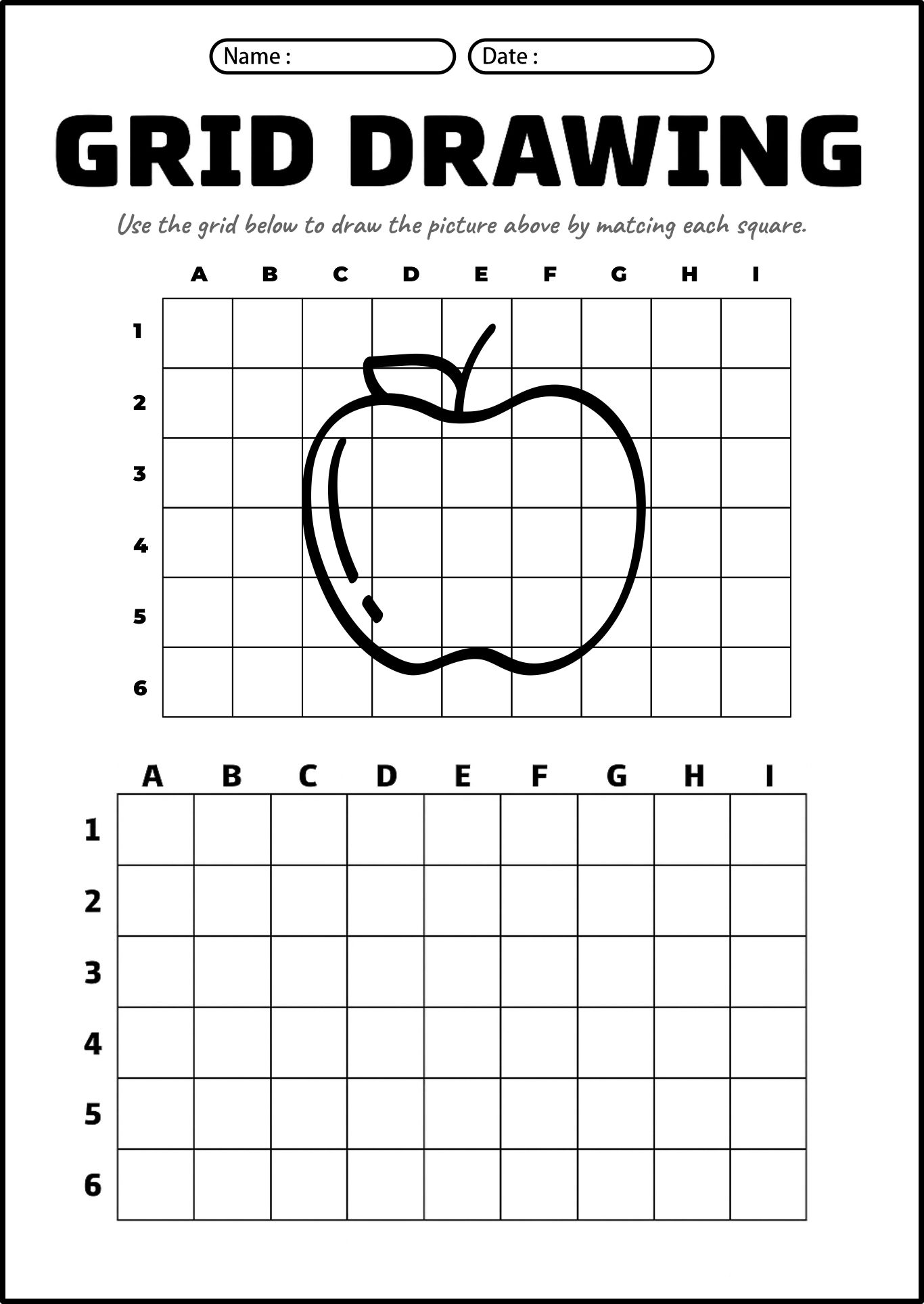
Executing effective grid-based lessons requires high-contrast source material and clean, smudge-free printed worksheets to eliminate visual confusion. Educators should print identical grid lines onto both the reference image and the blank drawing sheet to ensure direct coordinate correspondence. Instructors begin by demonstrating how to locate a specific intersection, such as column B, row 3, on the reference photo and replicate those exact intersecting strokes within the corresponding box on the blank sheet. Utilizing heavy-weight cardstock prevents ink bleed-through and withstands repeated erasing by developing artists refining their proportional estimates. This deliberate, step-by-step methodology replaces frustration with structured confidence, allowing children to independently verify their progress coordinate by coordinate.
Common Challenges and How to Avoid Them
Children frequently struggle with grid drawing paper when attempting to draw the entire subject at once instead of focusing exclusively on one isolated coordinate box. Educators resolve this hurdle by providing opaque cardboard windows that isolate a single square, forcing the child to ignore surrounding visual clutter and concentrate solely on local line direction. Another common obstacle involves mismatched grid aspect ratios between the reference picture and the student drawing sheet, which inherently distorts the final rendered proportion. Ensuring that both master templates feature uniform square dimensions prevents scaling errors and guarantees accurate visual translation from photograph to paper. Establishing patient, methodical habits early ensures that learners view grid systems as empowering scaffolds rather than restrictive rules.
💬 Frequently Asked Questions
Explore More Free Learning Printables and Visual Activities on WePhotoAgency
Parents, educators, and homeschool curriculum developers seeking to expand their visual arts library can access an extensive collection of professional resources, printable worksheets, and cognitive development tools directly through the main WePhotoAgency.com hub. Consistent engagement with structured printables empowers children to master spatial reasoning, artistic confidence, and advanced visual literacy at their own pace.
Visual Reference Gallery