Introduction
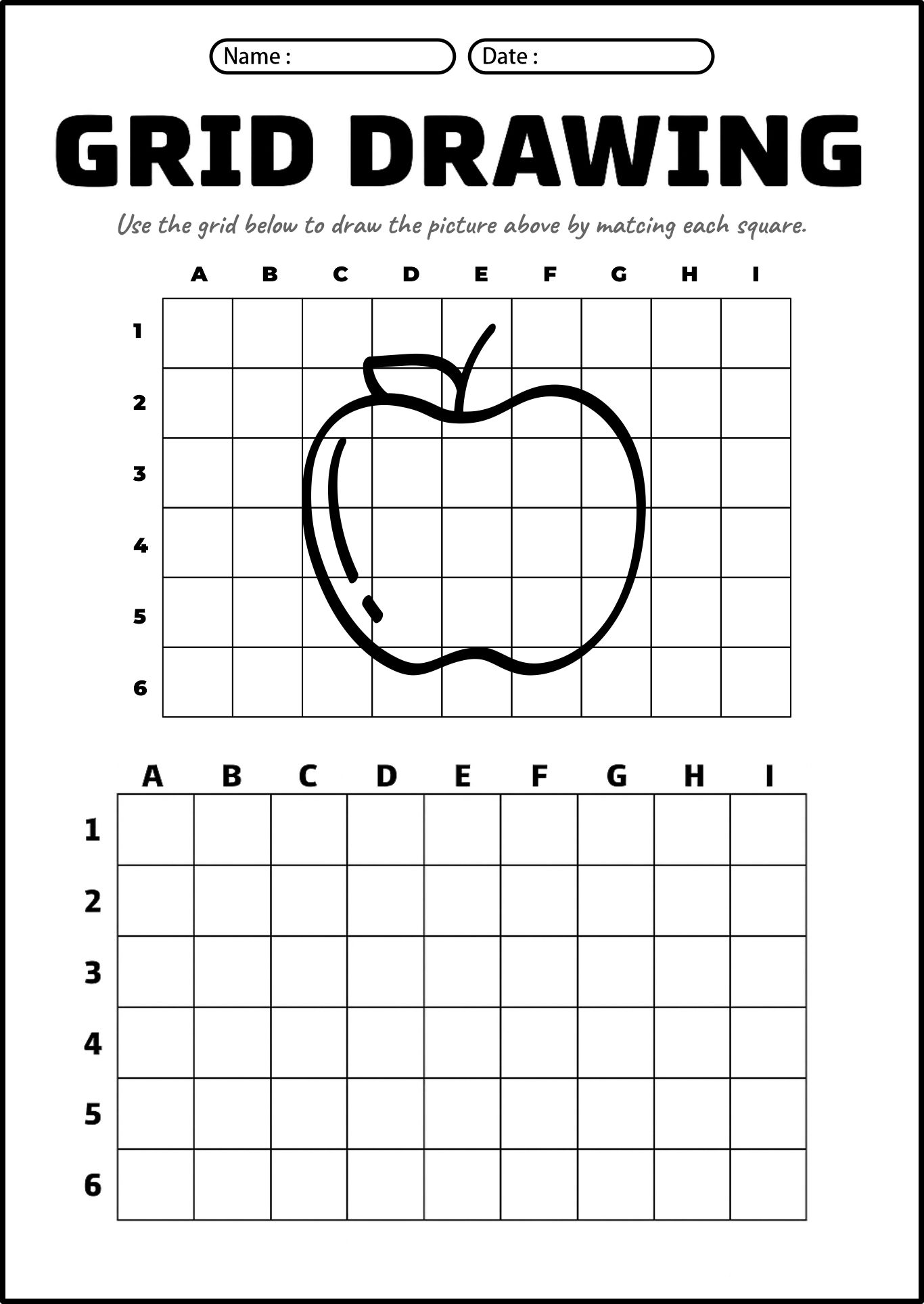
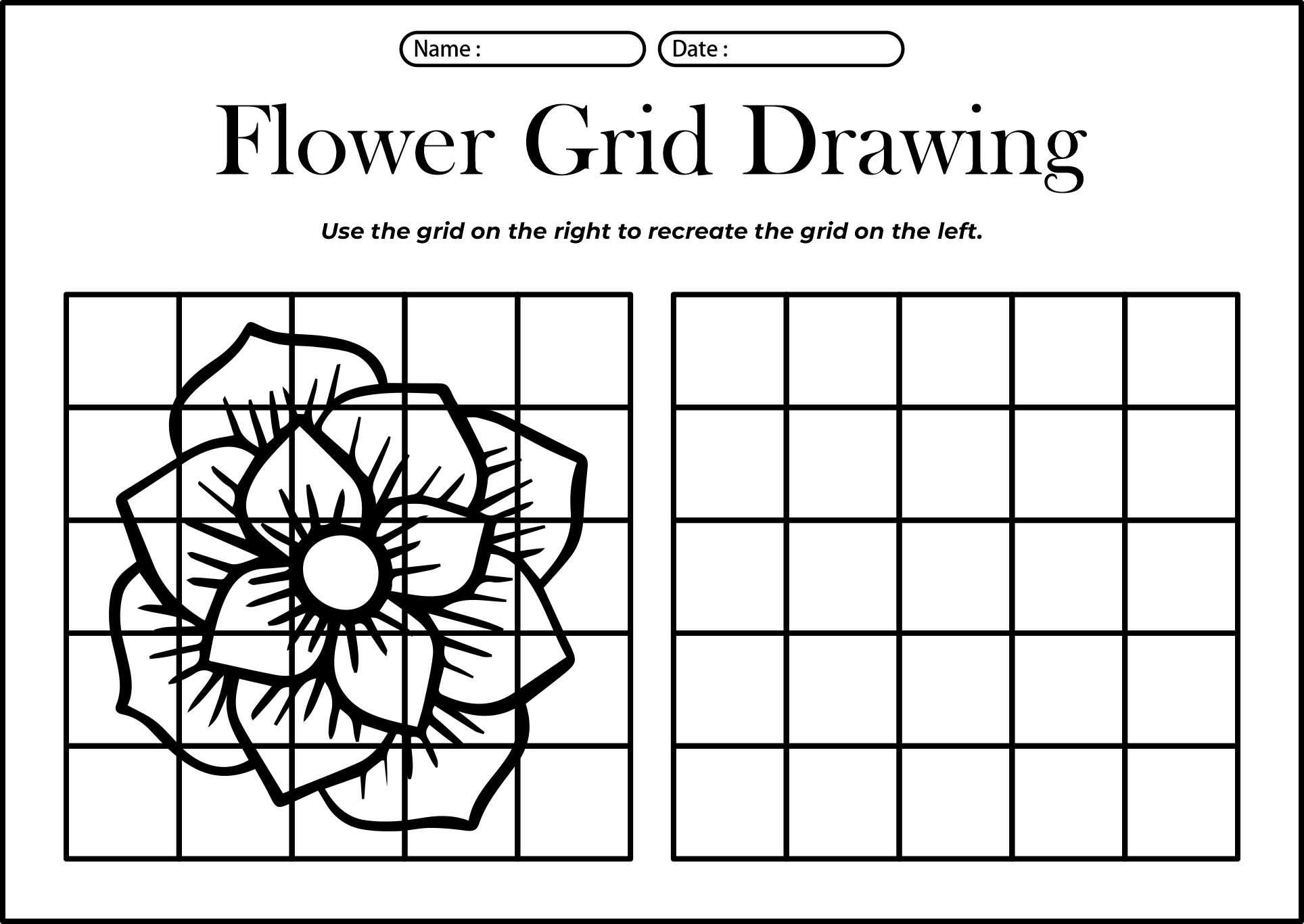
Grid drawing online free tools provide digital software and printable worksheet generators that overlay precise geometric matrices onto photographs, breaking complex visual information down into manageable segments for children. According to the National Art Education Association (NAEA), structured visual exercises that isolate perceptual components significantly accelerate spatial understanding, visual-motor integration, and contour mapping in developing minds. By utilizing scalable grids over real-world imagery, educators and parents can systematically bridge the gap between abstract observation and concrete drawing execution. This pedagogical approach transforms overwhelming visual stimuli into achievable, coordinate-based drawing tasks that foster analytical thinking and fine-motor precision. Exploring structured collections like Grid Drawing allows facilitators to access ready-made resources designed specifically for young learners.
Visual Learning & Skill Snapshot:
- Core Focus: Utilizing digital grid tools and printable photo templates to teach proportional scaling.
- Target Skill: Spatial reasoning, visual discrimination, fine-motor proportion, and photo-based concept mastery.
- Key Recommendation: Start early learners with simple 2×2 or 3×3 matrices using high-contrast real photo visual flashcards before progressing to complex grids.
Core Principles and Visual Learning Overview
Proportional coordinate mapping requires learners to analyze line directions, negative space, and intersections square by square rather than attempting to render a complex subject all at once. When young children engage with free online grid tools paired with Photo Flashcards, cognitive load is reduced by compartmentalizing visual data into isolated visual fragments. This method exercises the parietal lobe, which processes spatial relationships, teaching children how to translate three-dimensional visual cues onto a two-dimensional drawing surface with accurate relative sizes. Systematic grid utilization encourages careful observation, teaching students to look past preconceived symbols of objects and instead focus purely on abstract lines, angles, and tonal proportions.
Key Specifications and Breakdown
| Age / Learning Stage | Visual Skill & Grid Ratio | Pedagogical Application & Scaffolding |
|---|---|---|
| Ages 4-6 (Early Foundation) | 2×2 or 3×3 simple matrices with thick, high-contrast borders | Focuses on basic coordinate matching, left-to-right scanning, and pairing with real photo flashcards. |
| Ages 7-9 (Skill Expansion) | 4×4 to 6×6 grids with standard photographic references | Emphasizes angle estimation, contour tracking, and maintaining correct relative scale across intersecting lines. |
| Ages 10+ (Advanced Mastery) | 8×8 or custom high-density grids for detailed replication | Targets complex visual analysis, perspective awareness, and independent transition from gridded to freehand drawing. |
Systematic visual breaking through geometry directly reinforces analytical problem-solving and visual-spatial working memory during early childhood development. — National Art Education Association (NAEA)
Step-by-Step Practical Application and Printing Guidelines
Executing successful drawing exercises involves selecting high-contrast reference images, adjusting grid line weights for optimal visibility, and providing clean, untextured paper for the final rendering. Facilitators should first upload a clear photographic subject into a browser-based grid generator, customizing the row and column count to match the developmental stage of the child. Printing both the gridded reference image and an empty matching grid side-by-side allows students to easily cross-reference coordinates without losing their place. Integrating these structured worksheets alongside targeted Educational Activities ensures a well-rounded curriculum that bridges artistic expression with cognitive growth.
Common Challenges and How to Avoid Them
Rushing through individual grid squares without checking surrounding proportions often leads to distortion, a challenge best mitigated by encouraging children to sketch lightly and verify anchor points before committing dark lines. Young learners frequently experience cognitive fatigue when confronted with too many grid intersections at once, which can be easily resolved by masking off adjacent rows with a blank piece of paper to maintain focus. Furthermore, selecting overly complex reference photographs with cluttered backgrounds obscures essential outlines, making it crucial to use clean, isolated subjects during initial learning phases to build genuine confidence.
💬 Frequently Asked Questions
Explore More Free Learning Printables and Visual Activities on WePhotoAgency
Expanding a child’s creative capabilities and cognitive toolkit requires a diverse array of accessible, professionally designed resources that combine art with foundational learning. Educators, parents, and homeschoolers can discover a comprehensive library of printable worksheets, visual flashcards, and step-by-step drawing guides by visiting the main catalog at WePhotoAgency.com to support continuous, engaging childhood development.
Visual Reference Gallery