Introduction
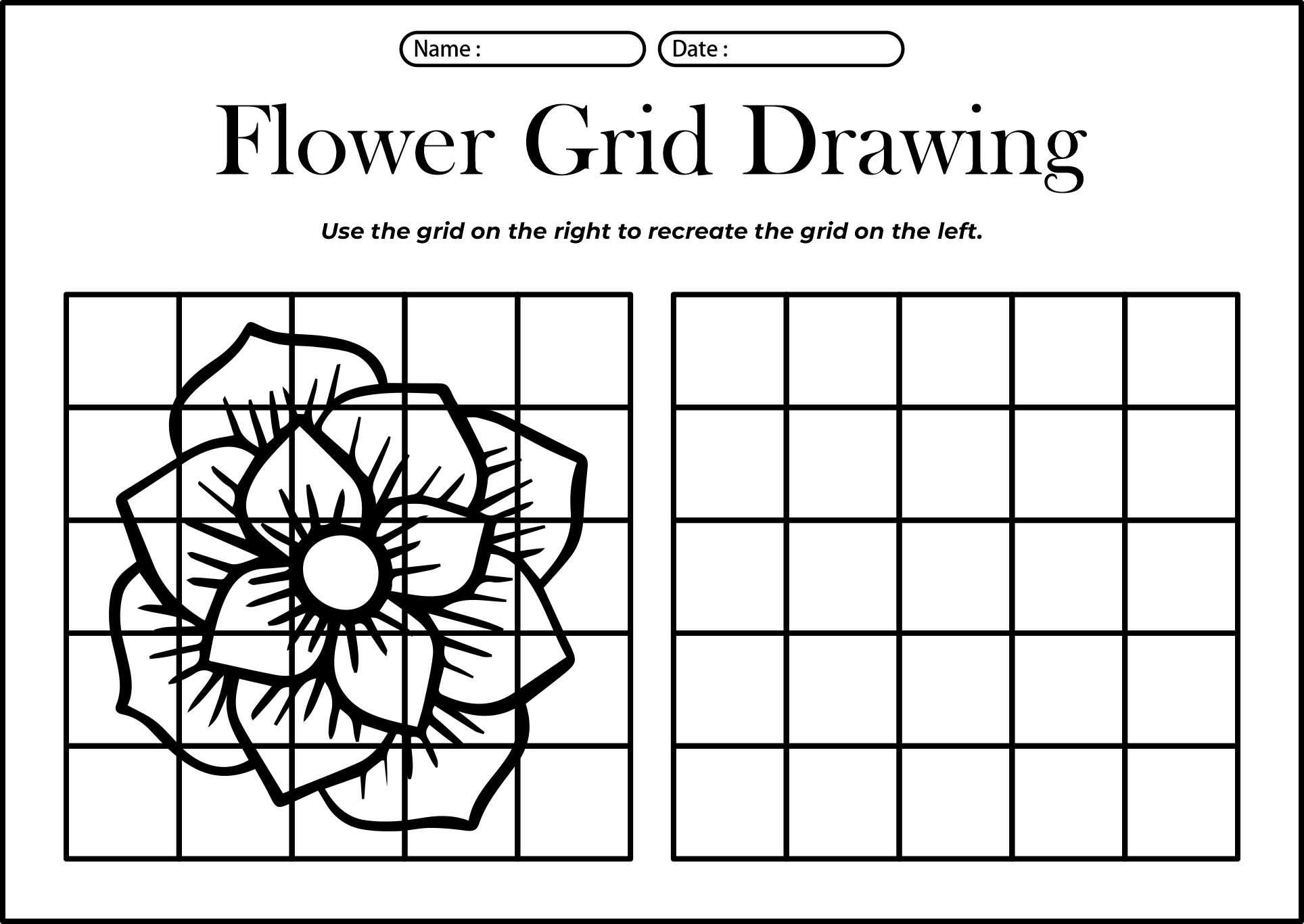
Grid drawing numbering is a systematic educational scaffolding technique that assigns numerical coordinates to rows and columns on printable visual worksheets, guiding young learners through precise proportional reproduction and spatial tracking. According to the National Art Education Association (NAEA), structured observational frameworks significantly enhance children’s ability to deconstruct complex visual stimuli into manageable geometric components. Integrating this numbering method with Grid Drawing exercises and realistic Photo Flashcards transforms abstract artistic tasks into concrete cognitive puzzles. Educators and parents utilize these numbered systems to build foundational geometry skills, improve fine-motor precision, and foster early visual literacy without cognitive overload.
Visual Learning & Skill Snapshot:
- Core Focus: Coordinate-based visual mapping using indexed rows and columns for accurate graphic reproduction.
- Target Skill: Spatial reasoning, visual discrimination, proportional estimation, and bilateral hand-eye coordination.
- Key Recommendation: Always pair high-contrast photographic references with clearly labeled, bold alphanumeric grid borders.
Core Principles and Visual Learning Overview
Grid drawing numbering operates by breaking down continuous photographic images into isolated, numbered coordinate squares that simplify complex visual data processing for the developing brain. Direct translation of single squares from a reference image to a blank drawing canvas trains young learners to isolate shapes, lines, and negative spaces independent of preconceived mental symbols. When children track coordinates such as matching row three, column two, they practice sequential processing, working memory recall, and attentional focus. This analytical approach supports broader Educational Activities designed to bridge art instruction with mathematical grid mapping and logical coordinate plotting.
Key Specifications and Breakdown
| Age / Learning Stage | Visual Skill & Grid Ratio | Pedagogical Application & Scaffolding |
|---|---|---|
| Ages 4–5 (Early Explorers) | 2×2 or 3×3 simple grids | Use basic photo references with large numerals to teach corner-to-corner tracking. |
| Ages 6–7 (Early Elementary) | 4×4 balanced grids | Introduce coordinate calling games to link numeric sequences with spatial location. |
| Ages 8+ (Advanced Beginners) | 6×6 or higher detail grids | Focus on proportion estimation, diagonal line tracing, and tonal value matching. |
Visual-spatial training through structured coordinate grids significantly accelerates mental rotation and early geometric comprehension in early childhood development. — National Art Education Association (NAEA)
Step-by-Step Practical Application and Printing Guidelines
Implementing grid drawing numbering effectively requires printing high-resolution worksheets featuring high-contrast reference images alongside identically numbered blank work grids. Educators should begin by demonstrating how to locate a specific cell, such as row B, column 4, on both the master photograph and the empty grid sheet. Instruct learners to observe the lines intersecting the boundaries of that single cell before sketching those exact contours onto their own page. Utilizing crisp, uncluttered photo prompts ensures that children do not become overwhelmed by visual clutter, allowing them to focus entirely on coordinate matching and observational accuracy.
Common Challenges and How to Avoid Them
Young learners frequently struggle with grid drawing numbering when they attempt to draw the entire picture at once instead of focusing strictly on one isolated numbered square. Adults can prevent this common pitfall by providing blank framing cards or sticky notes to cover surrounding cells, forcing the eye to concentrate exclusively on the active coordinate. Another frequent obstacle involves mismatched grid scales between the reference image and the drawing sheet, which leads to distorted proportions. Ensuring uniform box dimensions and clear, bold numbering eliminates confusion and keeps the drawing experience rewarding and frustration-free.
💬 Frequently Asked Questions
Explore More Free Learning Printables and Visual Activities on WePhotoAgency
Expanding early childhood art curriculums and spatial reasoning exercises is seamless with the comprehensive collection of educational resources available at WePhotoAgency.com. Educators, parents, and homeschoolers can instantly access an extensive library of printable worksheets, coordinate drawing templates, and photographic visual aids tailored for developing minds. Discover new ways to inspire creativity and cognitive growth by exploring the complete catalog of professional learning materials today.
Visual Reference Gallery