Introduction
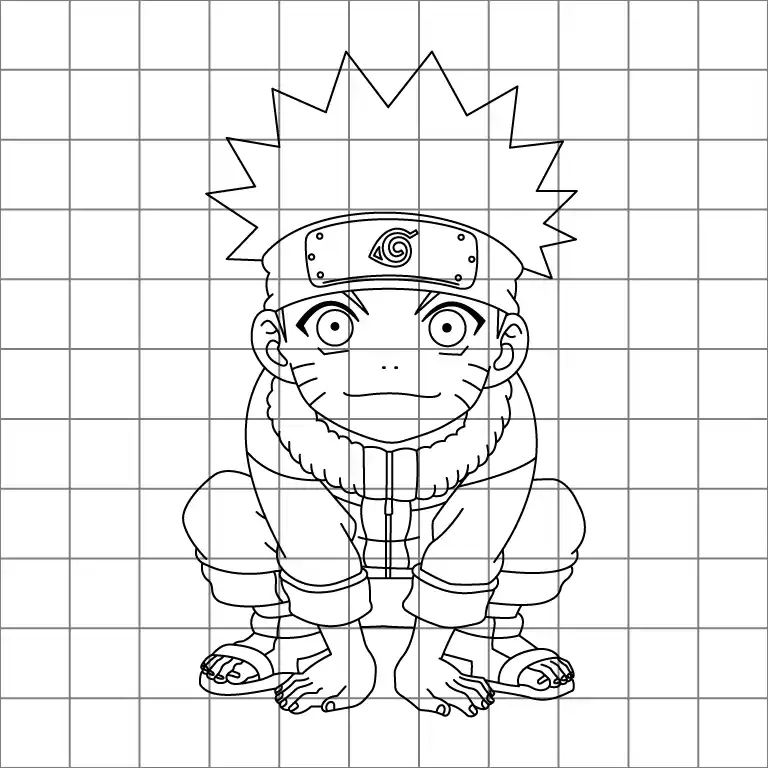
A grid drawing net is a structural framework of intersecting horizontal and vertical lines overlaid onto a visual reference to break complex images into manageable coordinate squares. According to the National Art Education Association (NAEA), systematic visual partitioning tools effectively strengthen children’s observational accuracy, proportional mapping, and spatial coordination during early cognitive development phases. Integrating these printable resources into early elementary curricula provides young learners with a reliable method to decode complex pictorial information. Educators and parents utilize specialized worksheets and Photo Flashcards to transition abstract visual tasks into structured, step-by-step drafting exercises that build supreme confidence in fine art foundations.
Visual Learning & Skill Snapshot:
- Core Focus: Structural coordinate overlays for breaking down and replicating images accurately.
- Target Skill: Spatial reasoning, visual discrimination, fine-motor proportion, and photo-based concept mastery.
- Key Recommendation: Pair large-cell grids with realistic photographs to simplify early tracking and coordinate mapping.
Core Principles and Visual Learning Overview
Proportion estimation relies on the human brain’s ability to isolate shapes within localized spatial frames rather than processing an entire image at once. A grid drawing net functions by dividing a complete subject—such as an animal, plant, or everyday object—into smaller coordinate blocks, allowing children to focus exclusively on drawing the specific lines contained inside a single square. This technique reduces cognitive overload, transforming intimidating artistic tasks into achievable visual puzzles. When children pair these coordinate frameworks with Grid Drawing exercises and Educational Activities, neurological pathways responsible for hand-eye coordination and visual-spatial analysis become significantly reinforced.
Key Specifications and Breakdown
| Age / Learning Stage | Visual Skill & Grid Ratio | Pedagogical Application & Scaffolding |
|---|---|---|
| Ages 4-5 (Early Foundation) | 2×2 or 3×3 large grid cells | Focuses on basic shape recognition and simple coordinate tracking using high-contrast photo subjects. |
| Ages 6-7 (Developing Primary) | 4×4 balanced reference grid | Enhances proportional estimation and line continuity across adjacent intersecting boundaries. |
| Ages 8+ (Advanced Elementary) | 6×6 or complex multi-cell grids | Refines fine-motor precision, detailed observation, and independent scaling capabilities. |
Structured visual partitioning methods demonstrably enhance spatial awareness, fine-motor coordination, and observational accuracy in early childhood learning frameworks. — National Art Education Association (NAEA)
Step-by-Step Practical Application and Printing Guidelines
Successful implementation requires high-contrast reference images and cleanly printed worksheets featuring bold, easy-to-read coordinate letters and numbers. Educators should begin by selecting a clear, uncluttered photo template, ensuring the matching blank grid sheet shares identical dimensions to prevent scaling confusion. Instruct learners to scan the reference grid square by square, identifying specific intersection points where lines enter and exit each border. Encouraging children to use a finger or a small blank card to isolate one active square at a time prevents visual fatigue and sharpens acute concentration during the drafting process.
Common Challenges and How to Avoid Them
Young learners frequently struggle with losing their place on the grid or attempting to draw the entire image freehand instead of focusing on one coordinate square. Guiding children to label rows and columns clearly with distinct letters and numbers eliminates tracking errors and establishes a methodical scanning habit. Furthermore, educators can prevent frustration by starting with thicker grid lines and fewer cells, gradually increasing grid complexity only after the child demonstrates consistent confidence in mapping basic shapes and proportions.
💬 Frequently Asked Questions
Explore More Free Learning Printables and Visual Activities on WePhotoAgency
Enhancing visual-spatial intelligence and fine-motor precision requires consistent practice with high-quality, educator-approved tools designed specifically for young learners. Parents, homeschoolers, and classroom instructors can discover an extensive collection of printable resources, progressive worksheets, and creative learning modules by visiting the main WePhotoAgency resource library.
Visual Reference Gallery