Introduction
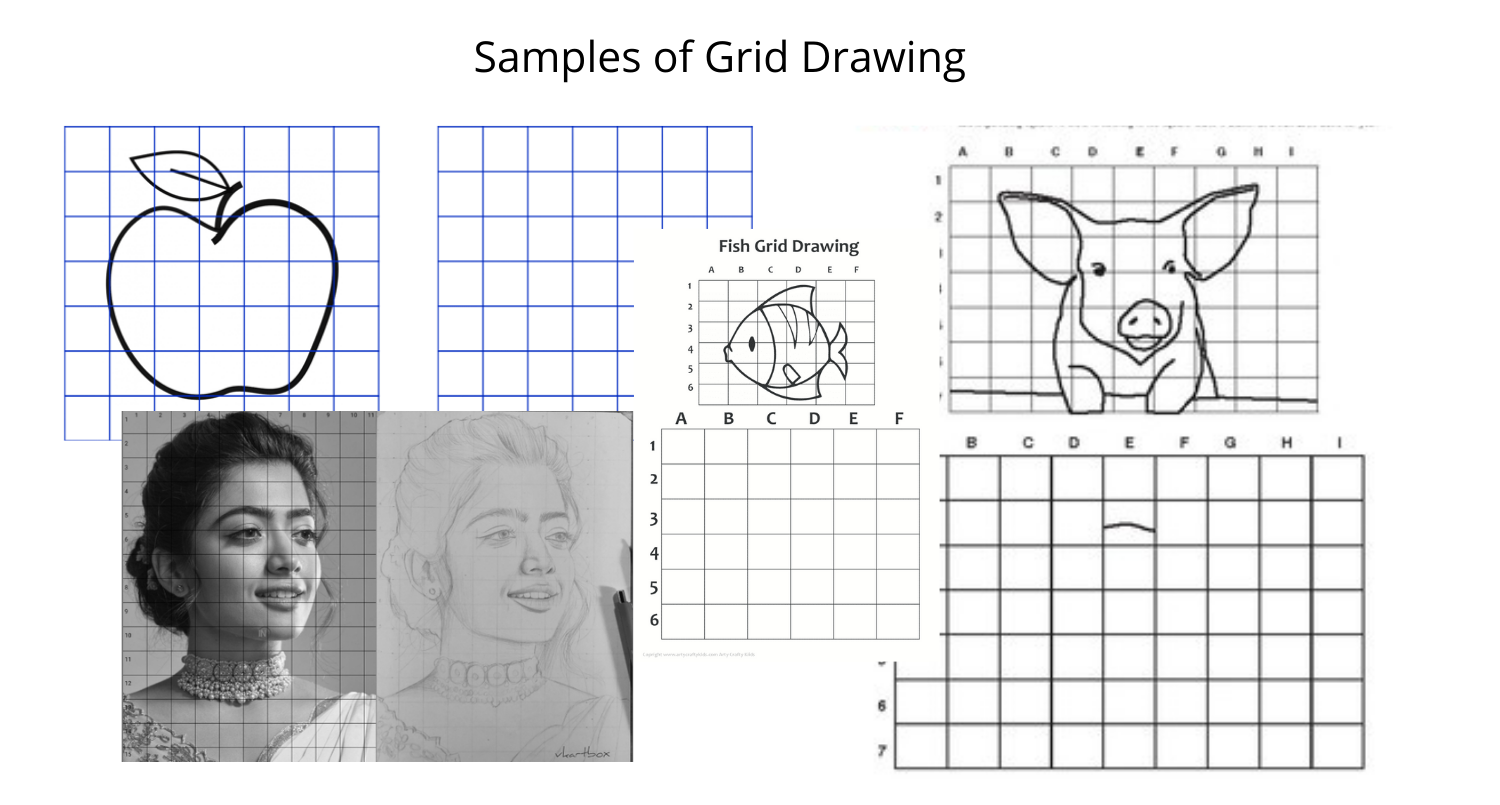
Grid drawing lines function as a foundational visual framework that segments reference images into manageable coordinate boxes, directly strengthening early spatial awareness, proportion estimation, and observation skills in developing minds. According to the National Art Education Association (NAEA), structured observational drawing exercises actively enhance visual literacy and critical cognitive problem-solving capacities in early childhood learners. By breaking complex photographic subjects into distinct coordinate squares, young learners transition from abstract symbol drawing to accurate, reality-based visual recording. Integrating Grid Drawing materials into early learning environments bridges the gap between raw visual perception and precise fine-motor execution.
Visual Learning & Skill Snapshot:
- Core Focus: Coordinate-based visual breakdown using printable grid drawing worksheets.
- Target Skill: Spatial reasoning, visual discrimination, fine-motor proportion, and photo-based concept mastery.
- Key Recommendation: Pair large-format reference photographs with matching grid overlays to maximize cognitive tracking.
Core Principles and Visual Learning Overview
Grid drawing lines operate by teaching young brains to isolate discrete segments of a picture rather than overwhelming the working memory with an entire complex image. When paired with real photo visual flashcards, these structured lines transform abstract artistic rendering into an accessible exercise in coordinate mapping and visual tracking. Children learn to scan individual squares, analyze line angles, and measure negative space relative to intersecting boundaries. This analytical process builds vital foundations for geometry, reading comprehension, and scientific observation. Educators expanding curricula can explore complementary Photo Flashcards to reinforce high-contrast visual recognition alongside traditional grid exercises.
Key Specifications and Breakdown
| Age / Learning Stage | Visual Skill & Grid Ratio | Pedagogical Application & Scaffolding |
|---|---|---|
| Ages 4-5 (Early Foundation) | 2×2 or 3×3 Large-Cell Grid | Utilize high-contrast photographic subjects to teach basic top-to-bottom, left-to-right scanning. |
| Ages 6-7 (Early Elementary) | 4×4 Standard Coordinate Grid | Focus on angle replication, curved line continuity, and proportional size estimation within cells. |
| Ages 8+ (Advanced Practice) | 6×6 or complex multi-cell grids | Incorporate detailed nature photography and real-world objects to test fine motor precision and patience. |
Structured visual partitioning and coordinate-based drawing activities significantly accelerate eye-hand coordination, geometric comprehension, and observational accuracy in early childhood cognitive development. — National Art Education Association (NAEA)
Step-by-Step Practical Application and Printing Guidelines
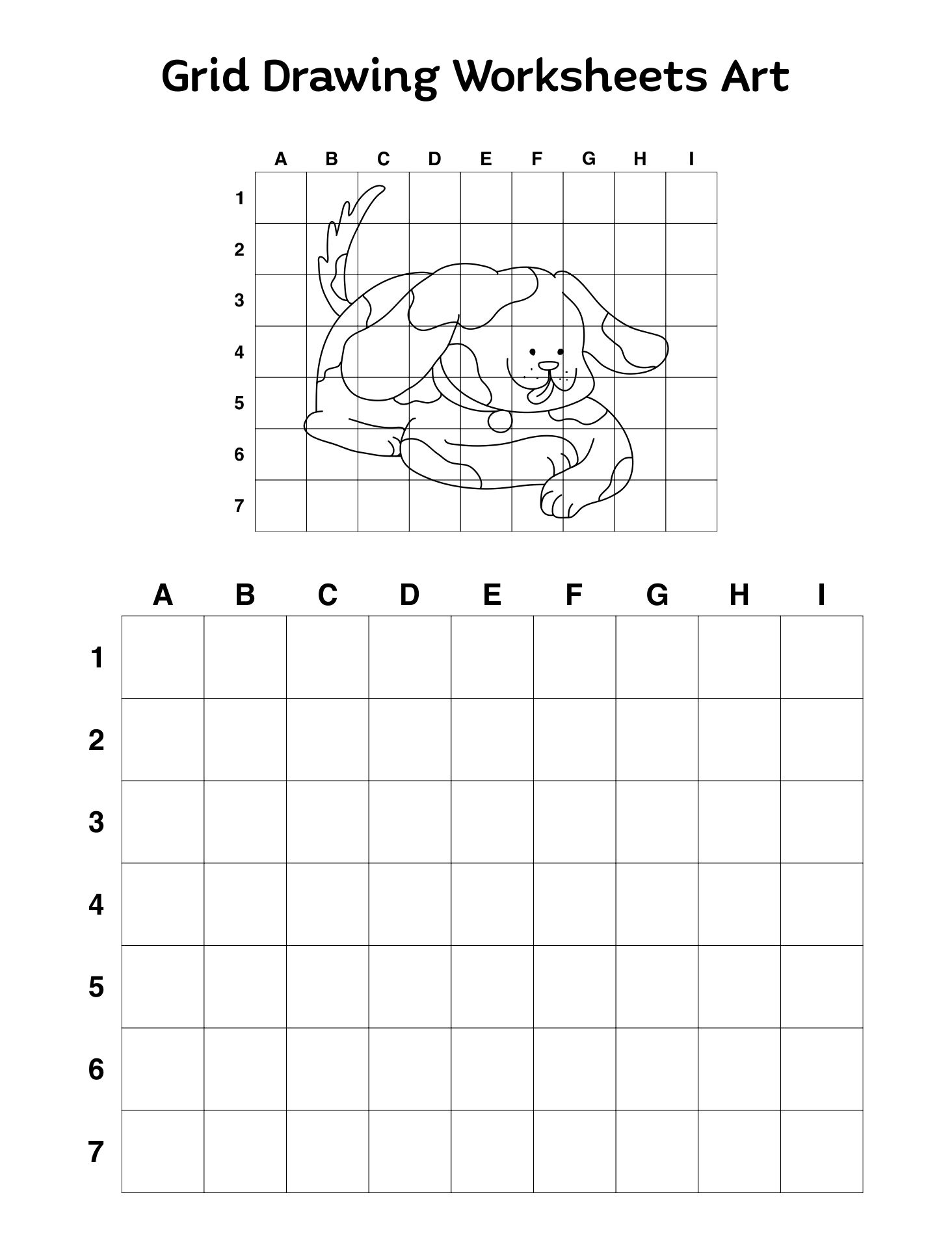
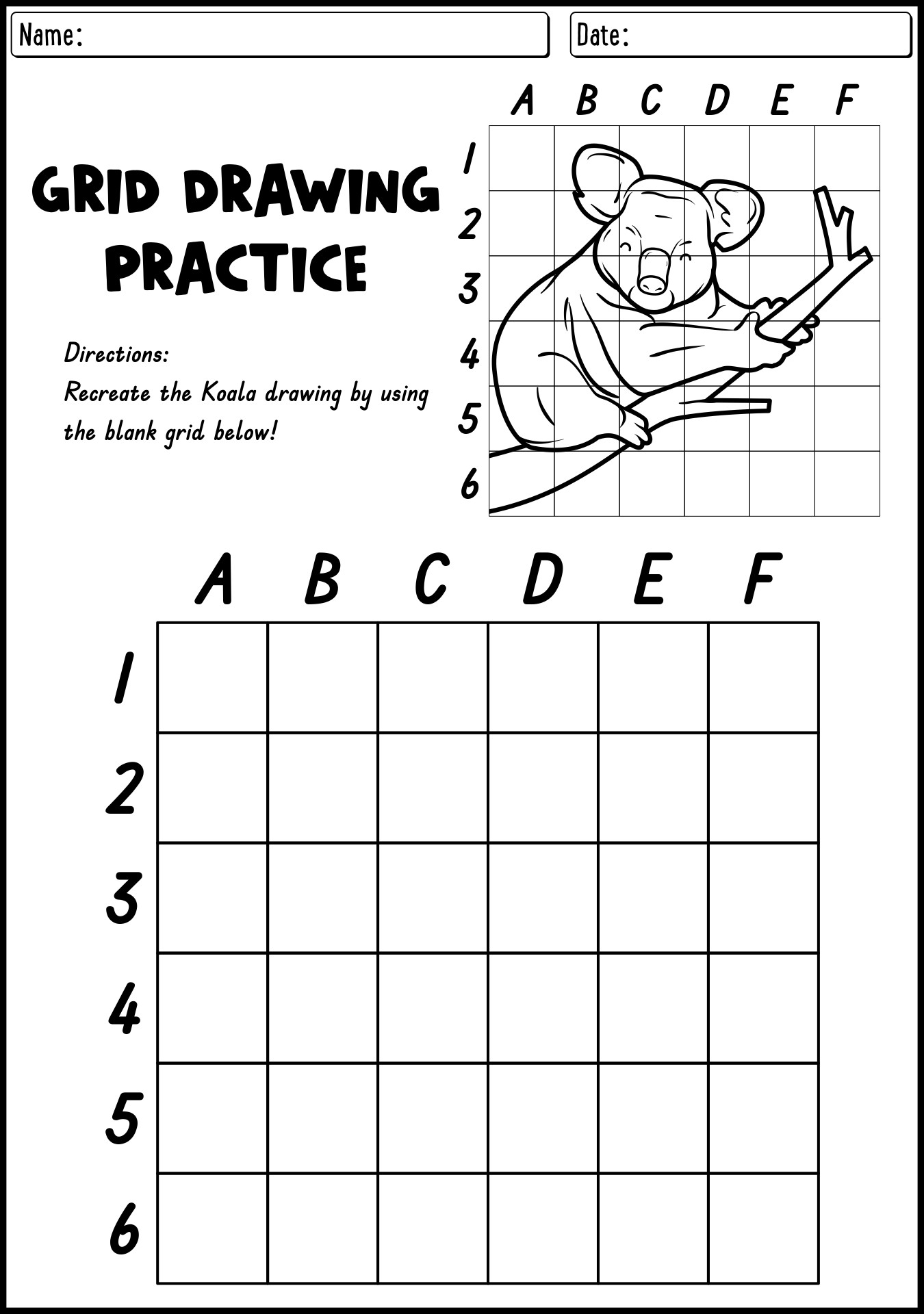
Implementing grid drawing worksheets successfully requires crisp printing standards, durable cardstock, and progressive difficulty scaling to maintain high student engagement. Start by selecting high-resolution photographic prompts that feature clear subject-to-background contrast, ensuring every coordinate intersection is sharp and easily visible to developing eyes. Print identical grids for both the reference photo and the blank drawing template, designating clear alphanumeric labels (such as numbers across the top and letters down the side) to teach basic graphing vocabulary. Instruct children to complete the drawing box by box, beginning with central focal points before addressing peripheral details. For holistic developmental growth, incorporate these worksheets into daily Educational Activities designed to build cross-curricular spatial competence.
Common Challenges and How to Avoid Them
Children frequently experience frustration when attempting to draw an entire grid box at once instead of focusing strictly on line intersections and individual stroke angles. Adults can prevent this obstacle by providing opaque cardstock “window masks” that cover all surrounding grid squares, forcing learners to isolate and concentrate exclusively on one active cell at a time. Another common hurdle involves scaling errors where proportions shift across the boundary lines; counter this by demonstrating how to check where lines cross grid borders before committing final pencil strokes. Patience-building strategies, such as short five-minute focused drawing sessions, ensure that cognitive fatigue never eclipses the intrinsic joy of creative visual problem-solving.
💬 Frequently Asked Questions
Explore More Free Learning Printables and Visual Activities on WePhotoAgency
Mastering visual proportion and observational accuracy becomes an engaging, structured journey when utilizing high-quality educational templates designed for young learners. Parents, homeschoolers, and educators can access an extensive library of printable resources, structured exercises, and developmental tools directly through WePhotoAgency.com to support continuous cognitive and artistic growth.
Visual Reference Gallery