Introduction
A grid drawing lesson systematically breaks complex visual stimuli into manageable coordinate squares to teach children proportional accuracy, spatial awareness, and fine-motor control. According to the National Art Education Association (NAEA), structured visual arts instruction directly enhances cognitive mapping and geometric analysis in young learners. By isolating visual information into small segments, educators help students overcome intimidation when replicating complex shapes, real-life photography, and natural objects. Utilizing printable Grid Drawing worksheets bridges abstract geometry with tangible artistic creation, fostering essential observational habits.
Visual Learning & Skill Snapshot:
- Core Focus: Coordinate-based visual breakdown for accurate rendering of real-world photographic references.
- Target Skill: Spatial reasoning, visual discrimination, fine-motor proportion, and coordinate mapping.
- Key Recommendation: Pair photographic reference cards with matching 4×4 coordinate grids to reduce cognitive overload in early learners.
Core Principles and Visual Learning Overview
Proportional estimation improves exponentially when children learn to isolate coordinate cells instead of attempting to draw an entire subject at once. This methodology shifts focus from abstract conceptual naming to concrete line, angle, and negative space observation. When paired with high-definition Photo Flashcards, young learners connect real-world imagery directly to geometric positioning. The cognitive benefit stems from reducing visual clutter, allowing the brain to process lines and intersections independently before assembling the cohesive image.
Key Specifications and Breakdown
| Age / Learning Stage | Visual Skill & Grid Ratio | Pedagogical Application & Scaffolding |
|---|---|---|
| Ages 4-6 (Early Foundation) | 2×2 or 3×3 simple square grids | Focuses on basic contour tracking, vertical-horizontal alignment, and single-cell shape recognition using bold photography. |
| Ages 7-9 (Developing Mastery) | 4×4 intermediate coordinate grids | Develops diagonal line estimation, negative space awareness, and relative sizing across multi-cell subjects. |
| Ages 10+ (Advanced Practice) | 6×6 or complex multi-quadrant grids | Refines fine-motor precision, intricate shadow gradation, and exact photographic reproduction standards. |
Systematic visual breaking through grid partitioning accelerates cognitive proportional analysis and fine-motor coordination in early childhood development. — National Art Education Association (NAEA)
Step-by-Step Practical Application and Printing Guidelines
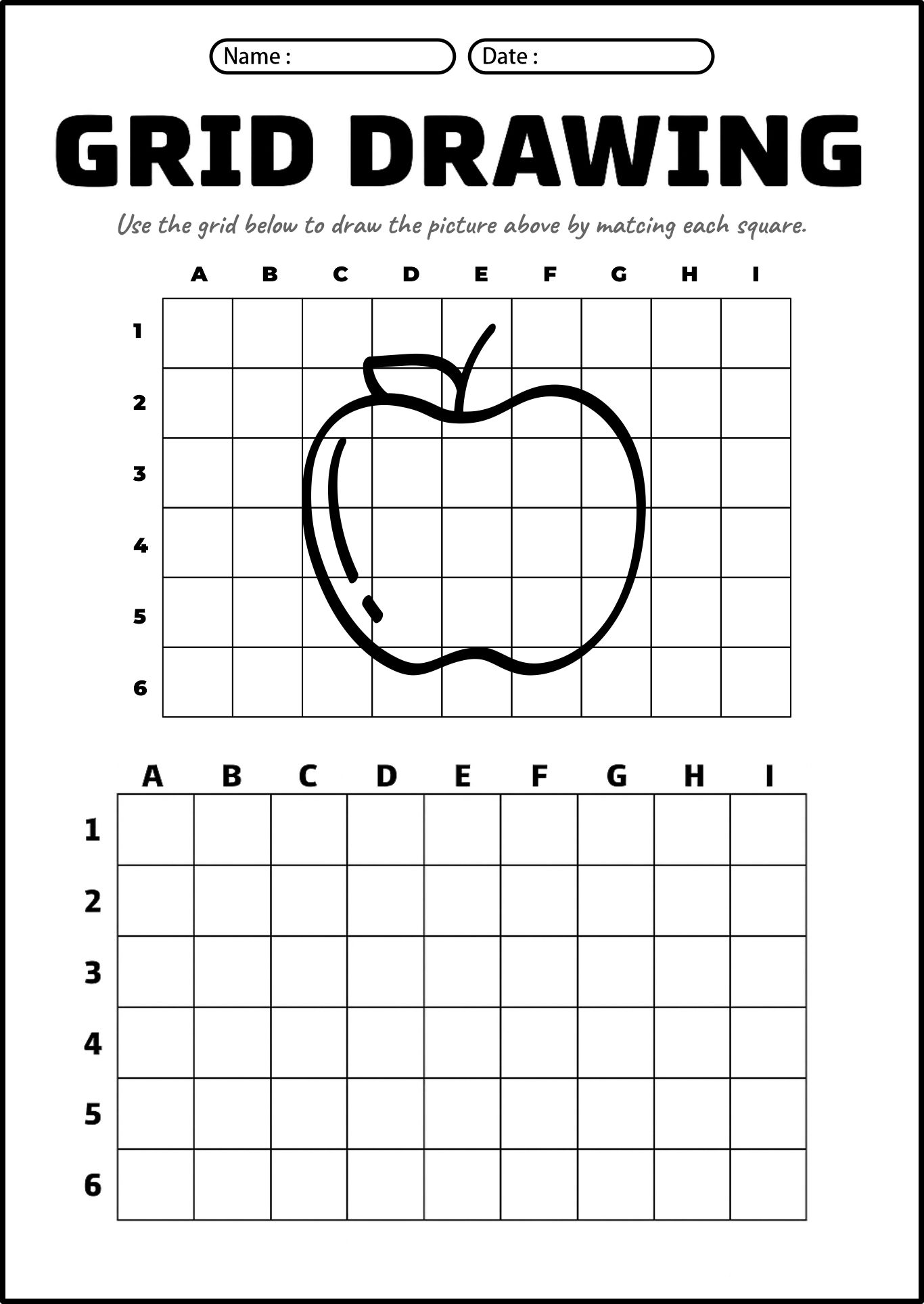
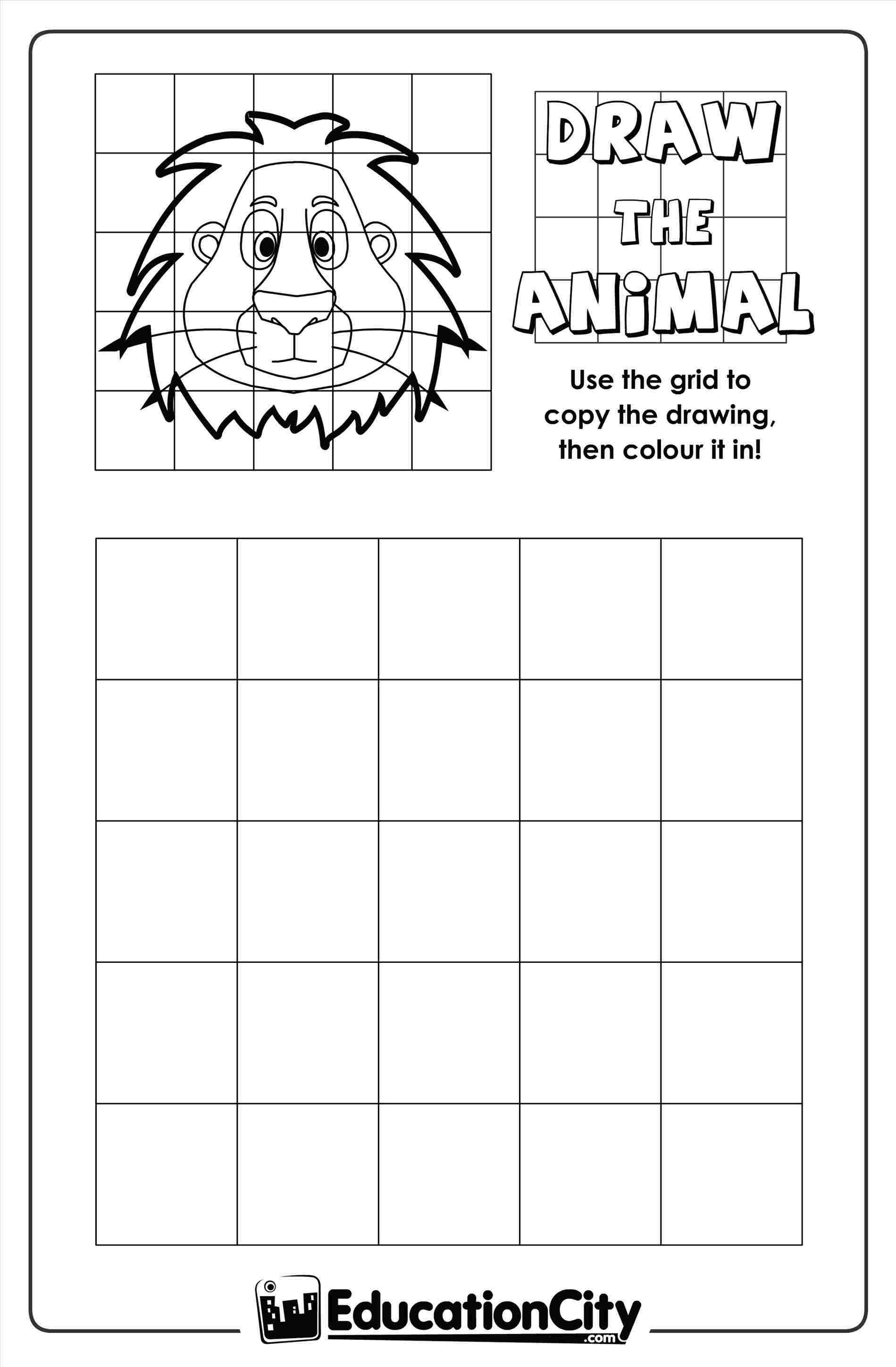
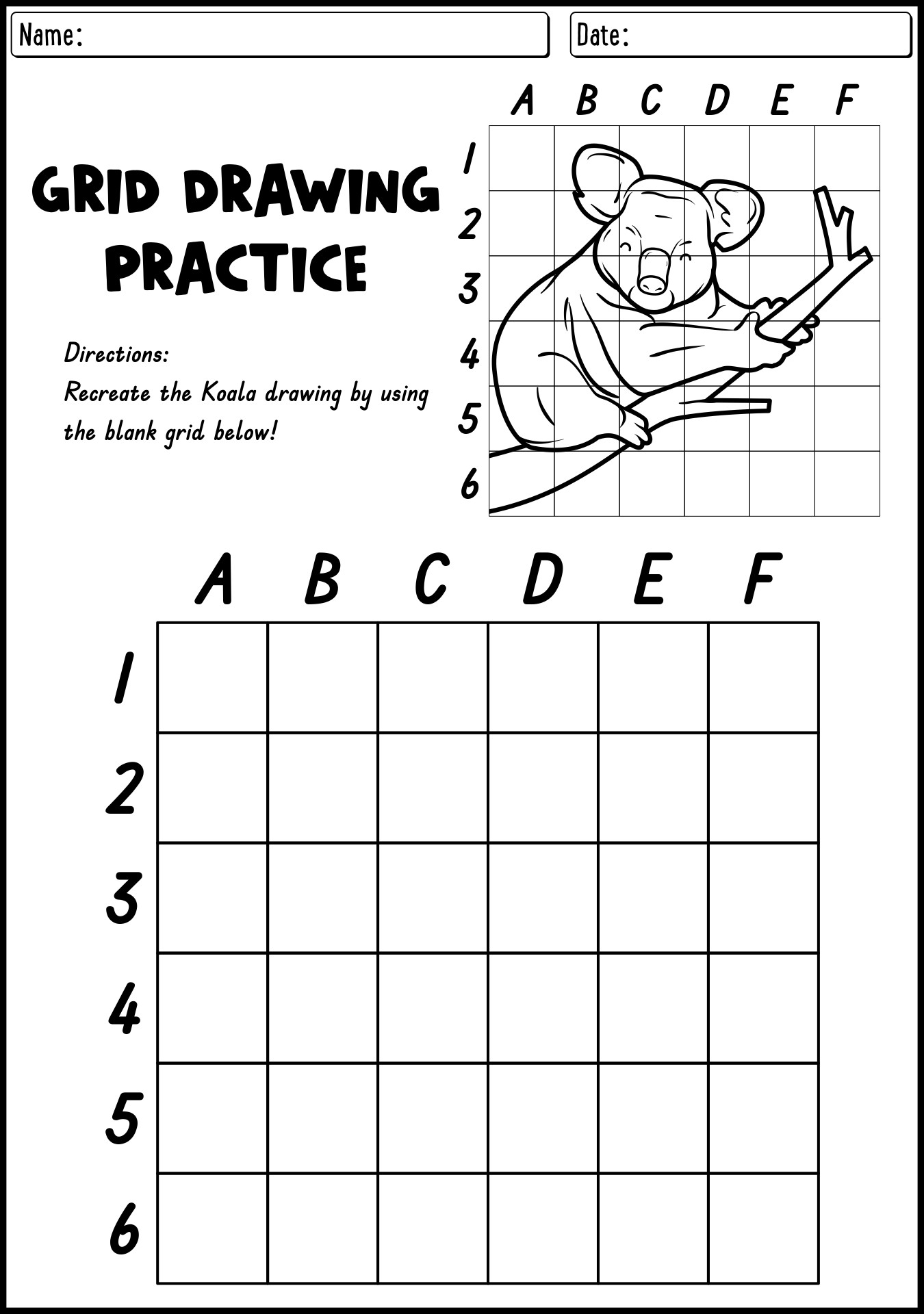
Executing an effective grid lesson requires precise matching between the reference image grid and the blank working grid template. Educators should print standardized worksheets on heavy cardstock to prevent pencil tearing during repeated erasing. Begin by placing numbered columns and lettered rows along the axis of both the reference photo and the blank grid. Instruct children to focus entirely on one single square at a time, checking intersections where lines cross cell borders. Incorporating structured Educational Activities around these printables reinforces cross-curricular math and geometry standards naturally.
Common Challenges and How to Avoid Them
Children frequently experience frustration when attempting to draw across multiple squares without first establishing key anchor points on the coordinate axes. To prevent scale distortion, guide young artists to lightly sketch intersecting center points before drawing continuous contour lines. If a student struggles with proportion, reduce the complexity by masking surrounding squares with an index card to eliminate visual distractions. Consistent practice with low-density grids builds the confidence required to tackle intricate photographic subjects without anxiety.
💬 Frequently Asked Questions
Explore More Free Learning Printables and Visual Activities on WePhotoAgency
Access a comprehensive library of downloadable visual tools, printable templates, and spatial awareness exercises designed for educators and parents by visiting the main catalog at WePhotoAgency.com.
Visual Reference Gallery