Introduction
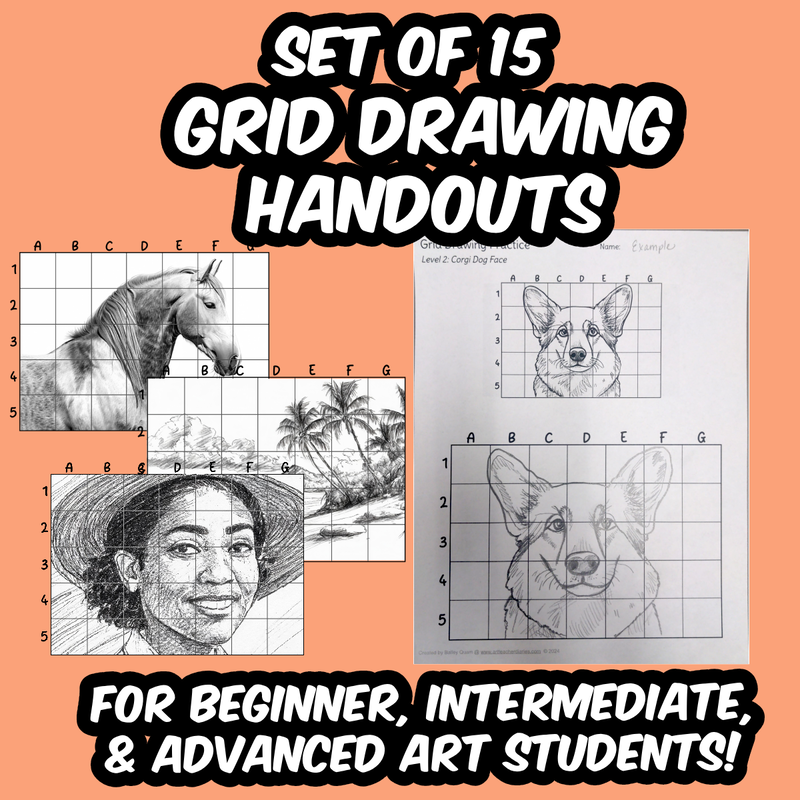
Grid drawing for students is an essential instructional method that breaks complex visual forms into manageable coordinate sections to systematically improve spatial awareness, proportion estimation, and observational accuracy. According to the National Art Education Association (NAEA), structured observational drawing exercises fundamentally strengthen cognitive mapping and fine-motor control during early childhood development. Educators utilize Grid Drawing resources alongside Photo Flashcards to bridge concrete visual recognition with abstract graphical execution. Mastering this technique allows young learners to transition from symbolic doodling to precise, realistic depiction by focusing on localized coordinates rather than overwhelming wholes.
Visual Learning & Skill Snapshot:
- Core Focus: Systematic breaking down of photographic references into coordinate grid sections for accurate drawing replication.
- Target Skill: Spatial reasoning, visual discrimination, fine-motor proportion estimation, and photo-based concept mastery.
- Key Recommendation: Pair high-contrast printable grids with real photographic reference cards to maximize visual cognitive processing.
Core Principles and Visual Learning Overview
Proportion estimation relies on training the brain to measure spatial relationships between distinct points rather than relying on preconceived mental symbols. When children engage with printable grid drawing worksheets, visual information is isolated into individual squares, dramatically reducing cognitive overload and anxiety associated with blank pages. This methodology directly supports broader Educational Activities designed to enhance bilateral coordination and hand-eye synchronization. By isolating visual data into distinct quadrants, students learn to evaluate line angles, negative space, and curve trajectories with mathematical precision wrapped in creative expression.
Key Specifications and Breakdown
| Age / Learning Stage | Visual Skill & Grid Ratio | Pedagogical Application & Scaffolding |
|---|---|---|
| Ages 4–5 (Early Preschool) | 2×2 or 3×3 simple square grid | Focuses on basic shape tracking, matching colors, and primary visual discrimination using bold photographic prompts. |
| Ages 6–8 (Early Elementary) | 4×4 moderate coordinate grid | Develops line continuity, angle estimation, and transferring complex object features from photo flashes to paper. |
| Ages 9+ (Upper Elementary) | 6×6 or higher detailed grid | Refines intricate shading, micro-proportions, realistic texture translation, and independent spatial verification. |
Visual-Spatial Scaffolding Principle — National Art Education Association (NAEA)
Step-by-Step Practical Application and Printing Guidelines
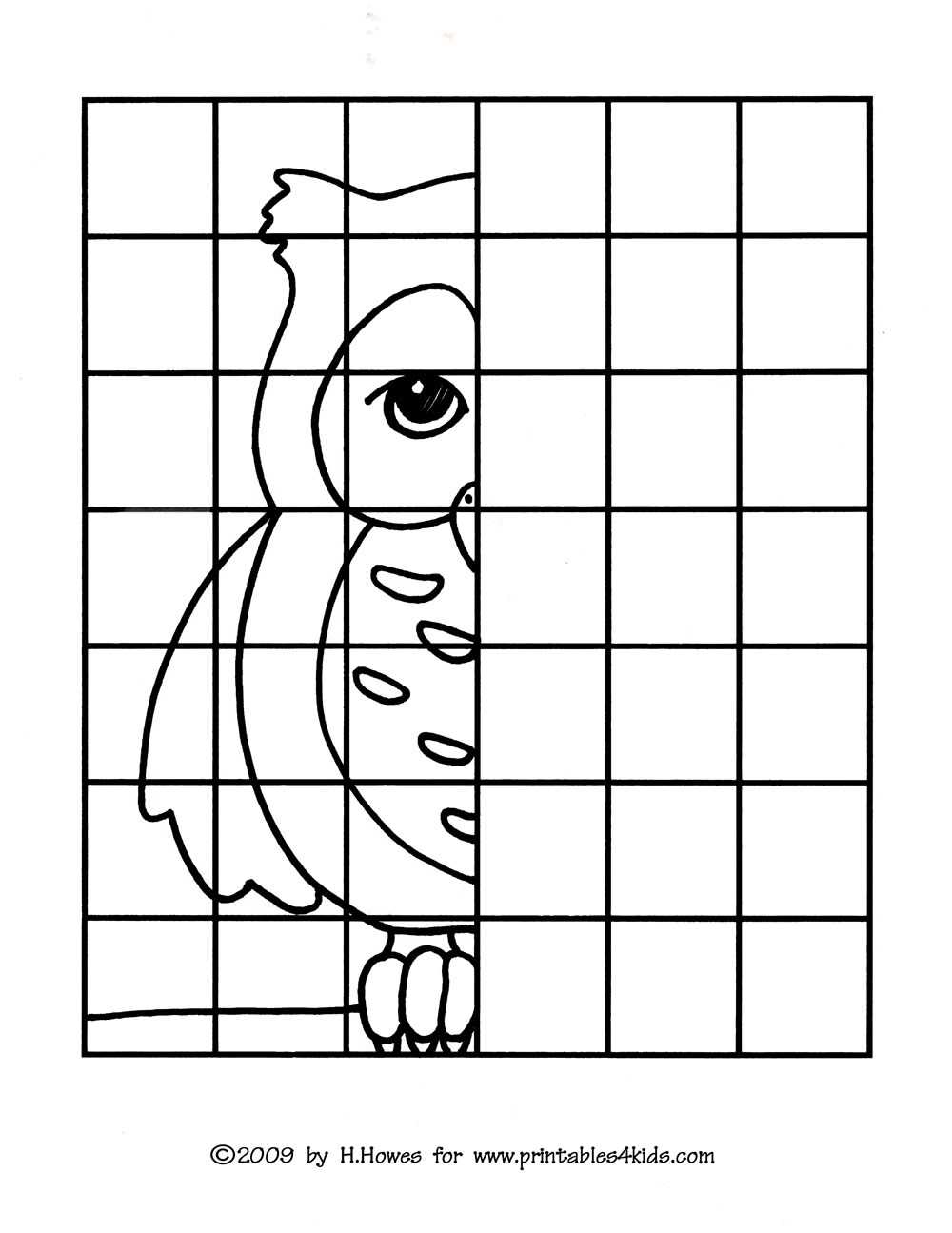
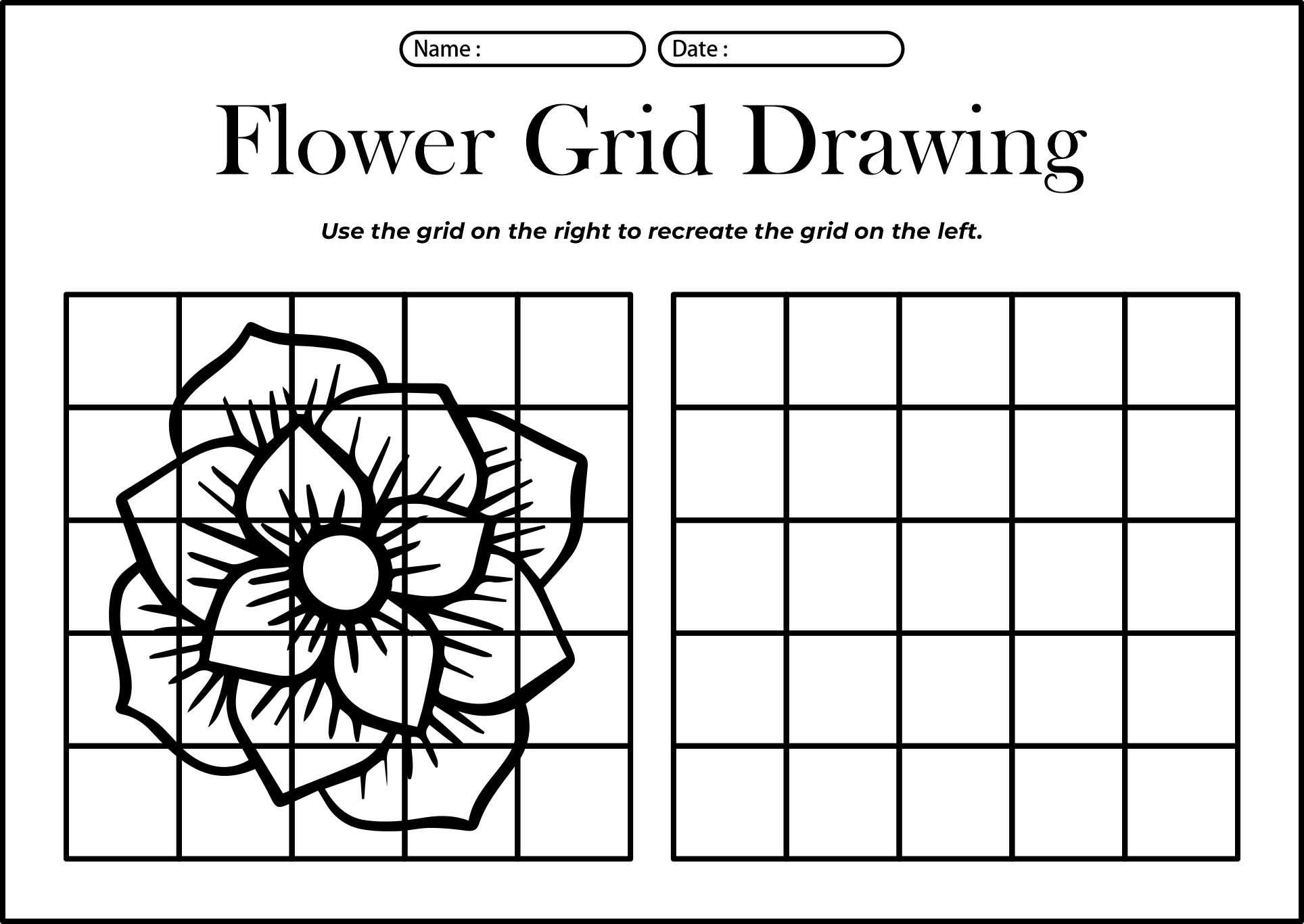
Successful implementation of grid exercises requires high-contrast printing, durable cardstock paper, and clear visual alignment between the reference image and the student drawing surface. Instructors must ensure that both the printable photo flashcard and the corresponding blank grid sheet feature identical grid coordinate dimensions (such as equal 1-inch squares) to prevent spatial distortion. Students begin by identifying a specific target square on the reference photo, noting where intersecting lines touch the subject contours, and replicating those exact coordinate marks onto the blank template. Utilizing sharp, well-sharpened writing tools further enhances precision, allowing young artists to make delicate correction marks without muddying the paper fibers.
Common Challenges and How to Avoid Them
Students frequently struggle with grid drawing when attempting to draw the entire subject at once instead of focusing exclusively on one isolated square at a time. To prevent frustration, educators should provide framing masks or sliding paper windows that force the learner to cover all surrounding squares, isolating attention to a single coordinate zone. Another common obstacle involves ignoring grid line intersections; instructors can resolve this by teaching learners to measure specific landmark points where lines cross before drawing curved contours. Consistent practice with simplified real-photo subjects ensures that cognitive stamina builds naturally alongside technical execution.
💬 Frequently Asked Questions
Explore More Free Learning Printables and Visual Activities on WePhotoAgency
Enhance visual education curricula by exploring the complete collection of specialized printables, developmental guides, and printable worksheets available across WePhotoAgency.com. Accessing curated categories empowers parents, homeschoolers, and professional educators to deliver engaging, structured, and cognitively enriching lessons every single day.
Visual Reference Gallery