Introduction
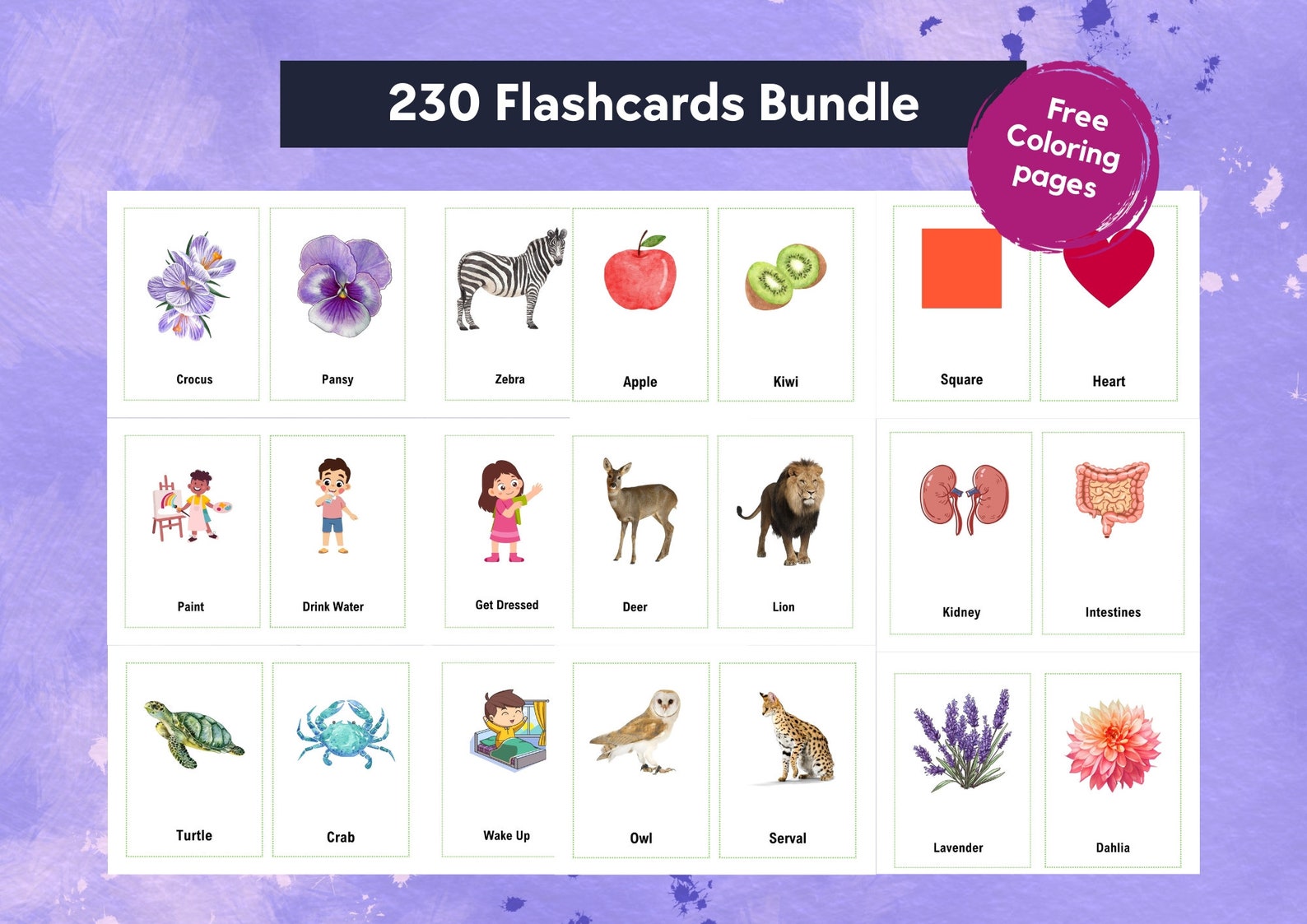
Anki picture flashcards serve as digitally organized visual retrieval prompts that translate real-world photographic stimuli into active cognitive recall and fine-motor execution. According to the National Association for the Education of Young Children (NAEYC), purposeful visual recognition tasks combined with tactile drawing exercises significantly enhance spatial working memory and neurological processing pathways in early childhood. Utilizing Photo Flashcards alongside structured Grid Drawing worksheets bridges the gap between passive image viewing and active geometric proportion estimation. This pedagogical fusion supports early elementary learners, homeschoolers, and art educators in developing acute visual discrimination, hand-eye coordination, and accurate spatial scaling.
Visual Learning & Skill Snapshot:
- Core Focus: Spaced repetition image cards paired with physical grid-based sketching activities.
- Target Skill: Spatial reasoning, visual discrimination, fine-motor proportion, and observation accuracy.
- Key Recommendation: Pair photographic digital prompts with physical square-by-square reproduction sheets for optimal cognitive retention.
Core Principles and Visual Learning Overview
Visual mastery begins when learners learn to isolate discrete elements of a complex image rather than processing the entire subject as a single overwhelming shape. Anki picture flashcards utilize spaced repetition algorithms to present high-resolution photographic subjects repeatedly over expanding time intervals, reinforcing neural pathways responsible for visual memory. When integrated with printable Educational Activities, children analyze the intersecting coordinates of a grid, translating two-dimensional photographic contours into hand-drawn replicas. This methodology trains the brain to measure negative space, angle inclinations, and relative proportions without relying on symbolic short-cuts, laying a rigorous foundation for both realistic drawing and geometric literacy.
Key Specifications and Breakdown
| Age / Learning Stage | Visual Skill & Grid Ratio | Pedagogical Application & Scaffolding |
|---|---|---|
| Ages 4-5 (Early Learners) | 2×2 grid ratio with high-contrast macro photographic cards. | Focuses on basic contour recognition and single-quadrant focus to reduce cognitive overload. |
| Ages 6-8 (Early Elementary) | 4×4 grid ratio featuring real photo animal and botanical flashcards. | Teaches proportional scaling, coordinate mapping, and deliberate line weight control. |
| Ages 9-11 (Advanced Elementary) | 6×6 or higher complex geometric and architectural photo prompts. | Emphasizes detailed shading, perspective accuracy, and independent error correction. |
Early childhood spatial reasoning and visual-motor integration directly predict later academic achievement in mathematics and structural design. — National Art Education Association (NAEA)
Step-by-Step Practical Application and Printing Guidelines
Executing an effective visual drawing session requires pairing high-contrast digital photographic prompts with precisely scaled physical drawing grids. Educators begin by displaying the chosen photo card on screen or printing physical reference cards at standard business-card dimensions. Next, students examine the targeted quadrant, identifying where specific lines intersect the grid borders. Instructors must ensure that printable worksheets maintain accurate square dimensions (typically one inch by one inch) to prevent proportional distortion during the manual transfer process. Utilizing heavy-weight cardstock for physical printouts prevents tearing and supports repeated eraser usage as young artists refine their proportion estimates.
Common Challenges and How to Avoid Them
Frustration occurs when learners attempt to copy an entire complex photograph at once instead of isolating individual grid coordinates. To prevent cognitive overload, educators should provide sliding window masks that isolate a single square of the photo flashcard at a time. Another frequent hurdle involves scale disorientation, where children draw features too large for the target box; addressing this requires explicitly teaching students to locate start and end points along the grid intersections before drawing continuous contours. Consistent, low-stakes practice with spaced photographic review turns these meticulous observational habits into intuitive artistic instincts.
💬 Frequently Asked Questions
Explore More Free Learning Printables and Visual Activities on WePhotoAgency
Mastery of visual proportion and spatial reasoning thrives when educators have access to reliable, high-quality pedagogical resources. Explore the complete library of drawing templates, photographic references, and structured learning tools available directly at WePhotoAgency.com to elevate daily instruction and inspire young creators.
Visual Reference Gallery