Introduction
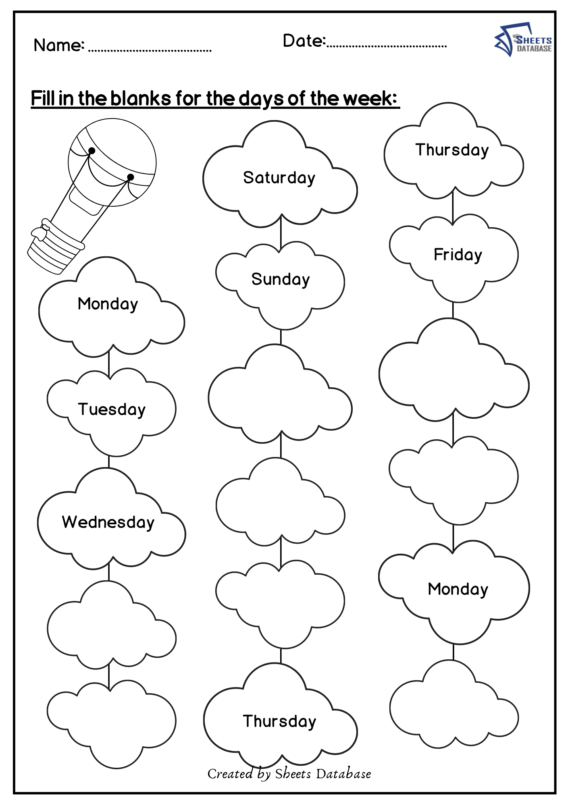
Free printable flashcards days of the week serve as foundational cognitive tools that bridge abstract chronological concepts with concrete visual literacy. According to the National Association for the Education of Young Children (NAEYC), multi-sensory tools combining real-world photographic stimuli with structured sequencing significantly accelerate temporal understanding and cognitive mapping in early childhood. Utilizing Photo Flashcards alongside structured visual grids transforms abstract calendar time into tangible spatial exercises. Educators and caregivers can leverage these downloadable resources to foster early organizational skills, visual discrimination, and fine-motor precision without requiring expensive commercial materials.
Visual Learning & Skill Snapshot:
- Core Focus: Utilizing free printable flashcards days of the week alongside grid-based drawing frameworks for multi-sensory time mastery.
- Target Skill: Spatial reasoning, visual discrimination, fine-motor proportion, and chronological sequencing.
- Key Recommendation: Laminate high-resolution photographic flashcards and pair them with proportional grid worksheets to reinforce spatial awareness.
Core Principles and Visual Learning Overview
Free printable flashcards days of the week ground abstract time concepts in concrete visual evidence by utilizing real photographic imagery rather than cartoon illustrations. Integrating these temporal cards with Grid Drawing worksheets allows children to translate temporal sequence into spatial practice, estimating line proportions and mapping coordinates across structured squares. Real photographic contexts reduce cognitive load, helping young learners connect specific weekly events, weather patterns, and daily routines directly to each named day. By engaging both the right hemisphere for spatial observation and the left hemisphere for symbolic decoding, children develop robust neurological pathways essential for both advanced mathematics and foundational literacy.
Key Specifications and Breakdown
| Age / Learning Stage | Visual Skill & Grid Ratio | Pedagogical Application & Scaffolding |
|---|---|---|
| Ages 3-4 (Preschool) | 1×1 Grid / Basic Photo Match | Focuses on object recognition, color association, and matching daily flashcards to current weather or routines. |
| Ages 5-6 (Kindergarten) | 2×2 Grid / Proportion Estimation | Encourages copying daily calendar cues, counting sequence positions, and developing pencil control within bounded squares. |
| Ages 7-8 (Early Elementary) | 4×4 Grid / Complex Spatial Mapping | Challenges learners to replicate photographic day cards from memory, calculating scale ratios and fine-tuning motor precision. |
Structured visual materials and real-photo flashcards significantly enhance working memory retention and cognitive mapping by anchoring abstract temporal concepts in concrete visual cues. — National Art Education Association (NAEA)
Step-by-Step Practical Application and Printing Guidelines
Free printable flashcards days of the week achieve optimal durability and instructional value when printed on heavy cardstock (110 lb or higher) and protected with matte thermal lamination. Educators should first select high-resolution PDF templates from trusted repositories like Educational Activities, ensuring the ink settings are calibrated to maximum quality for crisp photographic detail. Next, pair the printed cards with corresponding grid worksheets, instructing learners to observe the proportions of the target image before sketching corresponding lines square by square. This hands-on process builds patience, enhances hand-eye coordination, and solidifies the cyclic nature of the seven-day week through active physical manipulation.
Common Challenges and How to Avoid Them
Free printable flashcards days of the week can sometimes overwhelm young learners if educators introduce the entire seven-day sequence simultaneously without scaffolding. Mitigate cognitive overload by initially presenting only two or three sequential days—such as distinguishing yesterday, today, and tomorrow—before expanding to the full weekly cycle. Another frequent obstacle involves children rushing through grid-drawing exercises; counteract this by guiding learners to use their fingers or a view-finder tool to isolate one grid square at a time, ensuring accurate proportion estimation and reducing frustration during fine-motor tasks.
💬 Frequently Asked Questions
Explore More Free Learning Printables and Visual Activities on WePhotoAgency
Access an extensive collection of professional, educator-approved resources by visiting WePhotoAgency.com for all downloading needs. Elevate early childhood curricula today with zero-cost printables designed to inspire creativity and cognitive growth.
Visual Reference Gallery