Introduction
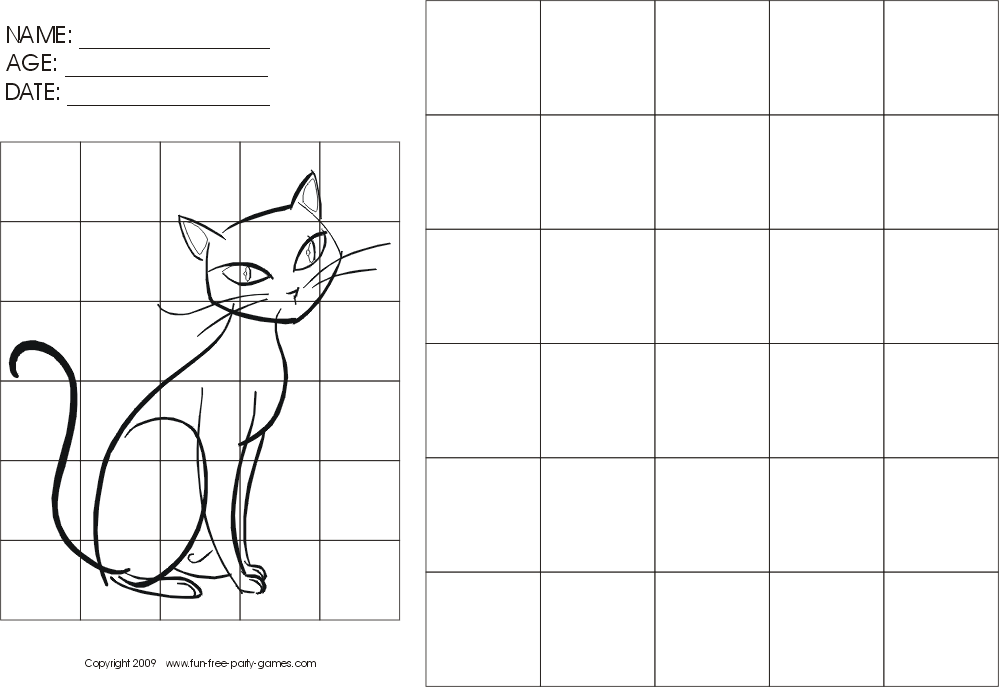
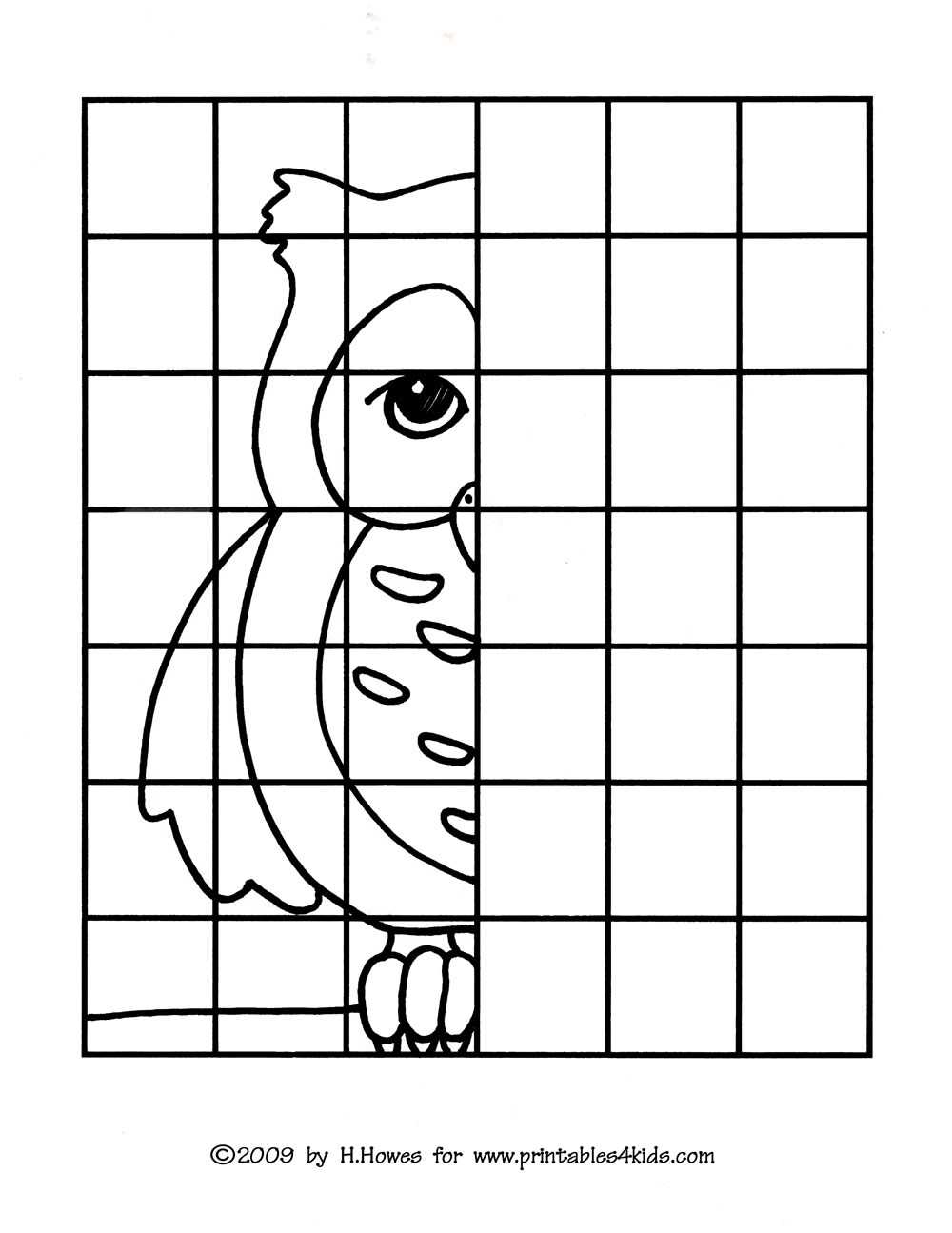
Grid drawing references are structured visual aids that divide photographic images and worksheets into manageable coordinate squares to teach spatial awareness and proportion estimation to young learners. According to the National Art Education Association (NAEA), sequential visual arts instruction utilizing proportional graphing tools significantly enhances a child’s geometric perception, eye-hand coordination, and fine-motor precision during early childhood development. By translating complex real-world forms into isolated grid sectors, children bypass the cognitive overload of drawing an entire subject at once. Educators frequently integrate these materials alongside Photo Flashcards to bridge concrete visual recognition with abstract graphical replication. Establishing an effective foundation in visual arts requires structured resources that scaffold complex concepts into achievable, bite-sized tasks for developing minds.
Visual Learning & Skill Snapshot:
- Core Focus: Systematic coordinate-based visual reproduction using photographic references.
- Target Skill: Spatial reasoning, visual discrimination, fine-motor proportion, and observation accuracy.
- Key Recommendation: Start early learners with simplified 2×2 grids before advancing to complex multi-coordinate matrices.
Core Principles and Visual Learning Overview
Grid drawing references function by breaking continuous photographic data into distinct, low-stress geometric fragments that align with early cognitive schemas. When young learners inspect a single grid square, attentional focus narrows to lines, angles, and negative space without the distraction of the overarching subject matter. This targeted observation builds critical visual literacy, reinforcing how separate parts compose a cohesive whole. Utilizing printable worksheets alongside structured Grid Drawing exercises enables homeschoolers and classroom educators to monitor exact developmental progression in scale estimation. Furthermore, pairing these graphic tasks with real-world Educational Activities solidifies cognitive mapping, bridging the gap between flat paper representations and tangible physical environments.
Key Specifications and Breakdown
| Age / Learning Stage | Visual Skill & Grid Ratio | Pedagogical Application & Scaffolding |
|---|---|---|
| Ages 4-5 (Early Preschool) | 2×2 Matrix with Bold Photo Outlines | Focuses on basic quadrant location and primitive shape matching using high-contrast images. |
| Ages 6-7 (Early Elementary) | 4×4 Matrix with Standard Reference Lines | Develops fine-motor pencil control, line continuity, and proportional size estimation. |
| Ages 8-9 (Advanced Primary) | 6×6 Matrix with Complex Photographic Data | Enhances detailed observation, shading interpretation, and multi-step coordinate tracking. |
Structured visual graphing and proportional partitioning accelerate neurological development in spatial reasoning by systematically reducing cognitive overload during complex representation tasks. — National Art Education Association (NAEA)
Step-by-Step Practical Application and Printing Guidelines
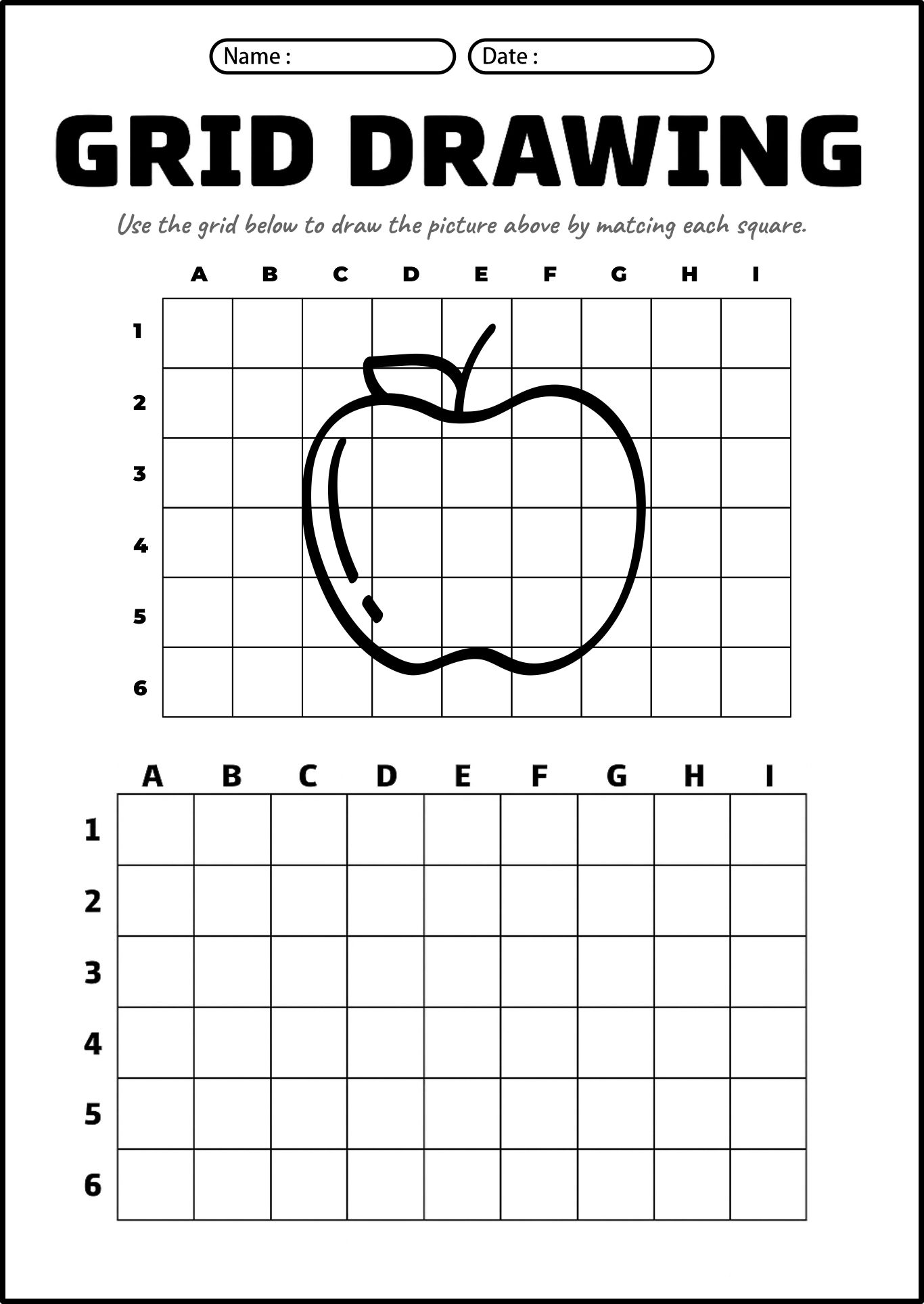
Implementing grid drawing references successfully requires durable print settings, high-contrast photographic subjects, and clear step-by-step guidance for children. Educators should print worksheets on heavy cardstock to prevent pencil tearing when children press down while learning proportion control. Instruct learners to isolate one square at a time using a blank index card to block out surrounding distractions, reinforcing focused visual tracking. Begin by modeling how to locate a specific coordinate, such as top-left box A1, and draw the intersecting lines before moving horizontally across the row. This methodical scanning pattern naturally instills disciplined study habits that translate directly into reading literacy and mathematical graphing in later grades.
Common Challenges and How to Avoid Them
Frustration during grid drawing activities usually stems from tackling overly dense reference photos or rushing through coordinate mapping too quickly. Children often attempt to draw the entire picture at once rather than copying one isolated square, which leads to distorted proportions and messy line alignment. To resolve this, adults should temporarily cover all grid squares except the target working area, forcing deliberate, single-cell observation. Selecting clear, uncluttered photographic references featuring distinct subject outlines prevents young learners from getting overwhelmed by complex background textures or subtle color gradients.
💬 Frequently Asked Questions
Explore More Free Learning Printables and Visual Activities on WePhotoAgency
Supporting comprehensive cognitive growth requires access to reliable, professionally designed educational resources that engage young learners through structured visual practice. Educators, parents, and homeschoolers can discover an extensive collection of printables, flashcards, and developmental tools by visiting the main hub at WePhotoAgency.com.
Visual Reference Gallery