Introduction
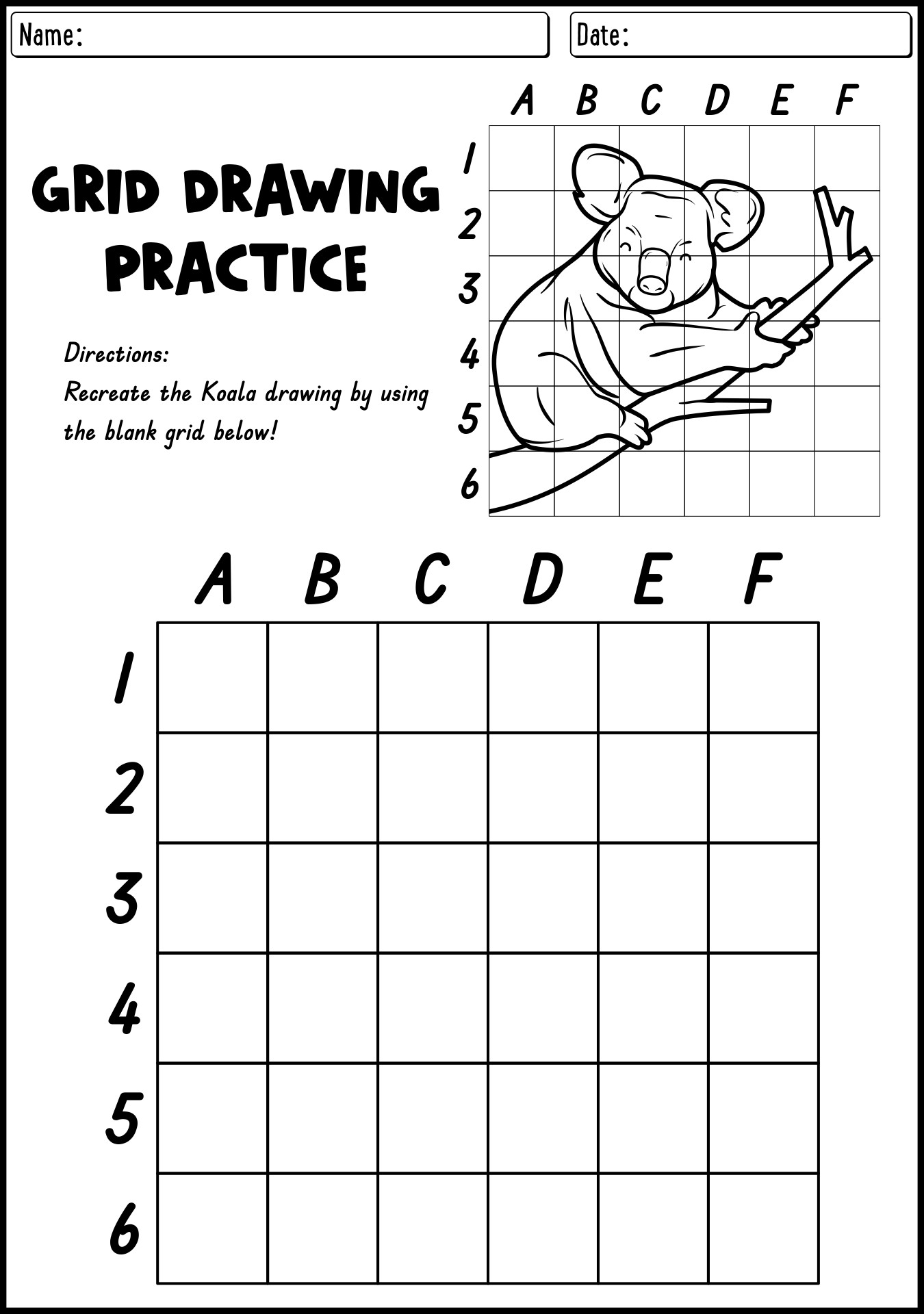
A grid drawing lesson plan provides a structured pedagogical framework that breaks complex visual stimuli into manageable geometric squares, significantly enhancing spatial awareness, proportion estimation, and hand-eye coordination in young children. According to the National Association for the Education of Young Children (NAEYC), hands-on visual arts experiences that systematically deconstruct imagery build foundational cognitive and mathematical mapping skills essential for early childhood development. Educators, homeschooling parents, and pediatric specialists utilize printable Grid Drawing resources alongside Photo Flashcards to transition children from abstract observation to concrete graphical execution. This authoritative guide examines how structured grid exercises transform observational drawing into an accessible, rewarding learning experience.
Visual Learning & Skill Snapshot:
- Core Focus: Systematic spatial breakdown of real photographs using printable grid overlays.
- Target Skill: Spatial reasoning, visual discrimination, fine-motor proportion, and coordinate mapping.
- Key Recommendation: Begin early learners with low-density 2×2 or 3×3 grids before progressing to complex multi-square templates.
Core Principles and Visual Learning Overview
Grid drawing lesson plans operate by leveraging cognitive chunking, a proven psychological process that reduces visual overwhelm by allowing the brain to process one discrete coordinate cell at a time. When children isolate a single square containing a fragment of a real photo, attention shifts away from the daunting whole subject and focuses entirely on lines, curves, and negative space within that confined boundary. This methodology bridges fine arts and geometry, reinforcing coordinate tracking and fraction estimation without formal instruction. Integrating Educational Activities centered on photographic references further anchors abstract drawing lessons in concrete, real-world context.
Key Specifications and Breakdown
| Age / Learning Stage | Visual Skill & Grid Ratio | Pedagogical Application & Scaffolding |
|---|---|---|
| Ages 4-5 (Early Explorers) | 2×2 or 3×3 simple grids | Focuses on basic contour matching and high-contrast photographic subjects. |
| Ages 6-7 (Early Elementary) | 4×4 balanced coordinate grids | Emphasizes proportion estimation, line continuity, and directional tracking. |
| Ages 8+ (Advanced Beginners) | 5×5 or greater detailed matrices | Refines intricate scale adjustments, shading values, and complex real-world observation. |
Systematic visual division strategies measurably enhance visuospatial working memory and fine-motor precision in early childhood learners — National Art Education Association (NAEA)
Step-by-Step Practical Application and Printing Guidelines
Executing an effective grid drawing lesson plan requires high-contrast reference images, identically proportioned blank grids, and explicit instruction on coordinate identification. Print the master reference photo with a clear, thin grid overlay, ensuring the matching blank drawing sheet features corresponding row letters and column numbers to minimize directional confusion. Instruct learners to scan individual squares row by row, locating intersection points before connecting lines with soft pencil strokes. Providing physical framing tools or cardboard viewfinders helps young children isolate active drawing zones, eliminating visual distractions from adjacent grid cells during the execution phase.
Common Challenges and How to Avoid Them
Children frequently struggle with grid drawing lessons when reference images contain excessive visual clutter or when grid lines are too thick and obscure vital image details. Educators resolve these obstacles by pre-selecting simplified, high-contrast photographic subjects and printing reference grids using light gray or cyan ink rather than heavy black lines. Another common pitfall involves learners attempting to draw the entire image at once instead of focusing strictly on isolated grid coordinates; redirecting attention back to a single square restores accuracy and prevents frustration.
💬 Frequently Asked Questions
Explore More Free Learning Printables and Visual Activities on WePhotoAgency
Empowering young learners with structured visual art exercises fosters essential cognitive and motor milestones that benefit academic growth across all disciplines. Access an extensive collection of professional teaching aids, classroom worksheets, and creative resources by visiting the central repository at WePhotoAgency.com to support continuous educational development at home and in the classroom.
Visual Reference Gallery