Introduction
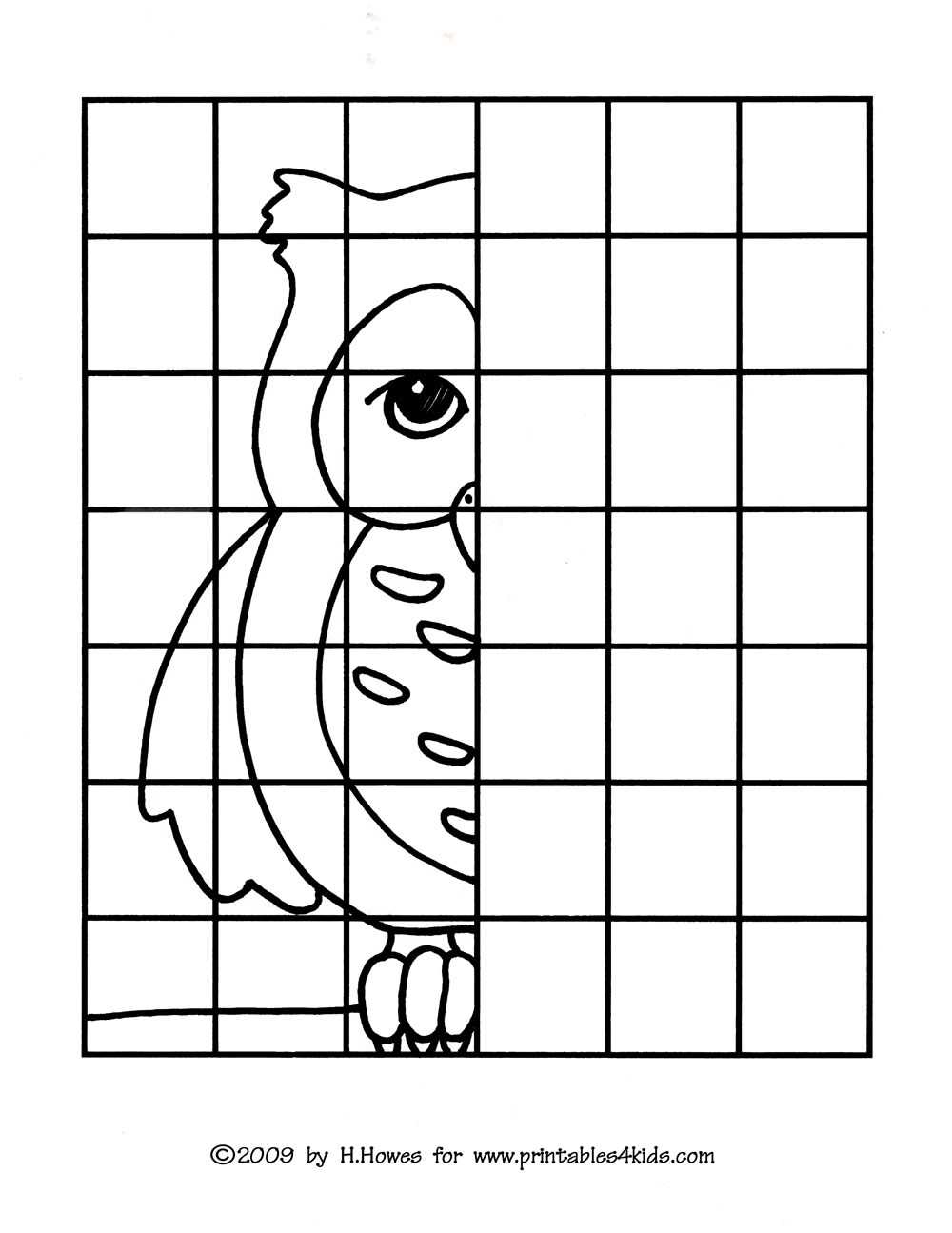
Grid drawing cartoon characters is a foundational visual arts technique that breaks complex illustrated forms into manageable segments, effectively accelerating spatial awareness, fine-motor control, and geometric proportion estimation in early learners. According to the National Association for the Education of Young Children (NAEYC), structured visual-spatial activities actively support the development of cognitive mapping, executive function, and mathematical readiness in young children. By pairing printable Grid Drawing worksheets with realistic visual references, educators can bridge abstract artistic concepts and concrete observational skills. These structured drawing exercises transform intimidating multi-curve cartoon subjects into isolated coordinate squares, allowing developing minds to decode scale, line orientation, and spatial relationships without experiencing cognitive overload.
Visual Learning & Skill Snapshot:
- Core Focus: Systematic breaking down of cartoon outlines using coordinate-based grid systems.
- Target Skill: Spatial reasoning, visual discrimination, fine-motor proportion, and photo-based concept mastery.
- Key Recommendation: Pair large-cell 4×4 printouts with high-contrast real photo visual flashcards before progressing to complex multi-row comic characters.
Core Principles and Visual Learning Overview
Grid drawing functions by leveraging coordinate-based visual chunking, which forces the human brain to process local details independently from the overwhelming global shape of a subject. When young learners replicate cartoon characters square by square, cognitive load decreases because attention is restricted to a single intersecting coordinate rather than an entire composition. This isolation technique reinforces bilateral integration, as children must continuously scan between a master reference image and a blank coordinate grid, translating visual data into physical pencil strokes. Incorporating Photo Flashcards alongside these illustration sheets enhances this process by helping students connect tangible real-world objects to stylized cartoon representations. Such cross-modal exercises accelerate cognitive flexibility, teaching early learners how to interpret shapes across different mediums and levels of abstraction.
Key Specifications and Breakdown
| Age / Learning Stage | Visual Skill & Grid Ratio | Pedagogical Application & Scaffolding |
|---|---|---|
| Ages 4-5 (Early Pre-K) | 2×2 Grid with high-contrast lines | Focuses on basic contour recognition and foundational pencil grip without overwhelming detail. |
| Ages 6-7 (Early Elementary) | 4×4 Grid with cartoon character outlines | Builds proportional estimation, hand-eye coordination, and accurate coordinate mapping. |
| Ages 8-9 (Advanced Elementary) | 6×6 Grid with complex comic figures | Refines precision, shadow analysis, and cross-referencing between real photos and cartoons. |
Structured visual decomposition significantly improves spatial working memory and analytical proportion estimation in early childhood development. — National Art Education Association (NAEA)
Step-by-Step Practical Application and Printing Guidelines
Implementing grid drawing exercises requires careful preparation of physical printables, high-contrast visual aids, and ergonomically appropriate writing tools. Educators and parents should begin by printing worksheets on heavy-weight cardstock to prevent tearing and pencil bleed-through during intensive tracing and sketching sessions. Select simple cartoon character templates that feature bold, clean outlines, ensuring that key features like eyes, noses, and major limbs align clearly with grid intersections. Instruct learners to tackle the grid systematically, moving row by row from top-left to bottom-right, which mirrors natural reading and writing trajectories. Supplementing these drawing tasks with structured Educational Activities helps reinforce the underlying geometric concepts, turning a simple art worksheet into a comprehensive spatial reasoning lesson.
Common Challenges and How to Avoid Them
Children frequently struggle with grid drawing when faced with dense, overly complex reference images or grids that contain too many individual cells for their developmental stage. To prevent frustration, educators must strictly scaffold the complexity, starting with minimal 2×2 or 3×3 matrices before introducing intricate cartoon panels. Another common obstacle occurs when learners attempt to draw the entire character at once instead of focusing exclusively on the contents of one single square. Correct this by providing a paper “window blocker” card that covers all surrounding squares, isolating the child’s vision entirely to the active coordinate cell. Encouraging eraser use as an experimental tool rather than a fix for failure also fosters a resilient growth mindset during early artistic exploration.
💬 Frequently Asked Questions
Explore More Free Learning Printables and Visual Activities on WePhotoAgency
Empowering early learners with effective visual arts tools requires a consistent supply of high-quality, educator-approved printables and structured guides. Parents, teachers, and homeschool coordinators can access an extensive library of specialized resources, creative worksheets, and developmental exercises directly through WePhotoAgency.com. Discover new ways to cultivate spatial intelligence and artistic confidence today.
Visual Reference Gallery