Introduction
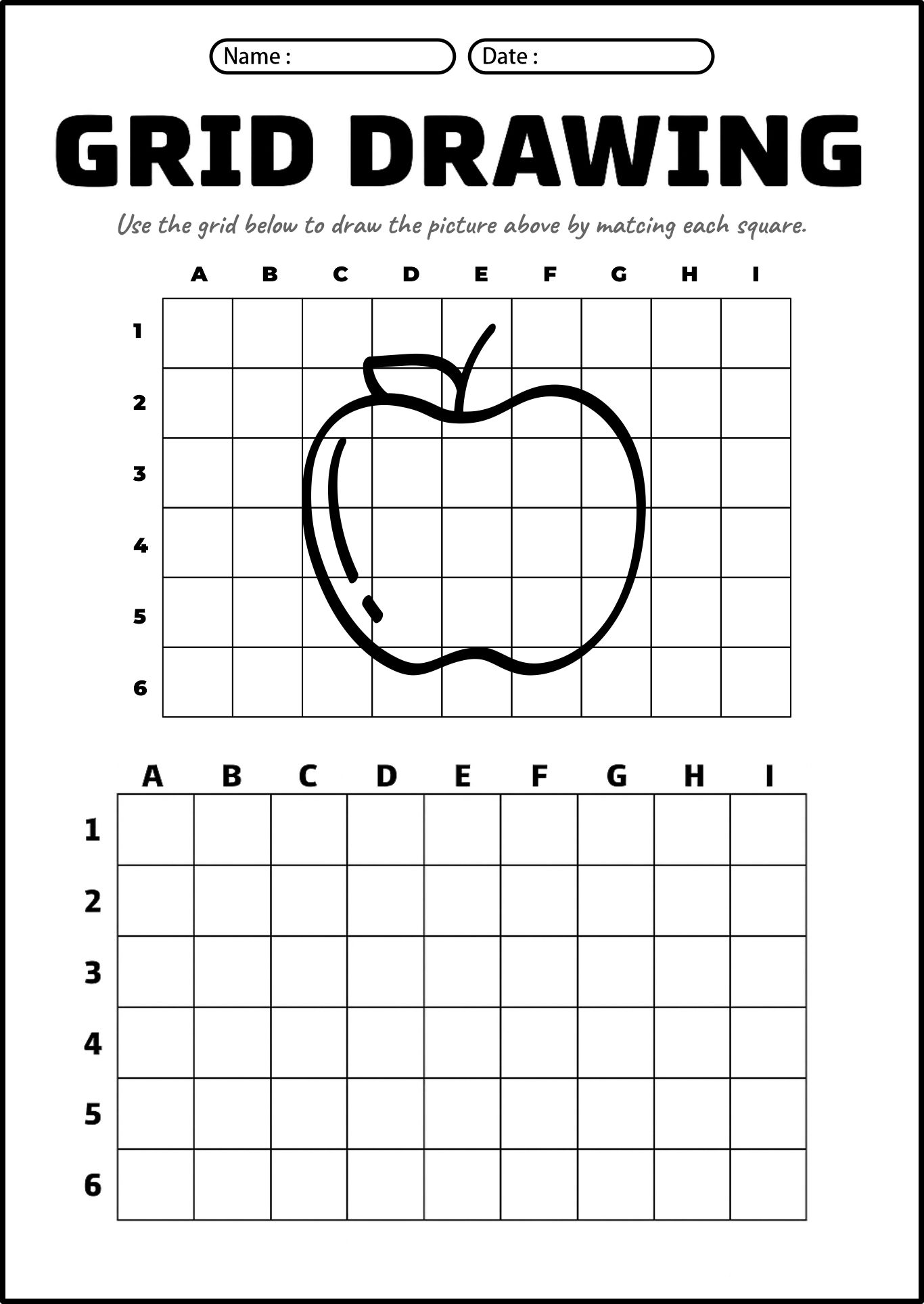
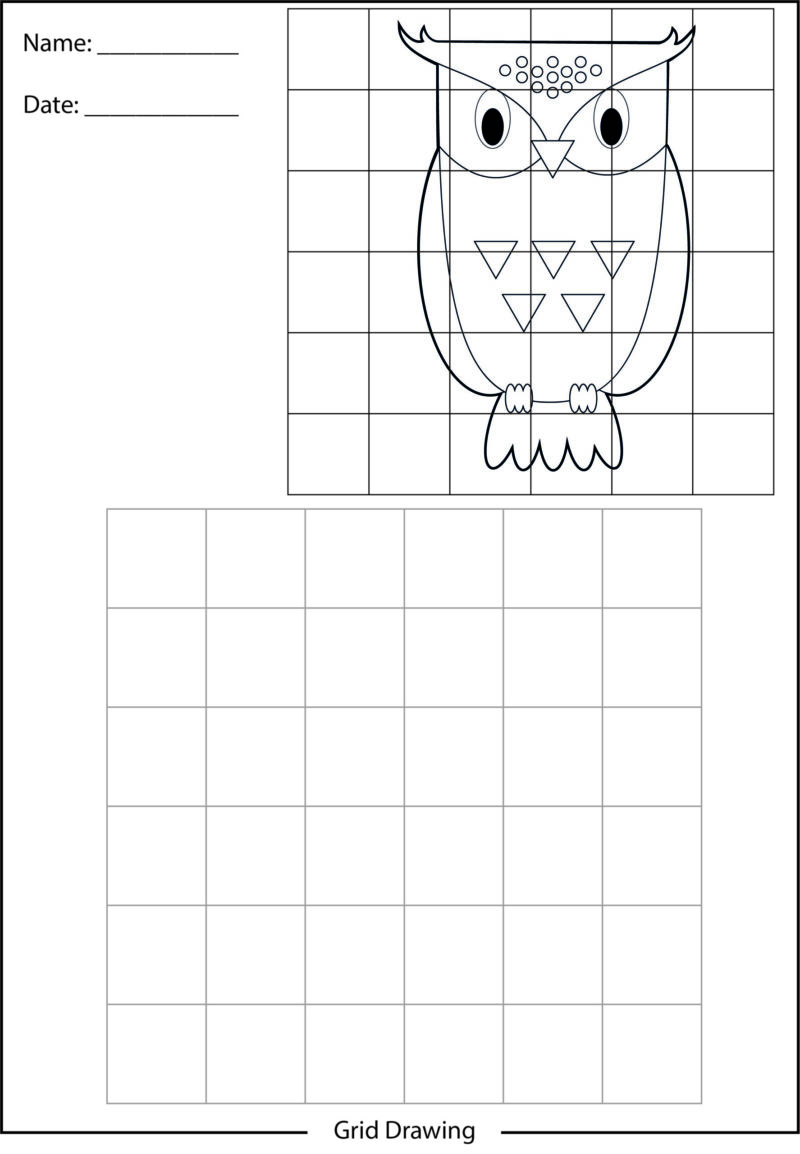
Grid drawing scale is a foundational visual arts technique that breaks complex photographic images into smaller, manageable coordinate squares to teach young learners proportional estimation and spatial awareness. According to the National Art Education Association (NAEA), structured observational drawing practices significantly enhance visual literacy and fine-motor coordination in early childhood learners by teaching them to isolate shapes from abstract whole forms. Utilizing printable worksheets alongside real photo visual flashcards transforms abstract spatial concepts into tangible tactile experiences, allowing early elementary students to master observation, hand-eye coordination, and accurate sizing through structured Grid Drawing exercises.
Visual Learning & Skill Snapshot:
- Core Focus: Systematic coordinate mapping for accurate visual scaling and proportion representation.
- Target Skill: Spatial reasoning, visual discrimination, fine-motor proportion, and photo-based concept mastery.
- Key Recommendation: Start early learners with simplified 2×2 or 3×3 grids before progressing to complex multi-square ratios.
Core Principles and Visual Learning Overview
Proportional grid scaling operates by teaching the brain to translate visual data from a master image to a working canvas square by coordinate square rather than relying on generalized mental imagery. When children utilize Photo Flashcards alongside corresponding grid worksheets, cognitive load is minimized because attention remains isolated to a single quadrant at a time. This method bridges the gap between raw perceptual observation and structured graphic execution, laying vital groundwork for geometry, handwriting alignment, and advanced visual arts comprehension.
Key Specifications and Breakdown
| Age / Learning Stage | Visual Skill & Grid Ratio | Pedagogical Application & Scaffolding |
|---|---|---|
| Ages 4-5 (Early Foundation) | 2×2 Grid (1:1 Equal Scale) | Focuses on basic line placement and quadrant orientation using high-contrast photo references. |
| Ages 6-7 (Developing Primary) | 4×4 Grid (1:1 Equal Scale) | Introduces complex curves, negative space, and continuous line tracking across intersecting grid lines. |
| Ages 8-9 (Advanced Elementary) | 4×4 to 8×8 Grid (Proportional Scaling) | Requires multiplicative scaling where the drawing grid is larger or smaller than the reference source. |
Systematic visual breaking down of complex shapes into distinct spatial coordinates directly supports early cognitive mapping and operational spatial memory development. — National Art Education Association (NAEA)
Step-by-Step Practical Application and Printing Guidelines
Implementing grid scaling successfully requires pairing high-resolution printed reference sheets with clean, uncluttered student drawing templates sourced from curated Educational Activities portfolios. Educators should ensure that printer settings maintain true-to-size dimensions so that grid squares remain perfectly square rather than skewed rectangles. Instructors must guide learners to cover unused grid sections with a blank index card, isolating the immediate coordinate box to prevent cognitive overwhelm and enhance targeted observational focus.
Common Challenges and How to Avoid Them
Misaligned proportions usually occur when children attempt to draw entire objects at once instead of mapping specific anchor points where lines intersect the grid borders. Providing printed reference photos with prominent coordinate lettering and numbering helps students cross-reference columns and rows systematically, eliminating guesswork. Encouraging light pencil sketching before final ink or crayon tracing ensures that initial scaling errors can be easily adjusted without frustration.
💬 Frequently Asked Questions
Explore More Free Learning Printables and Visual Activities on WePhotoAgency
Empowering early childhood cognitive development and artistic confidence requires access to professionally designed, structured resources that make learning engaging and intuitive. Educators, homeschoolers, and parents can discover an extensive library of supplementary worksheets, flashcards, and creative guides by exploring the full collection available directly at WePhotoAgency.com.
Visual Reference Gallery