Introduction
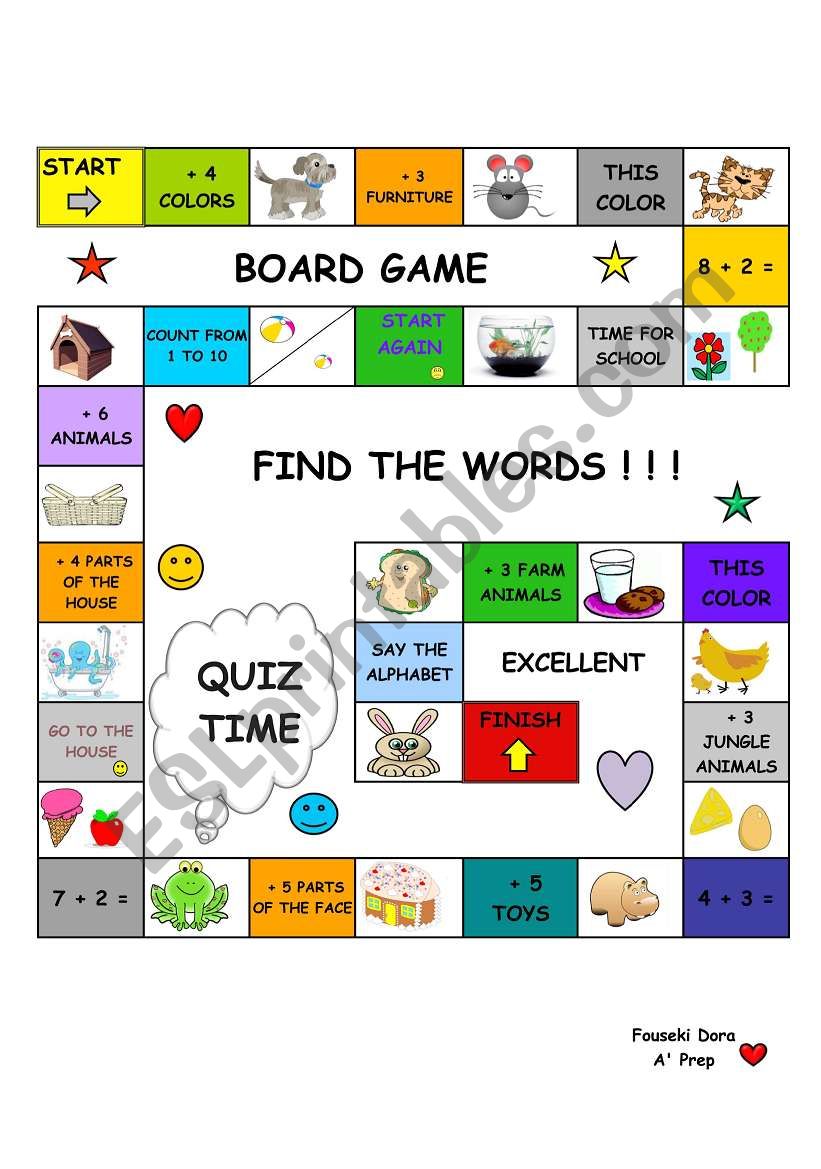
Fun educational board games for kids combine structured play with visual-spatial mechanics to accelerate early cognitive development and fine-motor precision. According to the National Association for the Education of Young Children (NAEYC), playful learning methodologies significantly enhance neurological wiring, attention spans, and creative problem-solving in early childhood. By integrating tactile tactile elements with structured visual challenges, educators and parents can transform passive playtimes into immersive visual arts workshops. These interactive resources bridge abstract geometric concepts with concrete manipulation, establishing a solid foundation for literacy, mathematics, and artistic expression. Utilizing structured printable resources from collections like Grid Drawing provides children with the necessary scaffolding to conquer complex visual tasks.
Visual Learning & Skill Snapshot:
- Core Focus: Fun educational board games for kids integrate spatial reasoning, photo recognition, and collaborative tactile mechanics.
- Target Skill: Spatial reasoning, visual discrimination, fine-motor proportion, and photo-based concept mastery.
- Key Recommendation: Pair tangible tabletop components with printable visual worksheets to reinforce grid awareness and coordinate mapping.
Core Principles and Visual Learning Overview
Fun educational board games for kids rely on systematic visual decoding, spatial tracking, and proportional estimation to cultivate critical observation skills. When children analyze Photo Flashcards during tabletop challenges, they process real-world photographic data, isolating shapes, shadows, and spatial relationships. This active engagement trains the developing brain to translate three-dimensional visual stimuli into two-dimensional graphical representations. Incorporating specialized Educational Activities further reinforces these cognitive structures, ensuring that learners progress smoothly from basic shape recognition to complex coordinate-based grid mapping.
Key Specifications and Breakdown
| Age / Learning Stage | Visual Skill & Grid Ratio | Pedagogical Application & Scaffolding |
|---|---|---|
| Ages 3-4 (Early Preschool) | 1×1 to 2×2 Macro Grids | Focuses on macro shape matching, basic photo matching, and large tactile game pieces. |
| Ages 5-7 (Kindergarten/1st Grade) | 3×3 to 4×4 Standard Grids | Emphasizes proportional copying, coordinate identification, and turn-based spatial strategy games. |
| Ages 8-10 (Early Elementary) | 6×6 to 8×8 Detailed Grids | Targets complex proportion estimation, precise angle measurement, and multi-step visual logic challenges. |
Manipulative-based visual learning systems significantly improve spatial working memory and geometric reasoning when paired with scaffolded grid tracking exercises. — National Art Education Association (NAEA)
Step-by-Step Practical Application and Printing Guidelines
Implementing fun educational board games for kids alongside printable visual worksheets requires precise preparation and high-contrast material formatting. Begin by selecting high-resolution photo sheets and uniform grid templates printed on heavy cardstock to prevent tearing during active tactile manipulation. Laminate reusable game boards and grid drawing sheets so learners can practice proportion estimation repeatedly using dry-erase markers. Establish a dedicated workspace with adequate lighting, organized colored pencils, and clear reference cards that match the specific difficulty tier of the chosen tabletop game. Supervise the initial matching phases, encouraging children to articulate their spatial observations aloud before transferring visual details onto their coordinate grids.
Common Challenges and How to Avoid Them
Addressing common frustrations during visual board game sessions prevents cognitive overload and maintains enthusiasm for hands-on learning tasks. Children frequently struggle with maintaining correct proportions when scaling images across different grid sizes, often rushing through coordinate mapping without referencing the source photo. Educators and parents can resolve this issue by introducing partial masking techniques, blocking out all grid squares except the active target area to focus attention. Furthermore, replacing generic tokens with detailed photographic elements helps sustain interest, anchoring abstract spatial rules in tangible, recognizable visual imagery.
💬 Frequently Asked Questions
Explore More Free Learning Printables and Visual Activities on WePhotoAgency
Discovering innovative ways to engage young learners through structured visual arts and tactile play transforms everyday teaching into an exciting adventure. Explore an extensive repository of expert-designed resources, printable grid worksheets, and visual learning tools by visiting WePhotoAgency.com to elevate early childhood education standards today.
Visual Reference Gallery