Introduction
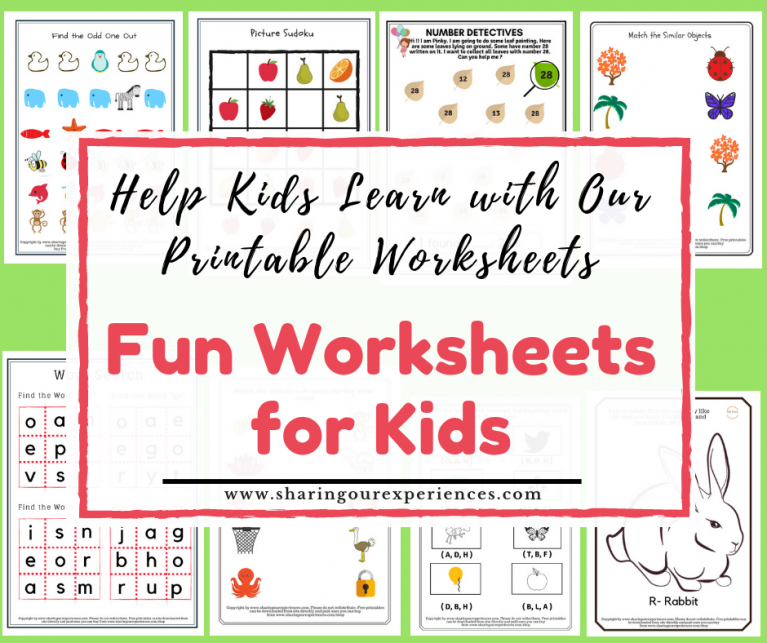
Educational group activities for kids serve as structured collaborative exercises designed to enhance visual literacy, cognitive mapping, and fine-motor precision through shared hands-on tasks. According to the National Association for the Education of Young Children (NAEYC), purposeful group play and structured visual exercises significantly accelerate spatial reasoning, peer communication, and fine-motor control during early childhood. Educators and caregivers can successfully integrate printable Grid Drawing templates and observational Photo Flashcards into collaborative settings to bridge abstract concepts with tangible, real-world imagery. To explore broader developmental strategies, reviewing structured Educational Activities provides foundational frameworks for daily classroom routines and homeschool curricula.
Visual Learning & Skill Snapshot:
- Core Focus: Collaborative visual learning through proportional grid replication and photographic observation.
- Target Skill: Spatial reasoning, visual discrimination, fine-motor proportion, and photo-based concept mastery.
- Key Recommendation: Pair children in small groups of two to three to encourage verbal sharing of perspective while parsing visual grids.
Core Principles and Visual Learning Overview
Proportional grid scaling and real photographic analysis require children to break complex visual stimuli into manageable coordinates, strengthening analytical thinking. When learners examine high-resolution photographic cards alongside segmented drawing frames, the brain actively engages in coordinate mapping and visual closure. Collaborative group settings amplify this cognitive gain by requiring children to articulate spatial relationships out loud, such as horizontal alignment, vertical intersection, and scale estimation. Systematic exposure to structured visual puzzles builds the neurological pathways necessary for geometric comprehension, reading readiness, and meticulous observation.
Key Specifications and Breakdown
| Age / Learning Stage | Visual Skill & Grid Ratio | Pedagogical Application & Scaffolding |
|---|---|---|
| Ages 4–5 (Early Explorers) | 2×2 or 3×3 simple photo grids | Focuses on basic contour matching and single-object recognition using high-contrast photo cards. |
| Ages 6–7 (Developing Analysts) | 4×4 balanced coordinate grids | Emphasizes proportional estimation, corner-to-corner tracing, and peer-assisted line replication. |
| Ages 8–10 (Advanced Observers) | 6×6 intricate detail mapping | Involves complex architectural or nature photography, shadow gradients, and independent error correction. |
Visual-spatial training through structured graphic replication significantly accelerates geometric comprehension and mental rotation capabilities in young learners — National Art Education Association (NAEA). For more related activities, check out our Fun Educational Activities For Kids Near Me.
Step-by-Step Practical Application and Printing Guidelines
Implementing group drawing exercises begins with selecting high-contrast photographic reference sheets and matching coordinate grid worksheets printed on heavy-weight cardstock. Educators should distribute one master photo card per small group while providing individual grid sheets to each participating child, ensuring collaborative dialogue without physical crowding over a single page. Instructors must guide learners to locate specific grid intersections first, sketching faint anchor points before connecting lines to maintain accurate scale and proportion. Utilizing clean printing techniques with distinct grid lines ensures that children with varying visual acuity can easily track coordinates and cross-reference details.
Common Challenges and How to Avoid Them
Frustration during group drawing sessions typically stems from attempting overly complex ratios too early or struggling with fine-motor hand fatigue. To prevent abandonment of the task, facilitators should introduce simpler matrices before scaling up to intricate photo reproductions, ensuring children master single-box alignment first. Encouraging peer-to-peer mentoring within the group environment diffuses individual anxiety, transforming potential hurdles into shared problem-solving moments. Maintaining an emphasis on observational accuracy rather than artistic perfection keeps young learners motivated and cognitively engaged throughout the exercise.
💬 Frequently Asked Questions
Explore More Free Learning Printables and Visual Activities on WePhotoAgency
Accessing extensive collections of printable resources empowers educators and parents to sustain engaging, developmentally appropriate learning environments. Discover a comprehensive library of developmental tools, visual flashcards, and drawing frameworks by visiting WePhotoAgency.com to elevate daily instruction and creative play.
Visual Reference Gallery