Introduction
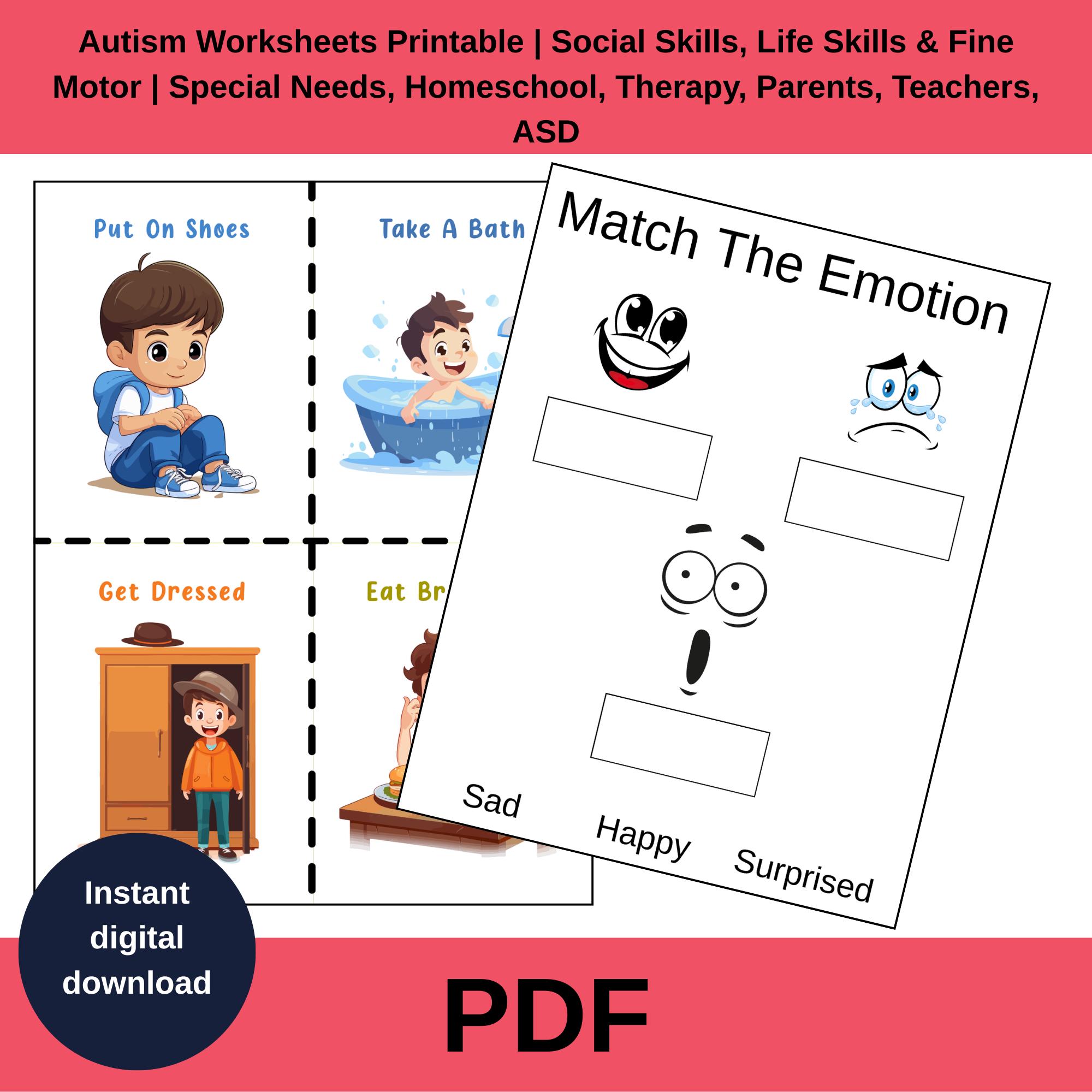
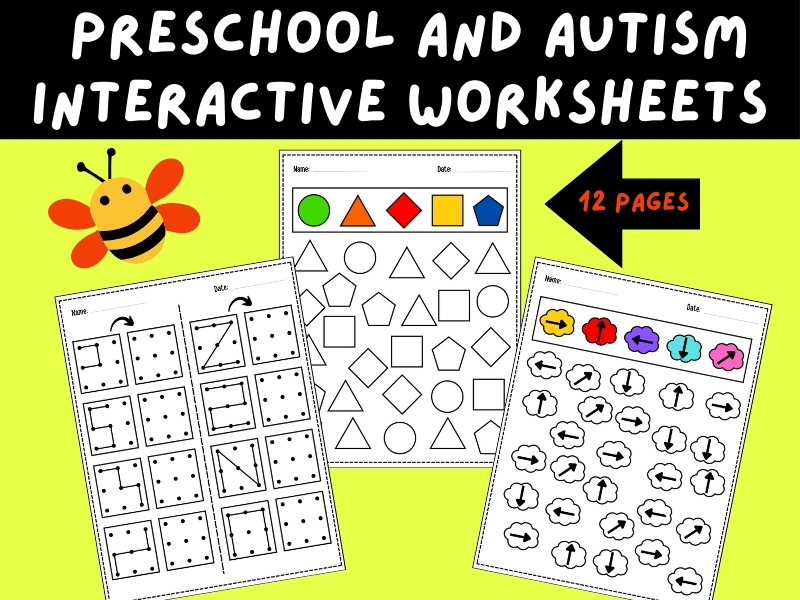
Educational activities for autistic kids leverage structured visual frameworks, such as printable grid drawing worksheets and real photo visual flashcards, to systematically build spatial awareness, observation skills, and proportion estimation. According to the National Association for the Education of Young Children (NAEYC), purposeful manipulation of concrete visual materials scaffolds abstract cognitive milestones by reducing extraneous sensory load and capitalizing on relative perceptual strengths. Integrating structured imagery into early childhood learning provides a predictable environment where neurodivergent learners can decode complex patterns, recognize structural relationships, and master fine-motor precision independently. Early childhood educators and homeschooling parents utilize these targeted Educational Activities to bridge the gap between concrete visual stimuli and symbolic representation. Developing robust spatial reasoning relies on minimizing cognitive overload through clean graphic layouts, explicit demarcation lines, and high-contrast photographic references that match real-world objects.
Visual Learning & Skill Snapshot:
- Core Focus: Structured photo-based flashcards and printable grid drawing worksheets designed for neurodivergent learners.
- Target Skill: Spatial reasoning, visual discrimination, fine-motor proportion, and observation-based estimation.
- Key Recommendation: Maintain consistent grid boundaries and utilize real photography to bypass abstract symbolism barriers.
Core Principles and Visual Learning Overview
Visual learning strategies for autistic children depend on predictable structural layouts that isolate individual perceptual components within manageable geometric quadrants. When children engage with Grid Drawing exercises, the compartmentalization of a complex image into smaller grid squares effectively reduces visual clutter and anxiety. Instead of processing an entire holistic scene simultaneously, the learner focuses strictly on a single intersection, matching line orientation, shape boundaries, and coordinate coordinates. This sequential method fosters deep observation skills and precise proportion estimation without overwhelming working memory. Concurrently, utilizing tangible Photo Flashcards featuring high-definition, real-world imagery eliminates the interpretive ambiguity often caused by cartoon illustrations, establishing immediate, concrete connections between visual prompts and cognitive categories.
Key Specifications and Breakdown
| Age / Learning Stage | Visual Skill & Grid Ratio | Pedagogical Application & Scaffolding |
|---|---|---|
| Early Preschool (Ages 3-4) | 1×1 to 2×2 Simple Grids | Use high-contrast photo cards to teach basic object categorization and matching. |
| Early Elementary (Ages 5-7) | 3×3 Moderate Grids | Implement simple line-continuation worksheets to bridge spatial observation and fine-motor output. |
| Advanced Elementary (Ages 8-10) | 4×4 Complex Grids | Apply proportional scaling tasks to encourage multi-step planning and self-correction. |
Structured visual supports and consistent environmental predictability significantly reduce cognitive anxiety and enhance task initiation in neurodivergent learners. — American Psychological Association (APA – Cognitive Development Division)
Step-by-Step Practical Application and Printing Guidelines
Successful implementation of visual worksheets requires high-contrast monochrome printing on heavyweight matte cardstock to eliminate distracting surface glare and tactile fragility. Educators and parents should begin by selecting a reference photo featuring a distinct, single subject against a neutral background, then pair it with a corresponding grid worksheet scaled to the child’s current fine-motor capacity. Instruct the learner to examine one specific box at a time using a physical window mask or finger-pointer to block out surrounding distractions. Encourage light pencil sketching initially so that adjustments can be made without eraser frustration, reinforcing steady hand-eye coordination. Establishing a routine practice schedule—such as ten minutes of focused grid analysis daily—builds reliable procedural memory and confidence in spatial problem-solving.
Common Challenges and How to Avoid Them
Overcoming spatial confusion and motor fatigue during drawing tasks involves addressing premature scaling errors and reducing excessive visual stimuli on the page. When learners attempt to copy an entire image across the whole page instead of focusing on individual grid coordinates, educators should temporarily cover adjacent squares to enforce localized visual scanning. Another frequent obstacle is fine-motor resistance; this can be alleviated by utilizing thicker, soft-grip writing instruments and ensuring grid lines are printed in bold black ink for maximum clarity. If frustration arises, reduce the complexity of the grid from a four-by-four matrix down to a two-by-two layout until the child successfully masters coordinate mapping and proportional estimation.
💬 Frequently Asked Questions
Explore More Free Learning Printables and Visual Activities on WePhotoAgency
Empowering neurodivergent learners through structured visual materials requires a dependable library of high-quality resources, expertly designed printables, and adaptable teaching strategies. Access the complete collection of pedagogical tools, printable worksheets, and developmental guides by visiting WePhotoAgency.com to support continuous growth in spatial reasoning and visual literacy.
Visual Reference Gallery