Introduction
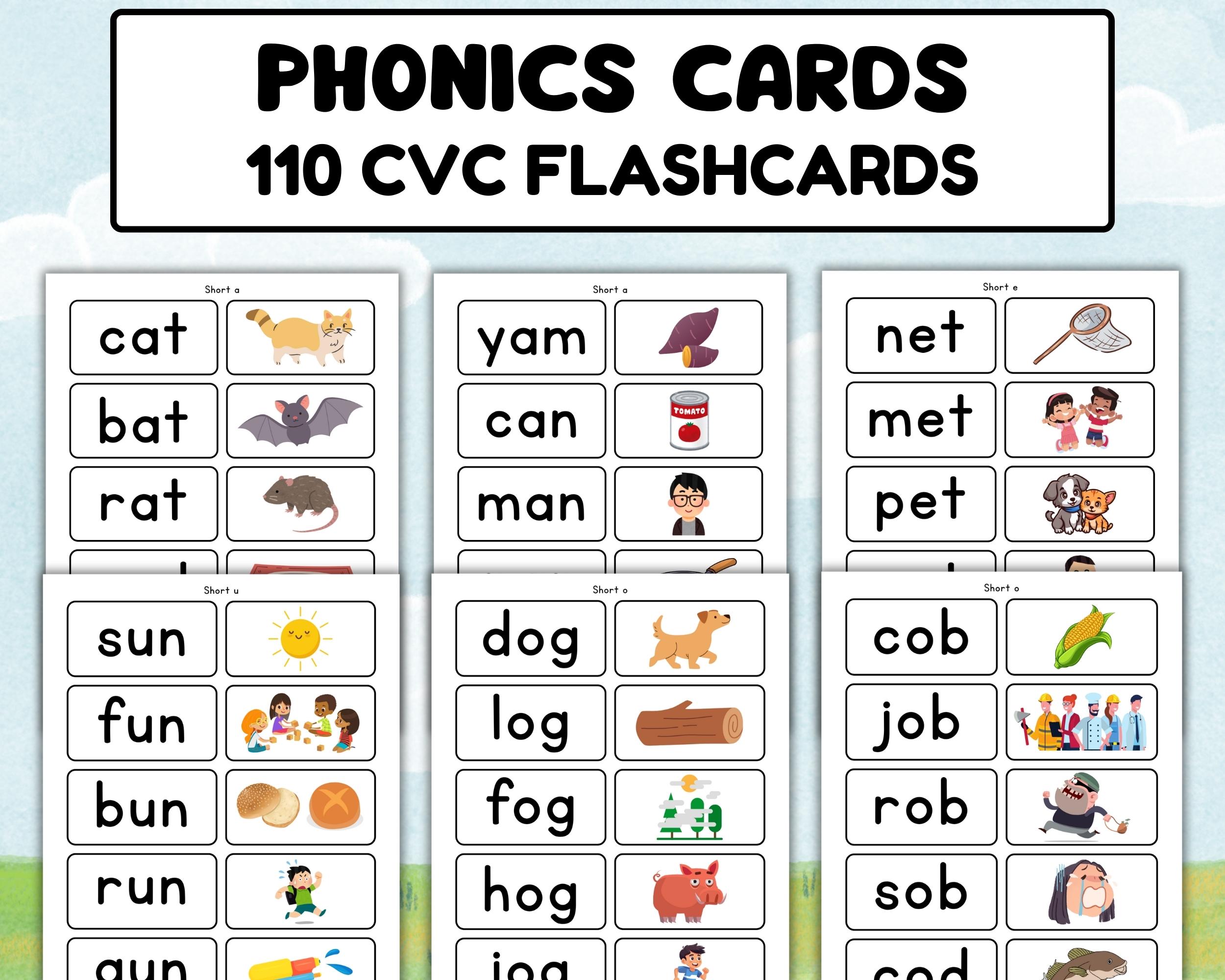
CVC picture flashcards bridge visual literacy and foundational phonics by pairing real photographic imagery with consonant-vowel-consonant word structures. According to the National Association for the Education of Young Children (NAEYC), integrating concrete photographic representations with early literacy tools significantly enhances young children’s cognitive retention, visual discrimination, and symbolic thinking capacities. These targeted visual assets transform abstract linguistic symbols into tangible concepts, making them essential components of modern early childhood educational environments, homeschool setups, and specialized art classrooms. High-contrast Photo Flashcards provide an optimal foundation for young learners transitioning from pure image recognition to decoding simple written words.
Visual Learning & Skill Snapshot:
- Core Focus: Cvc picture flashcards combine real photographic reference with three-letter phonetic decoding exercises.
- Target Skill: Spatial reasoning, visual discrimination, fine-motor proportion, and early phonetic decoding.
- Key Recommendation: Pair high-resolution photographic cards directly with printable grid drawing worksheets to reinforce spatial accuracy.
Core Principles and Visual Learning Overview
Spatial reasoning and structural observation develop rapidly when children deconstruct real photographic images into geometric grid components. Utilizing cvc picture flashcards alongside structured printable grid drawing worksheets trains the developing brain to analyze proportion, line orientation, and spatial relationships before pencil touches paper. By breaking down a familiar photographic subject into manageable quadrants, young artists and emergent readers simultaneously strengthen fine-motor coordination and phonemic awareness. Educators leverage these multi-sensory materials to anchor abstract linguistic rules in observable visual data, ensuring comprehensive cognitive development across diverse learning styles.
Key Specifications and Breakdown
| Age / Learning Stage | Visual Skill & Grid Ratio | Pedagogical Application & Scaffolding |
|---|---|---|
| Ages 4-5 (Pre-K) | 2×2 simple grid matrix; primary shape and contour tracking | Focuses on basic photo recognition, direct matching, and gross motor pencil control using Grid Drawing templates. |
| Ages 5-6 (Kindergarten) | 3×3 intermediate grid matrix; proportional line estimation | Aligns photographic CVC subjects with letter-sound correspondence, encouraging precise spatial copying. |
| Ages 6-7 (1st Grade) | 4×4 advanced grid matrix; complex detail rendering | Integrates independent phonetic spelling with accurate visual replication of realistic photographic subjects. |
Early childhood art education and cognitive mapping require concrete visual referents to successfully anchor abstract symbolic systems like phonics and geometry — National Art Education Association (NAEA)
Step-by-Step Practical Application and Printing Guidelines
Executing successful visual and phonics lessons requires high-contrast printing, durable cardstock, and systematic grid alignment techniques. Educators and parents should print cvc picture flashcards on heavy matte cardstock to eliminate distracting glare, ensuring optimal visual clarity for young observers. Next, pair each photographic card with a corresponding grid worksheet featuring matching coordinate lines. Instruct learners to observe the top-left quadrant of the photograph first, identify key lines or letter shapes, and replicate those exact proportions within the corresponding grid square before advancing across the page.
Common Challenges and How to Avoid Them
Overwhelming young learners with overly complex grids or poor-quality imagery remains the most frequent pitfall in visual-phonics instruction. Prevent cognitive overload by starting with simple 2×2 grids and high-clarity real photographic flashcards rather than abstract cartoon drawings, which lack the precise proportional cues found in reality. When children struggle with scale or proportion, provide physical finger-tracing guides across the photo flashcard surface to reinforce tactile memory before allowing independent sketching on the matching Educational Activities sheets.
💬 Frequently Asked Questions
Explore More Free Learning Printables and Visual Activities on WePhotoAgency
Empowering early childhood education requires access to premium, professionally designed pedagogical resources that blend visual arts with foundational literacy. Discover an extensive collection of printable grid worksheets, real photographic teaching aids, and structured learning modules by visiting the main catalog at WePhotoAgency.com to elevate daily instruction and spark lifelong creative curiosity.
Visual Reference Gallery