
Introduction
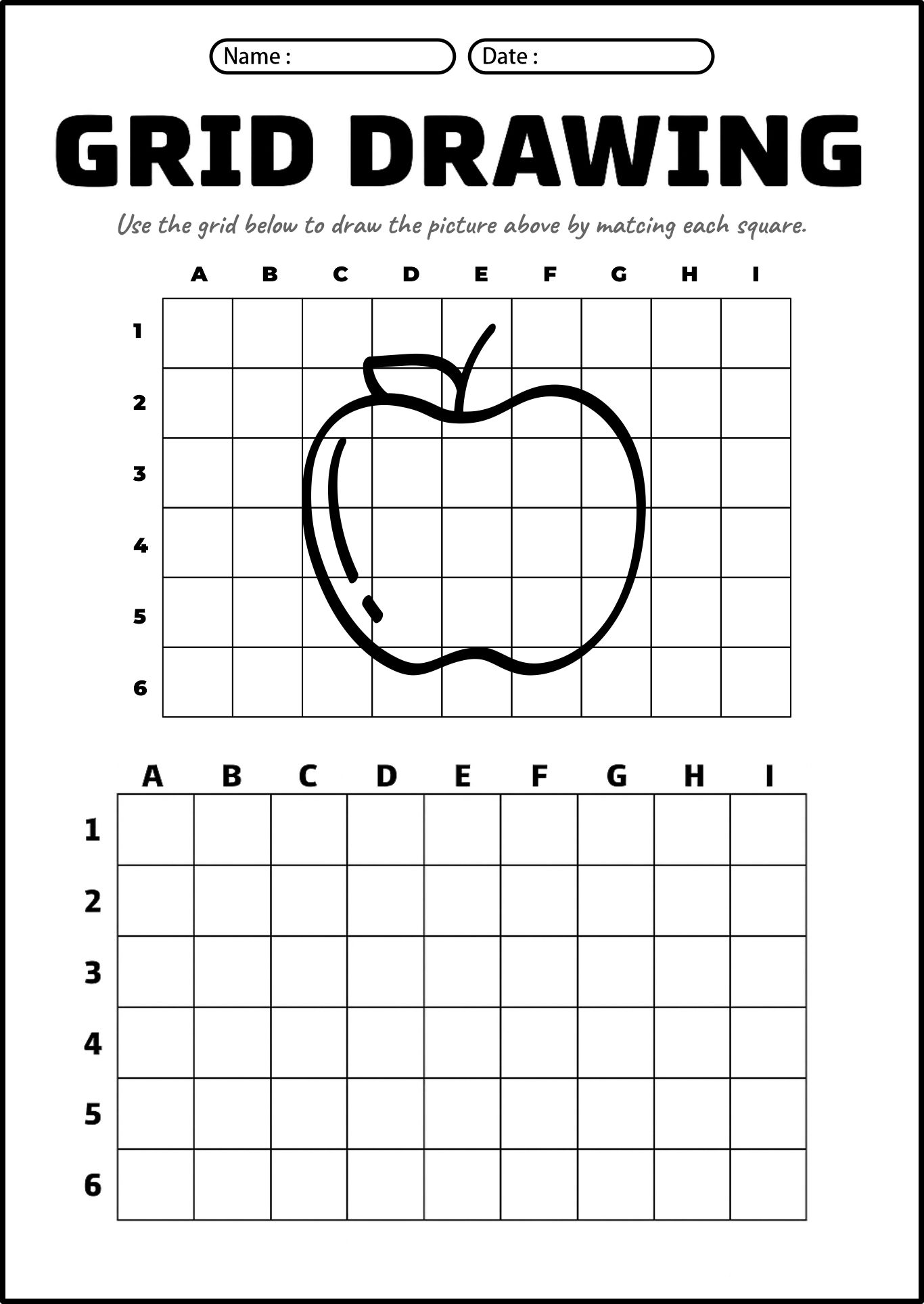
A grid drawing maker online serves as a digital utility that superimposes customizable rectangular matrices over reference images to help young learners systematically break down complex visual data into manageable geometric components. According to the National Art Education Association (NAEA), structured observational drawing exercises significantly enhance cognitive processing, hand-eye coordination, and spatial representation capabilities in early childhood education. By transforming real photo visual flashcards or familiar objects into printable, square-by-square worksheets, educators and parents bridge the gap between abstract visual perception and concrete fine-motor execution. Utilizing a specialized Grid Drawing tool enables adults to scale difficulty levels precisely to match developmental readiness.
Visual Learning & Skill Snapshot:
- Core Focus: Digital grid generation for scalable, printable proportion-based art worksheets.
- Target Skill: Spatial reasoning, visual discrimination, fine-motor proportion, and observation accuracy.
- Key Recommendation: Start early learners with simple 3×3 grids featuring high-contrast reference images before advancing to dense matrices.
Core Principles and Visual Learning Overview
Grid drawing methodologies leverage the human brain’s natural capacity for chunking information, reducing overwhelming visual stimuli into isolated, easily reproducible fragments within a single coordinate square. When children replicate contents cell-by-cell from realistic Photo Flashcards, they shift from drawing what they assume an object looks like to observing actual lines, angles, and negative spaces. This practice directly supports foundational mathematical geometry and visual literacy. Integrating structured Educational Activities alongside digital grid templates ensures that art instruction remains interactive, cognitively stimulating, and developmentally appropriate for primary students.
Key Specifications and Breakdown
| Age / Learning Stage | Visual Skill & Grid Ratio | Pedagogical Application & Scaffolding |
|---|---|---|
| Ages 4-5 (Early Preschool) | 3×3 Grid; High-contrast shapes and thick primary outlines | Focuses on basic coordinate tracking, left-to-right scanning, and gross motor pencil control using simplified objects. |
| Ages 6-7 (Early Elementary) | 4×4 or 5×5 Grid; Real photo references of animals and nature | Emphasizes proportion estimation, curve tracing, and cross-referencing adjacent squares to complete complex contours. |
| Ages 8-9 (Advanced Primary) | 6×6+ Grid; Detailed architectural or portrait subjects | Refines precision scaling, detailed shading translation, and independent spatial error analysis without adult intervention. |
Systematic observation through structured geometric grids reinforces multisensory cognitive integration and executive function development during early childhood. — National Art Education Association (NAEA)
Step-by-Step Practical Application and Printing Guidelines
Creating effective worksheets requires uploading clear, high-contrast photographic references into an online grid generator and adjusting row and column parameters to suit the target age group. Educators should print matching duplicate worksheets—one serving as the untouched master reference with clear cell labeling (such as letters across the top and numbers down the side) and the other serving as the blank drawing grid. Providing physical tracking tools, such as colored index cards to isolate individual squares, helps children with developing visual-spatial attention focus strictly on one coordinate zone at a time, minimizing cognitive overload and frustration during drawing sessions.
Common Challenges and How to Avoid Them
Young learners frequently struggle with spatial disorientation, often attempting to draw elements across multiple grid squares before verifying coordinate alignment. Adults can prevent this hurdle by demonstrating how to locate specific grid intersections and encouraging children to check anchor points—where lines cross grid boundaries—prior to rendering interior details. Another common obstacle involves choosing overly cluttered photographic subjects; selecting clean, isolated subjects maintains high engagement and guarantees achievable, confidence-building outcomes for beginning artists.
💬 Frequently Asked Questions
Explore More Free Learning Printables and Visual Activities on WePhotoAgency
Empowering young artists and students requires continuous access to versatile, high-quality resources that make foundational skill-building engaging and accessible. Educators, homeschoolers, and parents are encouraged to browse the comprehensive collection of downloadable educational materials, creative prompts, and visual learning tools available directly through WePhotoAgency.com to support ongoing cognitive and artistic growth.
Visual Reference Gallery


